

Key Takeaways
- Six or more hours of direct sunlight per day is the single most important factor in site selection.
- Testing and amending your soil before planting saves time and disappointment later.
- Starting with a small plot of easy crops dramatically improves first-year success.
- Consistent, deep watering matters more than frequent shallow watering.
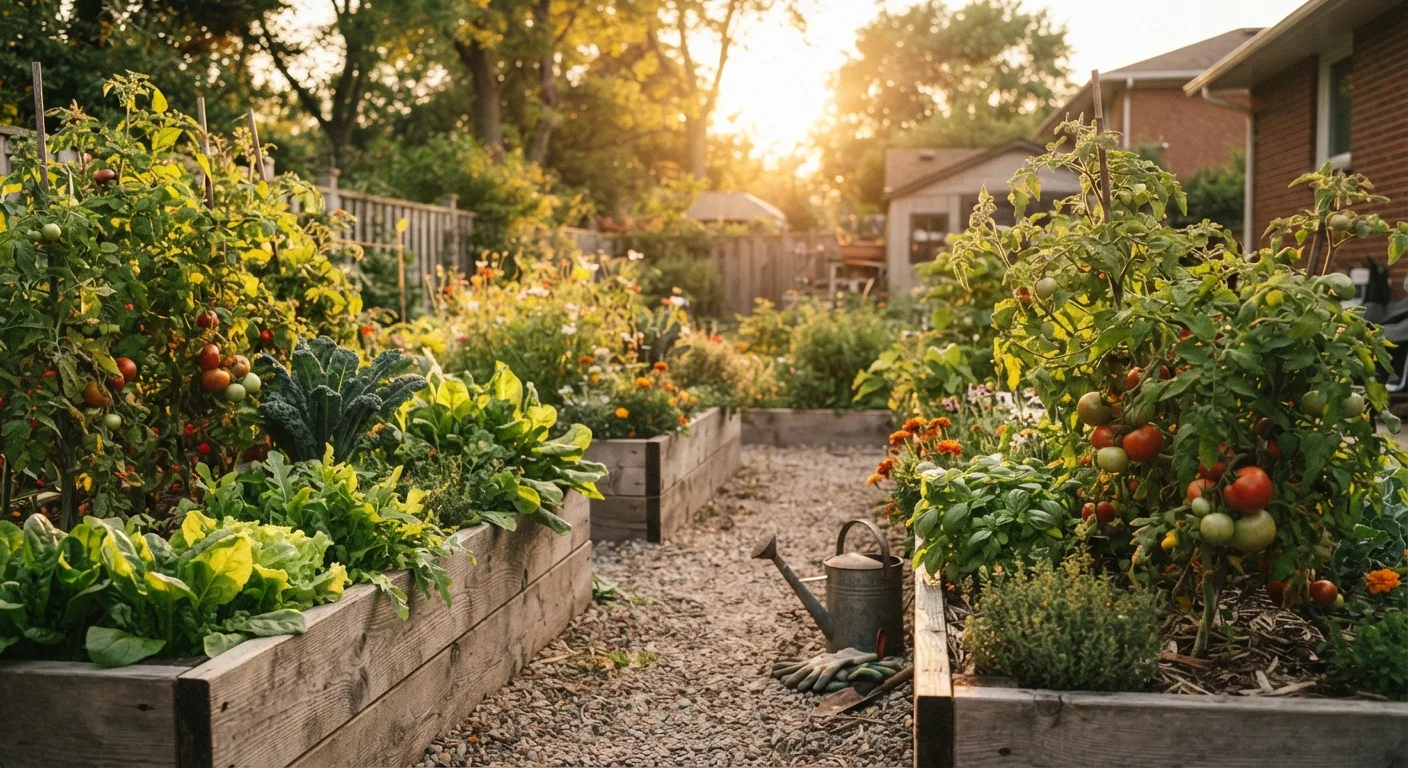
- Raised beds and in-ground plots both work — the choice depends on your space and soil conditions.
Start here
Choosing the Right Spot
Build the foundation
Understanding Your Soil
Plan your crops
Deciding What to Grow
Get hands-on
Setting Up Your Beds
Tend your garden
Planting, Watering, and Early Care
Learn from experience
Common First-Year Mistakes to Avoid
Choosing the Right Spot
Before you buy a single seed, walk your yard at several points during the day and watch where the sun falls. Vegetables — especially fruiting crops like tomatoes and peppers — need a minimum of six hours of direct sunlight daily to produce well. Eight hours is better.
Beyond light, consider water access. A spot far from a hose connection sounds convenient on paper but becomes a chore in the heat of summer. Also look at drainage: low-lying areas that hold water after rain can suffocate roots and invite disease. If your only option is a shaded or compact space, our guide to container and balcony growing covers practical alternatives.
Observe Before You Commit
Spend at least a full day watching how light moves across your yard before deciding where to place your garden. Shadows from fences, trees, and structures shift significantly between morning and afternoon. A spot that looks open at 9 a.m. may be deeply shaded by 2 p.m. This one step prevents one of the most common siting mistakes.
Understanding Your Soil
Soil is not just dirt — it is a living system that feeds your plants. Most vegetables thrive in loamy soil with a pH between 6.0 and 7.0, good drainage, and plenty of organic matter. Before you plant anything, take a close look at what you are working with.
A basic soil test kit (available at many garden centers or through your state's cooperative extension service) will tell you your pH and major nutrient levels. Compacted or clay-heavy soil benefits from worked-in compost; sandy soil drains too fast and also improves with added organic matter. Our in-depth article on understanding soil types explains what each type means for your plants. If you want to generate your own amendment material, composting at home is a practical and low-cost approach.
USDA Hardiness Zone
A map-based system that divides the US into climate regions based on average annual minimum winter temperatures. It helps gardeners understand which plants are likely to survive and thrive in their area.
Loamy soil
A balanced mix of sand, silt, and clay particles that drains well while retaining enough moisture and nutrients to support plant growth. It is considered ideal for most vegetables.
Soil pH
A measure of how acidic or alkaline your soil is, on a scale of 0 to 14. Most vegetables grow best in the slightly acidic to neutral range of 6.0 to 7.0.
Compost
Decomposed organic material — such as kitchen scraps and yard waste — that is worked into soil to improve its structure, drainage, and nutrient content.
Last frost date
The average calendar date after which freezing temperatures are unlikely in your area. Warm-season crops such as tomatoes and peppers are typically planted after this date.
Transplant shock
Temporary stress that occurs when a young plant is moved from one growing environment to another. Symptoms include wilting or slowed growth during the first days after planting.
Deciding What to Grow
Match your crop choices to two things: your climate's growing season and the amount of space you have. Your USDA Hardiness Zone provides a baseline, but your local last-frost date and summer heat are equally important factors. Your county's cooperative extension office publishes free planting calendars tailored to your region.
For beginners, a short list of reliable producers beats an ambitious mix of difficult crops. Lettuce, bush beans, zucchini, cherry tomatoes, and radishes are commonly recommended because they germinate predictably and reward basic care. Once you decide on crops, you will need to choose between starting from seed or buying young plants — each has real trade-offs in time, cost, and skill, which our guide to seeds vs. seedlings covers thoroughly.
Setting Up Your Beds
A 4×8-foot plot gives you enough space to grow a meaningful variety without becoming overwhelming. Mark out your area, remove grass or weeds by cutting below the root zone, and loosen the soil to a depth of 10 to 12 inches. Work in two to four inches of compost and mix it through the top layer.
If you are weighing whether to build raised beds or plant directly into the ground, the decision comes down to your existing soil conditions and budget. Our raised beds vs. in-ground planting comparison walks through the practical differences. Regardless of which method you choose, good soil preparation is the most important investment you can make before the first seed goes in.
Check for Underground Utilities First
Before digging any new garden bed, contact your local utility-locating service (dial 811 in the US) to identify buried lines. This is a safety requirement, not optional. Striking a gas, water, or electrical line while digging is a serious hazard. The service is free and typically completes a visit within a few business days.
Planting, Watering, and Early Care
Follow the spacing instructions on seed packets or plant tags — crowding is one of the most common beginner errors and invites disease and poor yields. Plant at the depth indicated, firm the soil gently around roots, and water in thoroughly at planting time.
After establishment, aim for about one inch of water per week. Water deeply and less frequently rather than shallowly every day; this encourages roots to grow downward where moisture is more consistent. If you are starting with purchased seedlings, watch for transplant shock in the first week — our article on why seedlings die after transplant describes what causes it and how to reduce the risk. As plants grow, keep an eye out for early pest activity; managing common garden pests without chemicals is a good first reference before reaching for any pesticide.
Common First-Year Mistakes to Avoid
New gardeners tend to make a handful of predictable errors. Planting too much too soon tops the list — an overfull plot quickly becomes discouraging when weeding and watering pile up. Start small, succeed, then expand.
Skipping soil preparation is the second major pitfall. Healthy soil grows healthy plants; poor soil forces you to compensate in every other area. Overwatering is also surprisingly common — more plants die from waterlogged roots than from drought. Finally, be skeptical of widely repeated gardening advice that sounds intuitive but may not hold up: our overview of common garden myths separates fact from folklore. When autumn arrives, a thoughtful end-of-season bed preparation will protect your soil and set you up for a stronger second year.