

Key Takeaways
- Seeds cost less per plant and offer far more variety, but require weeks of extra lead time.
- Seedlings reduce the time to harvest and lower the risk of early germination failure.
- Some crops, like carrots and beans, strongly prefer direct sowing and resist transplanting.
- Starting seeds indoors demands consistent light, warmth, and moisture management.
- Buying seedlings makes the most sense late in the season or for slow-growing crops like peppers.
- Many experienced gardeners use both methods depending on the crop and time of year.
Option A
Starting from Seeds
The patient, economical path with the widest variety.
Best for: Gardeners who have lead time, want rare or heirloom varieties, and enjoy hands-on growing from the very beginning.
Option B
Buying Seedlings
The faster, lower-risk route to an established garden.
Best for: Gardeners who want quicker results, have limited setup space, or are working within a tight planting window.
If you want the widest plant variety and lowest cost
Starting from Seeds
Seed catalogues offer hundreds of varieties unavailable as transplants, and per-plant costs are a fraction of what nursery seedlings run.
If you're a new gardener or short on time this season
Buying Seedlings
Seedlings skip the most failure-prone stages and let you focus on soil prep, watering, and learning how your garden actually performs.
If you're growing slow-maturing crops like peppers or celery
Buying Seedlings
These crops need 10–14 weeks from seed to transplant size, making purchased starts a practical solution unless you have a well-equipped indoor setup.
If you want to direct-sow root vegetables or climbing beans
Starting from Seeds
Crops like carrots, parsnips, and beans develop best when sown where they'll grow — transplanting disrupts their roots and often reduces yield.
If you're gardening in a raised bed with good soil already in place
Starting from Seeds
A controlled growing environment with quality soil gives direct-sown seeds excellent germination conditions and reduces the transplant shock risk entirely.
What You're Really Choosing Between
Deciding between seeds and seedlings isn't just a budget question — it's a question of time, equipment, and how much risk you're comfortable with at each stage of the growing season.
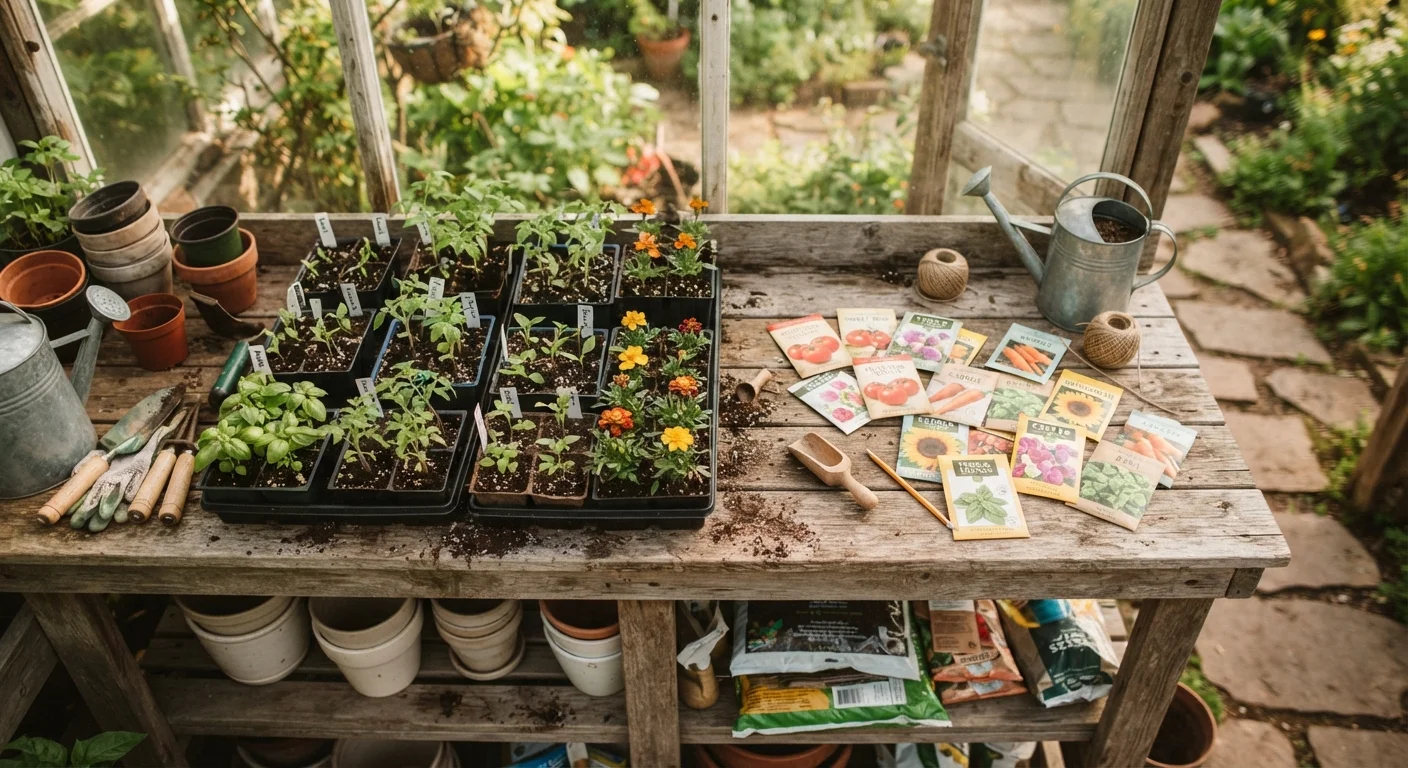
Seeds are the raw starting point: a dormant embryo inside a protective coat, waiting for warmth and moisture to trigger germination. Seedlings — also called transplants or starts — are young plants already weeks into growth, usually sold in small cells or pots at garden centers and nurseries.
Both approaches can produce a thriving garden. The difference is in what each method asks of you. Starting from seed demands patience, attention, and often some indoor infrastructure. Buying seedlings trades that effort for a higher per-plant cost and a narrower selection.
Before deciding, it helps to understand what your soil type means for plant establishment — because both seeds and seedlings depend on that foundation to succeed.
How the Two Methods Compare
The practical differences between seeds and seedlings show up across several dimensions: upfront cost, time investment, variety availability, and which crops are even suited to each approach.
| Criterion | Starting from Seeds | Buying Seedlings |
|---|---|---|
| Cost per plant | Very low | Moderate to high |
| Variety selection | Extremely wide | Limited to nursery stock |
| Time to transplant | 4–12 weeks of indoor growing | Ready immediately |
| Equipment needed | Trays, lights, heat mat | Minimal |
| Skill required | Moderate — needs attention | Low — beginner-friendly |
| Best for direct sowing | Yes — root veg, beans, squash | Not applicable |
| Risk of early failure | Higher (germination, damping off) | Lower |
One often-overlooked factor is crop suitability. Some plants — particularly root vegetables like carrots, beets, and radishes — develop a taproot early and do not transplant well. Disturbing that root structure stunts growth or causes forking. For these crops, direct sowing is almost always the better choice regardless of your skill level or timeline.
Conversely, slow-maturing crops like peppers, eggplant, and celery need so many weeks of indoor growing before they're ready for outdoor conditions that most home gardeners find purchasing seedlings far more practical.
Starting Seeds: What It Actually Takes
Successful seed starting indoors requires three things: adequate light, consistent warmth, and moisture control. A sunny south-facing windowsill is often insufficient — seedlings stretch toward inadequate light and develop weak, leggy stems. Supplemental grow lights placed close to the trays produce noticeably sturdier transplants.
Germination temperature matters just as much. Most vegetable seeds germinate best between 65°F and 75°F. Cool basements or drafty rooms slow germination and invite damping off — a fungal condition that collapses seedling stems at soil level.
4–8 weeks
Typical indoor seed-starting lead time
Most vegetable seedlings need 4–8 weeks of indoor growth before they're ready to transplant outdoors, with peppers and celery often requiring up to 12 weeks.
65–75°F
Ideal germination temperature range
Most common vegetable seeds germinate most reliably within this temperature range; soil that's too cold significantly delays or prevents sprouting.
7–10 days
Recommended hardening-off period
Gradually exposing seedlings to outdoor conditions over one to two weeks before transplanting reduces transplant shock and improves survival rates.
Once seedlings emerge, they need hardening off before going outside: a gradual, 7–10 day process of increasing outdoor exposure so plants adjust to wind, direct sun, and temperature swings. Skipping this step is one of the most common reasons transplants fail. See our article on why seedlings die after transplant for a closer look at what goes wrong and how to prevent it.
The payoff for this effort is real: seed starting gives you access to heirloom tomatoes, unusual pepper varieties, and specialty herbs that simply don't appear as nursery starts. It also lets you time your planting precisely and grow more plants for the same cost.
Buying Seedlings: Convenience With Caveats
Purchasing seedlings compresses the timeline dramatically. You skip germination, thinning, and the early weeks of careful indoor monitoring. For gardeners with limited space, no grow lights, or a late start to the season, this convenience is genuinely valuable.
The caveats are worth knowing. Nursery seedlings are typically grown under controlled commercial conditions and may need adjustment to your specific microclimate. Even purchased starts benefit from hardening off if they've been kept in a greenhouse. Check plants before buying: look for compact, dark-green growth with no yellowing, visible pests, or root-bound clumping at the base of the cell.
When Nursery Availability Runs Out
Popular seedling varieties often sell out at garden centers by mid-spring. If you're planning a larger garden or have specific variety preferences, seeds give you a reliable supply regardless of local nursery stock. Starting seeds also lets you stagger plantings across several weeks for a more extended harvest window — something purchased starts don't easily accommodate.
Variety selection at most nurseries skews toward proven commercial performers rather than rare or regionally distinctive types. If growing heirloom or open-pollinated varieties matters to your gardening goals, seeds are the more reliable route.
Seedlings also make sense as a hedge against a failed seed batch. Many experienced gardeners start their own tomatoes and peppers from seed but buy a few nursery backups — a practical approach that combines the variety benefits of seed starting with some insurance.
Whatever approach you choose, pairing it with thoughtful plant selection — including companion planting principles — helps your beds perform as a productive system rather than a collection of individual plants.