

Key Takeaways
- Most common garden pests can be managed effectively with physical and biological methods before chemicals are needed.
- Healthy soil and diverse plantings are your first line of defense against pest outbreaks.
- Identifying the pest correctly before acting saves time, effort, and potential plant damage.
- Beneficial insects like ladybugs and parasitic wasps provide free, ongoing pest control.
- Chemical pesticides, even organic ones, can harm beneficial insects and should be a last resort.
Know Your Enemy Before You Act
The single biggest mistake home gardeners make when pests appear is reaching for a spray before identifying what's actually causing the damage. Chewed leaves, yellowing, and stunted growth can each point to a different culprit — and the right response depends entirely on which one you're dealing with.
Take a few minutes to examine affected plants closely, ideally in the morning when pests are most active. Look under leaves, along stems, and in soil near the base. Common offenders include aphids (small, soft-bodied clusters near new growth), slugs (irregular holes in leaves, often with slime trails), caterpillars (larger, ragged bite marks), and spider mites (fine webbing, stippled leaves).
Once you know what you're facing, you can choose a targeted response rather than a broad-spectrum one. If you're new to growing food crops, our beginner's guide to vegetable gardening covers how to set up a plot that's easier to monitor and maintain from the start.
Physical and Cultural Controls That Actually Work
Before any product — chemical or otherwise — consider what you can do with your hands and your garden setup.
Hand-pick large pests like caterpillars and beetles directly from plants
For caterpillars, beetles, and other visible pests, physical removal is immediate and precise. It causes no collateral harm to beneficial insects or soil organisms and costs nothing.
Use physical barriers to protect vulnerable plants
Row covers, copper tape around containers, and collars around transplant stems block pests before they can reach the plant. Barriers are especially effective for slugs, cabbage moths, and root flies.
Practice crop rotation and companion planting
Moving plant families to different beds each season disrupts pest life cycles that depend on overwintering near host plants. Companion planting — like growing basil near tomatoes — can also confuse or repel certain insects.
Keep the garden clean of debris and decaying material
Slug eggs, overwintering beetle larvae, and fungal diseases all thrive in damp, decaying plant matter left on the soil surface. Regular tidying reduces the habitat available to them.
Water at the base of plants, not overhead
Wet foliage encourages fungal problems and can create the humid conditions that slugs prefer. Directing water to the root zone keeps leaves dry and makes the surface environment less hospitable to certain pests.
These approaches work best when they're part of regular garden maintenance. A walk through the garden every few days makes physical controls far more effective than treating only when damage is already severe. Healthy, well-fed soil also plays a major role: plants grown in nutrient-balanced ground are naturally more resilient. Our guide on composting at home explains how to build the kind of soil that gives plants a real advantage.
Bringing in Biological Allies
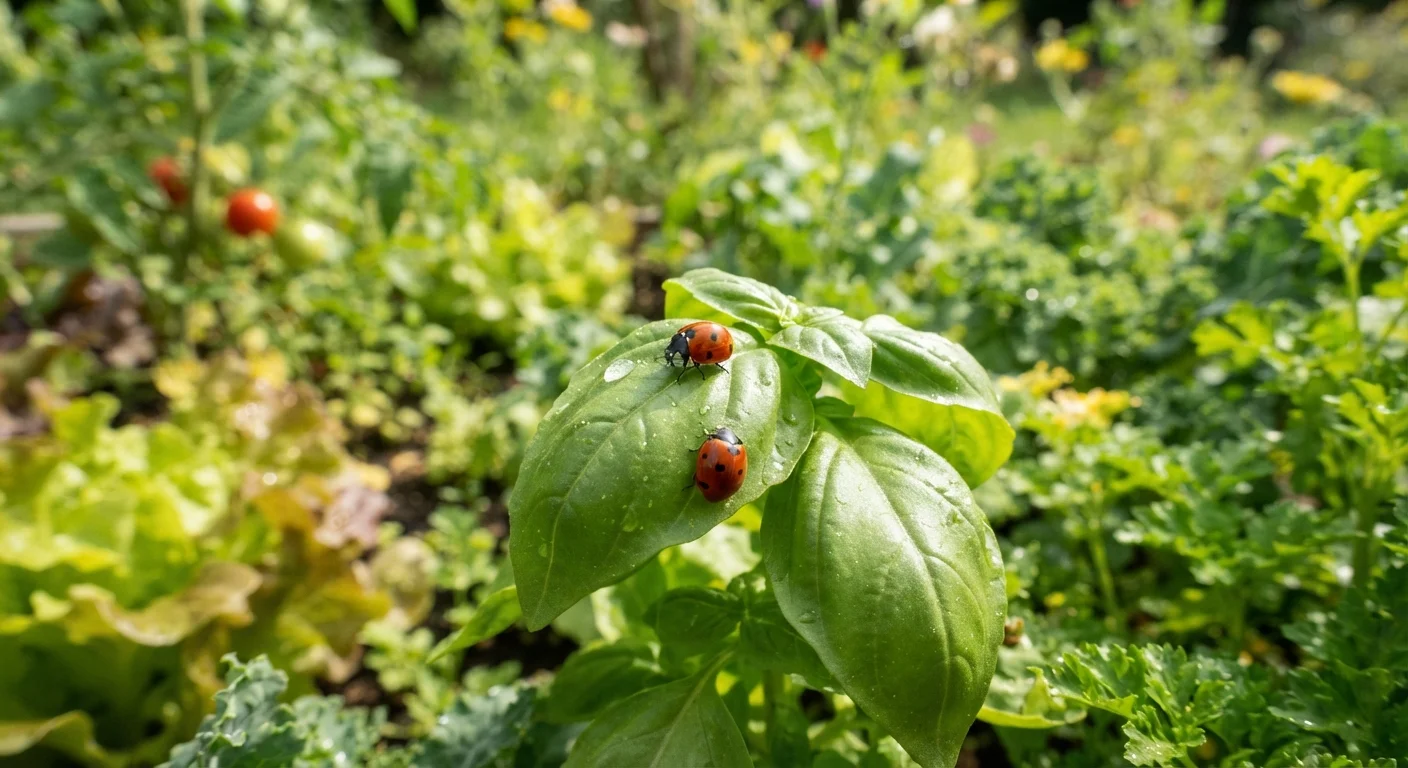
Natural predators are often already present in your garden — your job is to avoid disrupting them. Ladybugs, lacewings, ground beetles, and parasitic wasps all prey on common garden pests. A single ladybug can consume dozens of aphids per day.
400+
Aphids consumed by one ladybug per day
University extension resources commonly cite this figure when describing ladybugs as natural aphid predators in home gardens.
~75%
Of pest problems manageable without pesticides
Integrated Pest Management (IPM) guidance from land-grant university extension programs suggests the majority of home garden pest issues can be resolved through cultural and biological controls.
To encourage beneficial insects, plant a variety of flowering herbs and plants — dill, fennel, yarrow, and marigolds attract predators and provide habitat. Avoid broad-spectrum treatments that kill indiscriminately, and leave some areas of the garden slightly wild to provide shelter.
“The best pest control is a healthy, diverse garden. Monocultures invite outbreaks; complexity invites balance.”
— Eliot Coleman, Market gardener and author of 'The New Organic Grower'
Birds are another valuable ally. A simple birdbath or brush pile near your garden beds can attract species that feed on caterpillars and beetles. When planning fall garden cleanup, avoid clearing everything away — our guide to preparing beds before the first frost explains how to balance tidiness with habitat preservation.
When to Escalate — and How to Do It Carefully
If physical and biological controls haven't brought a pest population under control after consistent effort, you may need to consider additional intervention. Even then, starting with the least disruptive option makes sense.
Insecticidal soaps and neem oil are commonly used low-impact options that break down quickly in the environment — but they can still harm beneficial insects if applied carelessly. Always apply in early morning or evening when pollinators are less active, target only affected areas, and read any product label thoroughly before use.
Reserve broader treatments for genuine outbreaks rather than preventive spraying. A few chewed leaves rarely threaten a plant's overall health. Understanding that some pest presence is normal — and manageable — makes gardening far less stressful, and keeps your garden's natural balance intact over the long term.
Integrated Pest Management (IPM) Explained
IPM is a widely taught framework developed by university extension services and adopted by many home gardeners. It prioritizes prevention, monitoring, and the least-toxic intervention available at each stage. Rather than eliminating all pests, IPM aims to keep populations below a level that causes meaningful damage — accepting that some pest presence is a normal part of a living garden ecosystem.