

Key Takeaways
- Container gardening works well for herbs, greens, and compact vegetables — with the right soil and drainage.
- Balcony weight limits and sun exposure are the two most important constraints to assess before buying plants.
- Frequent watering and fertilizing are non-negotiable for container-grown plants; pots dry out fast.
- Vertical growing structures can triple your effective planting area without adding floor space.
- Not all plants thrive in containers — deep-rooted crops and large vines need more room than most pots offer.
What Small-Space Gardening Actually Involves
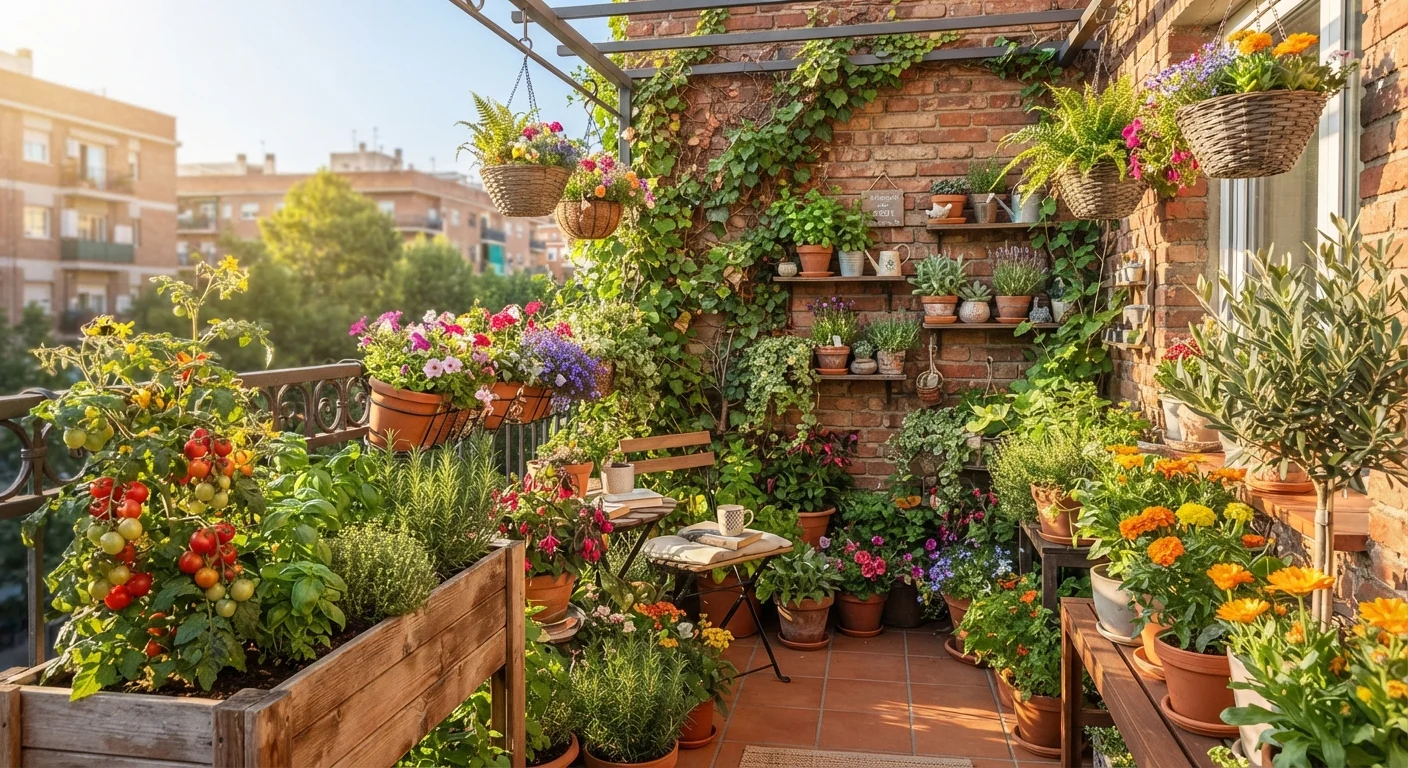
Small-space gardening is the practice of growing plants — food, herbs, or ornamentals — in confined areas such as apartment balconies, patios, rooftops, and doorsteps, primarily using portable or fixed containers rather than open ground. It doesn't require special skills beyond what any new gardener needs, but it does demand an honest understanding of your specific conditions.
The key variables are sunlight, weight capacity, water access, and wind exposure. A south-facing balcony that receives six or more hours of direct sun daily can support a surprisingly productive food garden. A shaded north-facing patio will favor leafy greens and shade-tolerant herbs but is poorly suited to fruiting crops like tomatoes or peppers.
If you're weighing this approach against a traditional plot or raised beds, our guide to raised beds vs. in-ground planting outlines how the two approaches compare in terms of cost, effort, and yield.
Containers: The Foundation of Small-Space Growing
The container is the soil environment your plant will live in entirely — its root zone, drainage system, and moisture reservoir all at once. Getting the container right matters more than almost any other factor.
- Size: Larger containers retain moisture longer and allow more root development. A 5-gallon pot suits most herbs and compact greens; tomatoes and peppers need at least 10–15 gallons.
- Drainage: Every container must have drainage holes. Waterlogged soil is one of the most common causes of plant failure in containers. Do not add a gravel layer at the bottom — this is a persistent myth that research has shown actually raises the water table inside the pot rather than improving drainage. See our garden myths explainer for more on this topic.
- Material: Terracotta is breathable and attractive but dries quickly. Plastic retains moisture longer. Fabric grow bags promote air pruning of roots and drain well but require more frequent watering.
- Potting mix: Always use a purpose-formulated potting mix — never garden soil, which compacts in containers and drains poorly.
Self-Watering Containers Save Time
Self-watering containers with built-in reservoirs are worth considering if you travel or work long hours. They reduce watering frequency by drawing moisture up from a lower reservoir through capillary action, which also buffers plants against the rapid soil-drying common in small pots during summer heat.
Balcony and Patio Considerations
Before loading a balcony with planters, consult your building's documentation or a structural professional if you're uncertain about load limits. Wet soil, pots, and standing water are considerably heavier than empty containers. A rough guideline: wet potting mix weighs roughly 50–80 lbs per cubic foot, though this varies by mix type.
Wind is frequently underestimated on upper-floor balconies. It accelerates moisture loss and can topple tall plants or damage fragile stems. Use trellises, windbreak screens, or position heavier pots as anchors for more delicate neighbors.
Check Building Rules Before Installing Fixtures
Permanent wall-mounted planters, drainage modifications, or overhead structures may violate building codes, HOA rules, or rental agreements. Always verify what is permitted in your specific building or municipality before making any structural changes. Violations can result in required removal at your own expense.
Renters should also review lease terms before installing permanent fixtures, wall-mounted planters, or drainage systems that could affect the structure or neighboring units below.
What Grows Well — and What Struggles
Container growing favors plants with compact root systems and reasonable water tolerance. The following categories tend to perform reliably:
- Herbs: Basil, chives, parsley, thyme, oregano, and mint adapt well to pots. Note that mint spreads aggressively and should always be grown in its own container. For more on how individual herbs behave differently in confined growing conditions, see our article on growing herbs indoors.
- Leafy greens: Lettuce, spinach, arugula, and chard grow quickly in shallow containers and tolerate partial shade.
- Compact vegetables: Determinate (bush) tomato varieties, dwarf peppers, radishes, and bush beans are bred for small spaces.
- Flowers: Annuals like marigolds, petunias, and nasturtiums thrive in pots. Understanding whether to plant annuals or perennials matters here — our guide on annual, perennial, and biennial plants explains the life cycles behind those labels.
Plants that typically struggle in containers include indeterminate vining tomatoes without substantial support and soil volume, large squash or pumpkin varieties, sweet corn (which requires mass planting for pollination), and deep-rooted root vegetables like parsnips or full-size carrots.
6+ hrs
Daily sun needed for fruiting crops
Most vegetable gardening resources consistently identify six hours of direct sunlight as the minimum threshold for tomatoes, peppers, and other fruiting plants.
10–15 gal
Minimum container size for tomatoes
Cooperative Extension guidelines from multiple U.S. land-grant universities recommend at least 10–15 gallon containers for standard tomato varieties to allow adequate root development.
~50–80 lbs
Weight of wet potting mix per cubic foot
Estimated based on standard potting mix composition; actual weight varies by mix type and moisture content — always verify against your specific product.
Common Mistakes and How to Avoid Them
Even experienced gardeners make predictable errors when transitioning to container growing:
- Underwatering — or inconsistent watering
- Containers dry out far faster than in-ground beds, sometimes needing water daily in summer heat. Check soil moisture by inserting a finger an inch into the mix; if it feels dry, water thoroughly until it drains from the bottom.
- Skipping fertilizer
- Nutrients leach out of containers with every watering. A slow-release granular fertilizer at planting, supplemented by liquid feeding during the growing season, keeps plants productive.
- Crowding plants
- The temptation to fill every inch of a pot leads to competition for nutrients, poor airflow, and disease. Follow spacing guidance on seed packets or plant tags.
- Ignoring microclimate shifts
- A patio corner that's sheltered from wind and reflects heat from a wall creates different conditions than an open balcony edge. Observe your space across a full day before deciding where each plant lives.
Group containers together to create a shared microclimate that retains humidity and slows moisture evaporation from individual pots.
Plants transpire moisture into surrounding air; clustering pots reduces the drying effect of open air exposure and can meaningfully reduce watering frequency on hot days.
Use saucers under containers in summer, but empty them within 24 hours after rainfall to prevent root rot and mosquito breeding.
Standing water in saucers keeps root zones saturated longer than most plants tolerate, and provides a breeding environment for mosquitoes in warm climates.
Making the Most of Vertical Space
When floor space is the binding constraint, growing upward is the most effective strategy. Wall-mounted pocket planters, tiered plant stands, trellises, and overhead hanging baskets can collectively multiply your planting capacity without occupying additional square footage.
Vertical structures work particularly well for: trailing crops like cherry tomatoes and cucumbers (with appropriate support), cascading herbs like thyme, strawberries in tower planters, and ornamental plants in stacked or hanging containers.
The same spatial thinking that applies to indoor organization — where choosing between vertical and floor-level storage shapes functionality — applies directly to outdoor growing areas. Assess where wall or railing space is underused before expanding your footprint.
Planning Your Setup Before You Plant
A small amount of planning before purchasing anything saves money and prevents avoidable disappointment. Work through these steps:
- Audit sunlight. Track how many hours of direct sun your space receives across a full day. Six or more hours opens up the most plant options; fewer than four hours limits you primarily to shade-tolerant species.
- Assess weight and structural constraints. Group heavy pots near structural walls or pillars rather than at the outer edge of a balcony.
- Map water access. How far is the nearest tap? A long drag with a watering can becomes discouraging in high-heat months. Drip irrigation systems scaled to containers are available and significantly reduce the daily time burden.
- Start small and expand. A first season with three to five well-chosen containers teaches you your specific conditions far more reliably than reading about them. Expand once you understand what works in your space.
For those starting entirely from scratch with no prior gardening experience, our broader guide to starting a vegetable garden from scratch covers soil preparation, plant selection, and climate considerations that apply equally to container and in-ground setups.
Container Gardening Has a Learning Curve
Most container gardeners experience some plant losses in their first season — this is normal and informative. Each loss reveals something specific about your space's conditions. Treat early failures as diagnostic information rather than reasons to abandon the approach; adjust variables like pot size, watering frequency, or plant selection and try again.