

Key Takeaways
- Vertical storage frees floor area but requires safe anchoring and reachability planning.
- Floor-level storage is more accessible but can visually shrink a small room.
- Wall height, ceiling clearance, and how often you access items should guide your choice.
- Most small homes benefit from a deliberate combination of both strategies.
- Anchoring tall units to wall studs is a safety requirement, not optional.
Option A
Vertical Storage
The ceiling-bound strategy that preserves precious floor area.
Best for: Rooms where walkable floor space is tight and ceiling height offers untapped capacity.
Option B
Floor-Level Storage
The grounded, accessible approach that keeps items within easy reach.
Best for: Households prioritizing daily ease of access, mobility needs, or low visual weight.
If you want to maximize walkable square footage
Vertical Storage
Moving storage upward keeps floors clear, which makes a room feel larger and easier to move through.
If you need daily, effortless access to frequently used items
Floor-Level Storage
Ottomans, low cabinets, and under-bed drawers put essentials within arm's reach without steps or ladders.
If you share space with young children or older adults
Floor-Level Storage
Low, accessible storage reduces fall risk and keeps hazardous or heavy items from being placed at height.
If your ceilings are eight feet or taller
Vertical Storage
Taller ceilings make floor-to-ceiling shelving proportional and allow generous storage without crowding sightlines.
If your room feels cluttered despite having enough storage
Vertical Storage
Consolidating items vertically — ideally behind closed doors — reduces visual noise at eye level and below.
Why the Direction of Storage Matters
In a small home, storage decisions are spatial decisions. Where you place items — and at what height — directly affects how open, functional, and comfortable a room feels. The instinct is often to add more storage horizontally: another cabinet, another shelf at counter height, another bin on the floor. But that approach compounds the problem it's trying to solve.
Vertical storage works by redirecting clutter upward, trading unused ceiling clearance for organized capacity. Floor-level storage keeps everything grounded and reachable, prioritizing convenience over visual openness. Neither approach is universally superior — the right balance depends on your ceiling height, the room's purpose, who lives in the home, and how often each category of items needs to be accessed.
For a deeper look at how storage format choices play out room by room, see Drawer, Shelf, or Bin? Choosing the Right Storage Format for Each Room.
| Criterion | Vertical Storage | Floor-Level Storage |
|---|---|---|
| Floor area impact | Minimal footprint | Occupies floor space |
| Visual effect | Draws eye upward, opens floor | Can feel heavy if bulky |
| Accessibility | Upper sections need stool/ladder | Easy reach for most users |
| Best item types | Infrequent-use, seasonal items | Daily-use essentials |
| Safety considerations | Must be wall-anchored | Lower tip-over risk |
| Suitability for children/elderly | Limited for high sections | Generally more suitable |
| Ceiling height dependency | More effective with taller ceilings | Works in any ceiling height |
The Case for Going Vertical
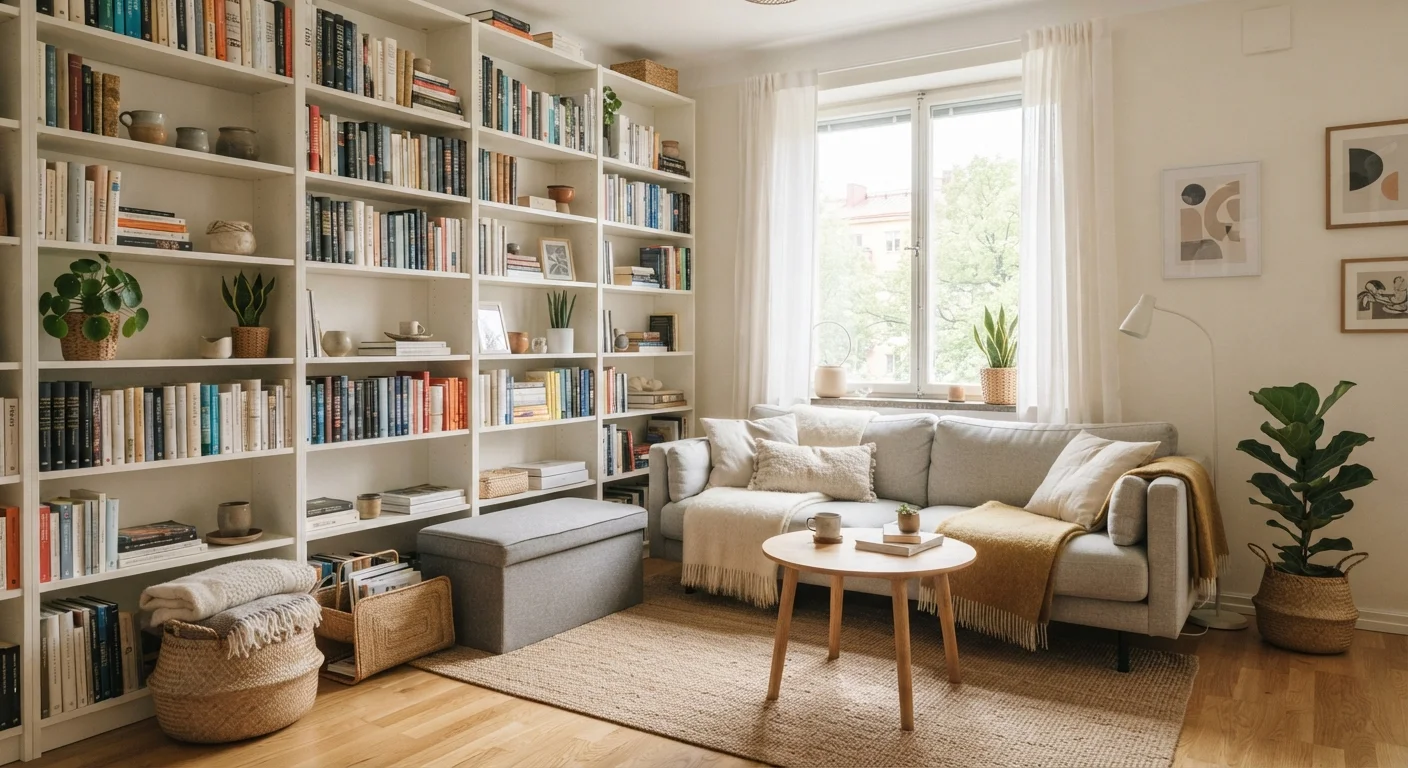
Vertical storage — bookcases, floor-to-ceiling shelving units, wall-mounted cabinets, pegboards, and stacked drawer towers — earns its place in small rooms by leaving the floor largely unoccupied. That open floor area makes a room feel less congested and easier to clean. It also preserves flexibility: a clear floor can serve multiple purposes throughout the day.
The practical limits matter. Items stored above shoulder height require a step stool or ladder to access safely, which makes vertical storage better suited for things you use infrequently — seasonal items, archival documents, extra linens. Storing everyday essentials at ceiling height creates friction in daily routines.
Wall anchoring is non-negotiable for tall freestanding units. Any bookcase or shelving tower that extends above roughly 30 inches should be secured to wall studs with the appropriate hardware. This is a safety requirement — unsecured tall furniture poses a serious tip-over risk, particularly in homes with children. Always follow manufacturer guidance and, if in doubt, consult a handyperson or contractor.
~30"
Height at which anchoring becomes critical
Consumer product safety guidance generally recommends anchoring freestanding furniture that exceeds approximately 30 inches in height to prevent tip-overs.
2–3×
Storage capacity gain with floor-to-ceiling shelving
Going from a standard 72-inch bookcase to a full 96-inch floor-to-ceiling unit can roughly double or triple usable shelf area depending on shelf spacing.
For a closer look at one popular vertical option, Open Shelving in the Home: The Trade-Offs Worth Knowing walks through the daily maintenance reality of open shelves versus closed cabinetry.
The Case for Staying Low
Floor-level storage — under-bed drawers, storage ottomans, low sideboards, and baskets — keeps items accessible to everyone in the household without requiring reaching or climbing. That matters significantly in homes with young children, older adults, or anyone with mobility limitations.
Visually, low storage can either help or hinder a small room. Furniture that sits close to the floor and has visible legs tends to make a room feel airier, because sightlines travel further before hitting a solid mass. Bulky, closed-front low cabinets without legs, on the other hand, can make a room feel heavier and more cramped — especially when lined along multiple walls.
Low storage also risks consuming floor area that might otherwise serve circulation or dual-purpose use. A storage ottoman in a living room works well if it serves as seating and a surface too; a row of bins along a hallway wall may not.
Low Furniture With Legs: A Visual Trick
Choosing low storage pieces with exposed legs rather than solid bases helps preserve the visual impression of floor space. The gap between the furniture base and the floor allows sightlines to continue, making the room feel less enclosed. This effect is especially useful in living rooms and bedrooms where square footage is limited.
If your home has underused zones — behind doors, under stairs, or above cabinets — Storage Solutions for Under-Utilized Home Zones offers practical guidance on putting those pockets to work.
Combining Both Approaches Thoughtfully
Most well-organized small homes use a layered strategy: vertical storage handles infrequently accessed and bulkier items, while floor-level options keep daily-use items within easy reach. The key is intentionality — deciding which category each zone serves rather than filling available space reactively.
A practical starting point is to sort items by frequency of use. Things you reach for daily belong between knee and shoulder height. Items you access weekly can go slightly higher or lower. Seasonal and archival items are candidates for high shelves or deep under-bed drawers.
In shared households, storage strategy also needs to account for differing habits and physical abilities. Shared Spaces, Different Standards explores how to design systems that work for multiple people with different organizational tendencies.
Above all, avoid measuring storage success by how much you can fit in. A small home with thoughtfully distributed, accessible storage will function better than one where every cubic inch is packed but nothing is easy to reach or put back.