

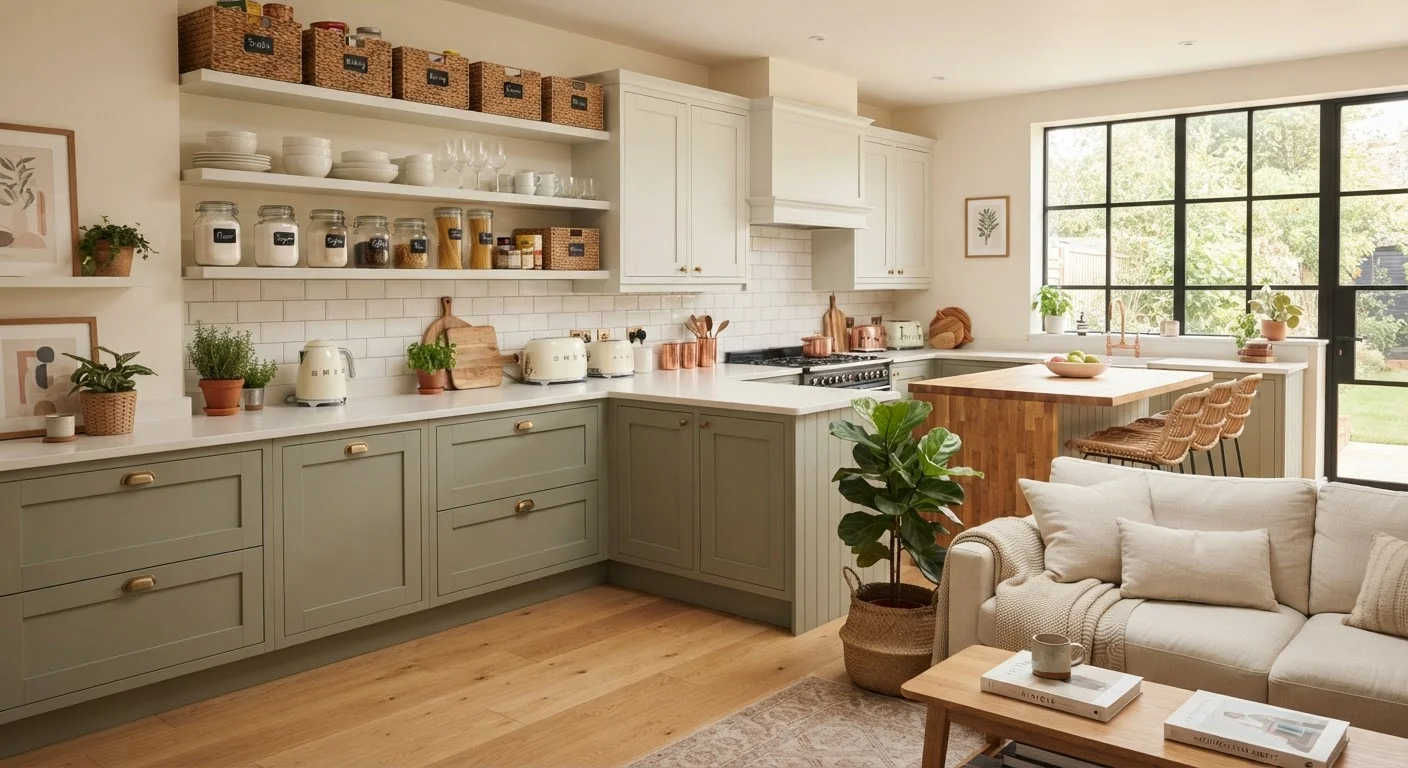
| Best for hiding clutter | Drawers |
| Best for frequent grab-and-go access | Open shelves |
| Best for bulky or grouped items | Bins and baskets |
| Most dust-resistant format | Closed drawers and cabinets |
| Most child-accessible format | Wide-mouth labeled bins at low height |
Why Storage Format Matters More Than Storage Quantity
Most organization problems aren't caused by too little storage — they're caused by the wrong kind of storage for how a space is actually used. A drawer you have to open and close twelve times a day becomes a friction point. Open shelving in a dusty garage becomes a maintenance burden. Bins in a bedroom closet that everyone digs through end up in a permanent state of disorder.
Choosing a storage format is really a question of matching the container to the behavior. Before adding any new storage, it helps to ask: How often is this item accessed? Does it need to be visible or hidden? Who else in the household uses this space? The answers point toward the right format more reliably than any trend or aesthetic preference.
For a deeper look at how organization habits vary by household, see managing shared spaces with different standards.
| Best for hiding clutter | Drawers |
| Best for frequent grab-and-go access | Open shelves |
| Best for bulky or grouped items | Bins and baskets |
| Most dust-resistant format | Closed drawers and cabinets |
| Most child-accessible format | Wide-mouth labeled bins at low height |
Drawers: Best for Small, Frequently Used Items
Drawers excel at concealing clutter while keeping items within arm's reach. They're the right format when items are small, irregularly shaped, or visually noisy — think utensils, socks, stationery, and cosmetics. Because drawers keep contents out of sight, they also reduce visual fatigue in rooms where you spend a lot of time.
The catch: drawers reward organization at setup but punish neglect. Without dividers or intentional grouping, they become jumbled quickly. They also work poorly for bulky or tall items, which don't stack efficiently in a shallow space.
Where Drawers Work Well
- Kitchen: Utensils, measuring tools, small gadgets
- Bedroom: Folded clothing, accessories, bedside essentials
- Home office: Pens, paper clips, chargers, sticky notes
- Bathroom vanity: Cosmetics, grooming tools, first-aid items
Open shelving
Storage shelves without doors or enclosures, leaving contents fully visible. They offer fast access but require consistent tidying and accumulate dust more readily than closed storage.
Closed shelving
Shelves housed behind cabinet doors or panels, hiding contents from view. They provide the retrieval speed of a shelf while reducing visual clutter and protecting items from dust.
Storage format
The physical type of container or structure used to hold items — such as a drawer, shelf, bin, basket, or hook. Choosing the right format depends on how often items are accessed and whether visibility is desirable.
Bin labeling
The practice of attaching a written or printed label to a storage bin to identify its contents. Labeling maintains organization over time, especially in high-use zones or shared spaces.
Shelves: Best for Items You Want to See and Reach
Shelving — open or closed — suits items that are accessed frequently and benefit from visibility. Books, pantry staples, folded towels, and decorative objects all make natural candidates. The key advantage of a shelf is speed: you can scan, grab, and return an item without opening anything.
Open shelves in particular create accountability. Because everything is visible, they require consistent tidying to look intentional rather than chaotic. Open shelving involves real trade-offs in terms of upkeep, especially in kitchens and bathrooms where grease and moisture accumulate. Closed shelving behind cabinet doors gives you the retrieval speed of a shelf with the visual calm of hidden storage.
Where Shelves Work Well
- Kitchen pantry: Canned goods, dry staples, boxed items
- Living room: Books, media, display objects
- Laundry room: Detergents, folded linens
- Garage: Closed shelving for tools, equipment bins
Bins and Baskets: Best for Grouping Loose or Bulky Items
Bins and baskets occupy a middle ground: they contain without confining. They're ideal for items that don't have a fixed shape or size, things that are used as a group rather than individually, or anything that gets grabbed and moved frequently — like toys, sports gear, craft supplies, or seasonal accessories.
The flexibility of bins makes them well-suited to households with children, who are more likely to toss items in the right direction when the target is a wide-open container rather than a specific drawer or slot. Labeled bins on low shelves can make tidying genuinely accessible for young children.
1 in 4
Households cite lack of accessible storage as a top clutter cause
Research from organizational behavior studies suggests that storage inaccessibility — not insufficient quantity — is a leading driver of household clutter.
3×
More likely to return items when storage is visible and open
Behavioral studies on habit formation indicate that low-friction, visible storage locations significantly increase the likelihood of consistent item return.
Bins also adapt well to irregular spaces. Under-utilized zones like under-stair cubbies or cabinet tops often fit bins better than built-in drawers. The main limitation is depth: large bins get disorganized at the bottom, so sizing down and labeling clearly keeps them functional.
Where Bins Work Well
- Entryway: Shoes, umbrellas, dog leashes, seasonal gear
- Children's rooms: Toys sorted by type or size
- Linen closet: Extra blankets, spare pillows
- Mudroom or garage: Sports equipment, garden tools, reusable bags
Room-by-Room Format Guide
No single format dominates a well-organized home — most rooms benefit from a layered approach. The table below summarizes how to think about format selection by room and item type.
| Room | Preferred Format | Why |
|---|---|---|
| Kitchen | Drawers + closed shelves | Fast access, conceals visual clutter |
| Bedroom | Drawers + bins for extras | Clothing needs folding; overflow needs flexibility |
| Living room | Open or closed shelves | Display items and books need visibility |
| Bathroom | Drawers + small bins | Cosmetics need containment; grease rules out open shelves |
| Garage | Closed shelves + large bins | Dust and bulk require durable, sealed storage |
| Entryway | Bins + hooks | High-turnover items need low-friction access |
If your home is short on floor space, the format question connects directly to vertical planning. Rethinking vertical versus floor-level storage can unlock significant capacity without adding furniture. For a broader look at organization frameworks that inform how you sort before you store, see home organization methods compared.