

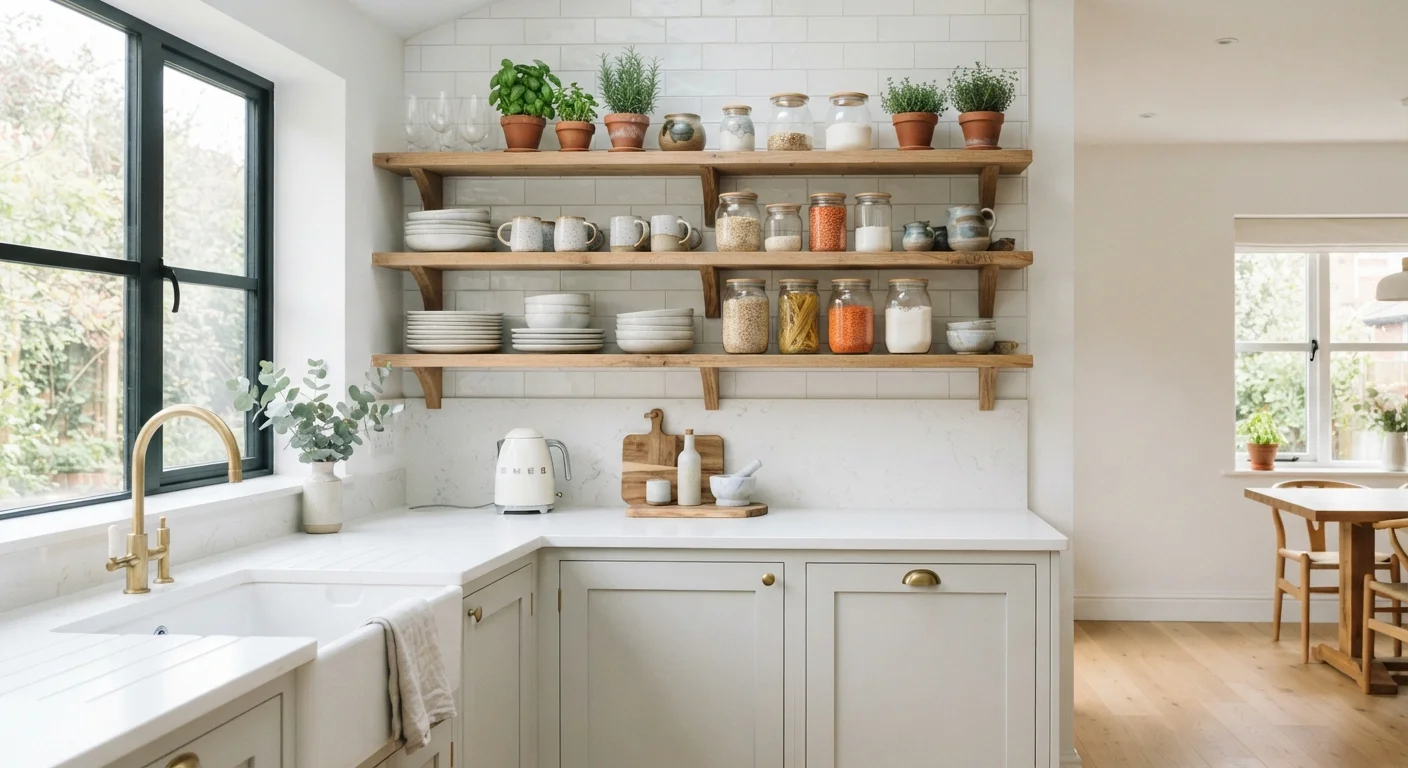
Key Takeaways
- Open shelving creates a sense of spaciousness and makes frequently used items immediately accessible.
- Exposed storage collects dust faster than closed cabinets, requiring more frequent cleaning.
- The visual impact of open shelves depends heavily on how well items are curated and maintained.
- Open shelving works best in rooms where contents stay consistent and clutter is actively managed.
- Households with shared spaces or mixed organization habits may find open shelving harder to sustain.
Items are immediately visible and accessible
Frequently used objects — dishes, books, pantry staples — can be grabbed without opening doors or rummaging through stacked containers. This reduces friction in daily routines.
Creates a sense of visual openness in a room
Without solid cabinet fronts interrupting sightlines, rooms often feel more spacious and lighter, particularly in smaller kitchens or narrow spaces.
Encourages deliberate curation of belongings
Knowing that shelved items are always on display motivates many homeowners to edit down to what they actually use and value, reducing gradual accumulation.
Generally less expensive than full cabinetry
Open shelves typically require fewer materials and less complex installation than door-and-hinge cabinet systems, which can lower upfront costs for a renovation.
Flexible and easy to reconfigure
Adjustable bracket systems make it straightforward to change shelf heights or remove shelving entirely as needs shift, without the commitment of built-in joinery.
Dust and grease accumulate on exposed items
Open shelves require more frequent cleaning than closed storage. In kitchens, cooking vapors coat shelved objects in a greasy film that periodic wiping must address.
Clutter becomes immediately visible
Disorganization on an open shelf affects the entire room's appearance. There is no door to close on a bad week, which can create persistent visual stress.
Demands consistent maintenance to look intentional
The styled, editorial look associated with open shelving requires ongoing editing of what's displayed. Without regular attention, shelves can drift toward disorder quickly.
Not suited to all storage categories
Cleaning supplies, medications, and items with inconsistent packaging rarely benefit from open display. These categories typically look and function better behind closed doors.
Harder to sustain in shared or high-traffic households
When multiple people use a space with different tidying habits, open shelving can become a point of friction rather than a functional system everyone maintains.
Our Verdict
Open shelving delivers genuine visual appeal and functional convenience, particularly in kitchens, living rooms, and home offices where items are used regularly and owners are committed to maintaining order. However, it magnifies clutter, accumulates dust, and puts organizational habits on full display. It's a system that rewards consistency rather than forgiving occasional lapses.
Best suited to homeowners who regularly edit their belongings, enjoy curated displays, and are realistic about the cleaning and organization habits the style demands.
What Open Shelving Actually Means for Your Home
Open shelving — storage without doors or drawer fronts — has become a fixture in modern interior design, particularly in kitchens, home offices, and living areas. Its appeal is straightforward: items are visible, accessible, and can double as décor. But the same quality that makes open shelving attractive is also what makes it demanding. Everything on display is always on display.
Unlike closed cabinetry, which contains visual noise behind a uniform face, open shelving makes the state of your storage the state of your room. That trade-off is worth understanding clearly before committing, whether you're planning a renovation or simply reassessing your current setup. See our guide to matching storage formats to each room for a broader look at how different storage types fit different spaces.
Items are immediately visible and accessible
Frequently used objects — dishes, books, pantry staples — can be grabbed without opening doors or rummaging through stacked containers. This reduces friction in daily routines.
Creates a sense of visual openness in a room
Without solid cabinet fronts interrupting sightlines, rooms often feel more spacious and lighter, particularly in smaller kitchens or narrow spaces.
Encourages deliberate curation of belongings
Knowing that shelved items are always on display motivates many homeowners to edit down to what they actually use and value, reducing gradual accumulation.
Generally less expensive than full cabinetry
Open shelves typically require fewer materials and less complex installation than door-and-hinge cabinet systems, which can lower upfront costs for a renovation.
Flexible and easy to reconfigure
Adjustable bracket systems make it straightforward to change shelf heights or remove shelving entirely as needs shift, without the commitment of built-in joinery.
The Real Disadvantages to Weigh
Open shelving's drawbacks are less about aesthetics and more about the ongoing effort required to keep the system functional. Dust settles on exposed surfaces and on the items themselves — dishes, books, jars, and decorative objects all accumulate grime that closed cabinets would otherwise intercept. In kitchens especially, cooking grease and steam can coat shelved items in a film that requires more than a quick wipe to remove.
There's also the visibility factor working against you. A single chaotic shelf can make an entire room feel disorganized, which places a higher cognitive load on anyone sharing the space. This matters particularly in households where different people have different tidying habits. If that dynamic sounds familiar, the strategies in organizing a home when everyone has different habits are worth reviewing before committing to an open system.
Dust and grease accumulate on exposed items
Open shelves require more frequent cleaning than closed storage. In kitchens, cooking vapors coat shelved objects in a greasy film that periodic wiping must address.
Clutter becomes immediately visible
Disorganization on an open shelf affects the entire room's appearance. There is no door to close on a bad week, which can create persistent visual stress.
Demands consistent maintenance to look intentional
The styled, editorial look associated with open shelving requires ongoing editing of what's displayed. Without regular attention, shelves can drift toward disorder quickly.
Not suited to all storage categories
Cleaning supplies, medications, and items with inconsistent packaging rarely benefit from open display. These categories typically look and function better behind closed doors.
Harder to sustain in shared or high-traffic households
When multiple people use a space with different tidying habits, open shelving can become a point of friction rather than a functional system everyone maintains.
Where Open Shelving Tends to Work — and Where It Struggles
Context matters considerably. Open shelving tends to succeed in spaces where the items stored are used frequently enough that they don't sit long enough to gather dust, and where the owner actively curates what stays on display. A living room shelf holding a rotating selection of books and a few objects can look intentional and calm. The same approach applied to a pantry stocked with mismatched packaging tends to read as cluttered within days.
Rooms with high humidity — bathrooms in particular — create additional challenges: moisture can damage shelved items and encourage mildew on the shelf surface itself. In smaller homes where storage is at a premium, weighing vertical against floor-level storage becomes especially relevant, since open shelving uses vertical space efficiently but may not conceal items that benefit from being out of sight.
~30%
Of renovation budgets spent on cabinetry
Kitchen cabinetry is consistently cited among the largest single cost categories in kitchen renovations, making alternatives like open shelving an appealing budget consideration.
2–3×
More frequent cleaning vs. closed cabinets
Interior design and cleaning professionals commonly note that open shelves in active kitchens require dusting and wiping significantly more often than enclosed storage.
If you're drawn to the idea of open storage but uncertain about full commitment, a hybrid approach — open shelves for display-worthy or frequently used items, closed storage for everything else — often proves more sustainable. For ideas on where that closed storage might live, storage solutions for under-utilized home zones covers overlooked spaces that can absorb the overflow.
A Note on Rental and Temporary Setups
If you're renting or want a reversible option, freestanding shelving units offer most of the visual and functional benefits of open shelving without wall modifications. They can be repositioned or removed without affecting the property, and many systems are available with adjustable shelves. Always check your lease terms before making any wall-mounted installations.
Making an Honest Assessment Before You Install
Before removing cabinet doors or investing in new open shelving units, it's worth auditing your current habits rather than the habits you intend to adopt. Do the surfaces in your home tend to accumulate items? Is the kitchen counter regularly clear, or does it collect mail and miscellaneous objects? These patterns predict how open shelving will function in practice.
It also helps to consider what you actually plan to store. A shelf of uniform containers, matching mugs, or a curated book collection is a different proposition from a shelf holding whatever doesn't fit elsewhere. Organization frameworks that emphasize intentional placement — explored in our comparison of home organization methods — pair naturally with open shelving, since both require a deliberate relationship with possessions. Open shelving, at its best, is a system that reflects organization rather than creating it.