

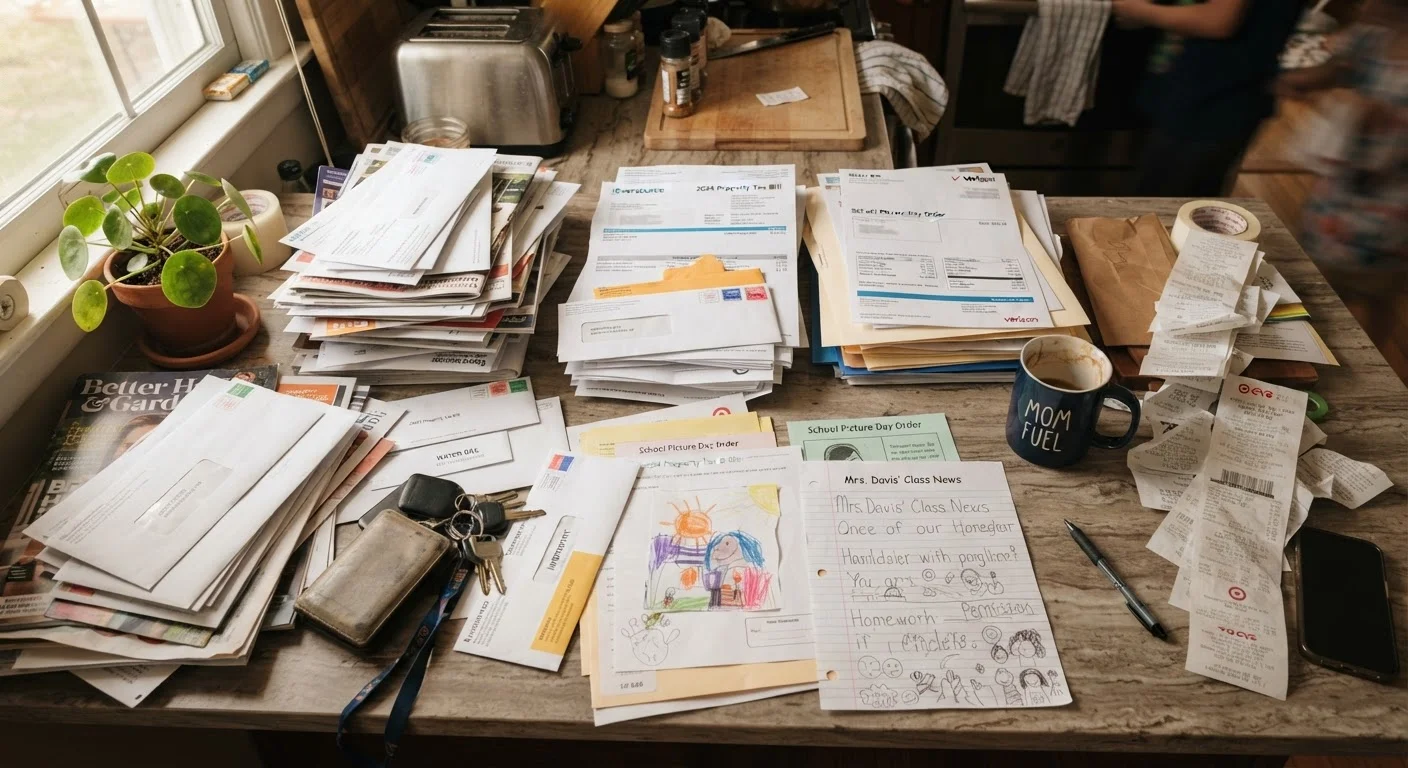
Key Takeaways
- Paper clutter returns because most households lack a consistent intake-and-action system.
- Keeping papers 'just in case' is one of the biggest drivers of ongoing accumulation.
- Switching to digital statements and records eliminates a significant portion of incoming paper.
- A weekly five-minute paper sort prevents small piles from becoming overwhelming backlogs.
Why Paper Clutter Is Different From Other Clutter
Unlike a forgotten toy or an unused kitchen gadget, paper arrives constantly — through the mail slot, in your child's backpack, from your workplace, and stuffed into shopping bags. Most household objects stay put until you move them. Paper, by contrast, regenerates daily.
The result is that paper clutter is less a one-time mess and more an ongoing management problem. Clearing a pile once doesn't fix the system — or the lack of one. Understanding why paper keeps accumulating is the first step toward stopping it at the source. As research broadly suggests, even low-level clutter creates background mental noise that compounds over time.
Treating paper as 'homeless' — setting it down without a designated landing zone.
Why it happens: Most homes have no defined inbox for incoming paper, so flat surfaces become default drop zones by habit.
Keeping documents indefinitely 'just in case' they're needed someday.
Why it happens: Uncertainty about what to discard, combined with a low effort to keep, makes retention feel like the safe default.
Filing and clearing in one overwhelming session rather than processing paper regularly.
Why it happens: People wait until the pile is unmanageable before addressing it, which makes the task feel daunting and easy to keep postponing.
Continuing to receive paper statements and catalogs that could be switched to digital.
Why it happens: Changing delivery preferences takes a small upfront effort, so most people never get around to it even though they prefer less paper.
Creating an overly complex filing system with too many categories.
Why it happens: People assume a more granular system will be more effective, but complex systems require more effort to use and are quickly abandoned.
Breaking the Cycle for Good
Most people treat paper clutter as a tidying problem when it's actually a decision-making problem. Each piece of paper that lands in your home requires a micro-decision: act on it, file it, or discard it. When those decisions get deferred, piles form. When piles form, the task feels bigger, which leads to more deferral.
80%
Papers filed but never referenced again
Organizational research frequently cites estimates suggesting the vast majority of filed papers are never looked at again, pointing to over-retention as a core problem.
~28 min
Daily time lost searching for misplaced items
Studies on workplace productivity suggest people spend significant time each day searching for misplaced documents and items, a pattern that carries into home environments.
The practical fix is a simple weekly ritual — often called a "paper sort" — where you spend five to ten minutes processing everything that has come in. Pair this with a deliberate effort to reduce incoming paper: opt out of paper billing, unsubscribe from catalogs, and register with the DMA's mail preference services to reduce unsolicited mail. For guidance on which financial records genuinely need to be kept on paper versus digitally, explore different approaches to tracking your finances.
The goal isn't a perfectly empty inbox — it's a system that handles the flow automatically rather than relying on motivation. Habits, not one-time purges, are what keep organized spaces organized. And if you find yourself holding onto certain papers for emotional rather than practical reasons, the strategies explored in dealing with sentimental clutter may also apply. Finally, it's worth questioning whether some popular filing advice is actually helping — several common organization myths actively make paper management harder.
Don't Shred Before You're Sure
Before discarding any financial, legal, or medical document, verify the recommended retention period from an authoritative source such as the IRS website or your state attorney general's office. Shredding tax records too early, for example, can create problems during an audit. When in doubt, scan a digital copy before discarding the original.