

Key Takeaways
- Sentimental clutter is driven by emotional attachment, not practicality, which is why standard decluttering rules often fail here.
- Inherited items, childhood keepsakes, and gifts from loved ones are the most commonly difficult categories to address.
- Keeping an item does not require displaying it — storage with intention is a legitimate choice.
- Photographing, repurposing, or sharing items with others can honor memory without requiring you to keep the physical object.
- Decision fatigue is real: working through sentimental items in short, focused sessions reduces overwhelm.
- Letting go of an object does not erase the memory or relationship it represents.
Sentimental Clutter
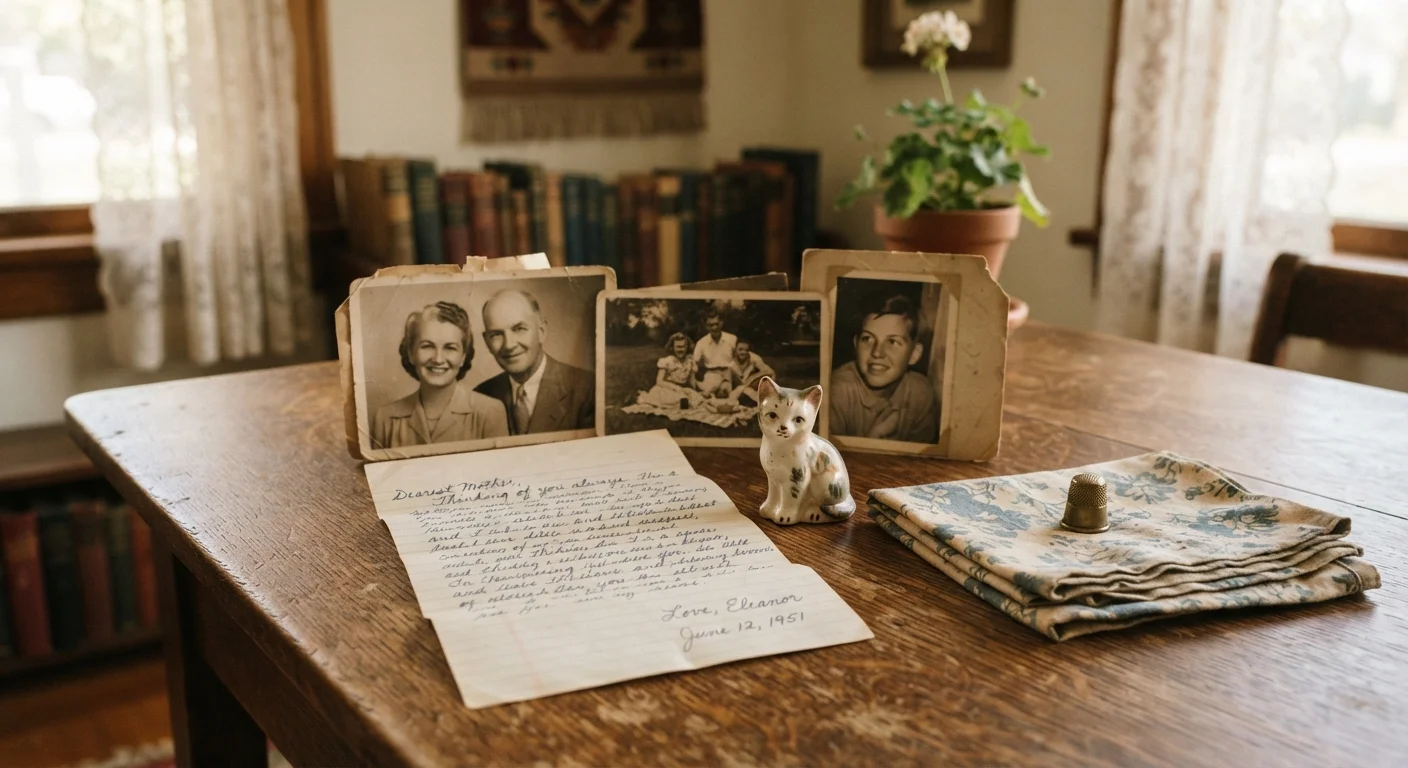
Sentimental clutter refers to objects you keep not because they serve a practical function, but because of the emotional meaning attached to them — often connected to a person, relationship, or period of life. Unlike broken appliances or expired pantry items, these objects resist the usual decluttering logic of usefulness. They tend to accumulate quietly over years, occupying both physical space and mental energy.
In behavioral psychology, attachment to meaningful objects is sometimes linked to the concept of 'extended self' — the idea that possessions can become part of how people define their identity and relationships.
Why Sentimental Items Are Different
Most decluttering advice works on a simple premise: keep what you use, remove what you don't. That logic works well for duplicate kitchen utensils or clothes that no longer fit. It breaks down almost immediately when you open a box of your grandmother's costume jewelry or your child's first drawings.
Sentimental objects are not just things — they are proxies for people, moments, and versions of ourselves we don't want to forget. Deciding whether to keep them triggers a different kind of thinking: not is this useful? but what does letting this go mean about who I am and what I value?
That shift is why people who can efficiently clear an entire closet in an afternoon may spend weeks unable to sort through a single inherited box. Understanding this distinction is the first step toward making progress without forcing yourself through a process that feels emotionally dishonest.
Sentimental Clutter Is Not a Character Flaw
Holding onto meaningful objects is a deeply human response — not a sign of disorganization or weakness. The challenge isn't that you care too much; it's that most decluttering frameworks aren't designed with emotional complexity in mind. Approaching this category with patience rather than judgment tends to produce better outcomes than forcing yourself to apply rules that weren't built for it.
The Most Common Categories — and What Makes Each Hard
Sentimental clutter tends to cluster in predictable categories. Recognizing which type you're dealing with helps you choose the right approach.
Inherited Items
Objects that belonged to someone who has passed often carry a layer of grief on top of the attachment. Keeping them can feel like an act of loyalty; letting them go can feel like a second loss. This is compounded when siblings or family members have different feelings about what should stay or go.
Childhood Keepsakes
Trophies, report cards, handmade gifts, old toys — these are artifacts of a self that no longer exists in the same form. Parents often face this twice: once with their own childhood belongings and again with their children's. The sheer volume can be staggering, making any individual decision feel impossible.
Gifts from Living People
An unwanted gift from a living friend or family member carries social weight that inherited items don't. There's an implicit fear that getting rid of it signals ingratitude or disrespect — even if the giver has long forgotten they gave it. This is one of the most guilt-driven categories in home organization.
Relationship Artifacts
Letters, photographs, mementos from ended relationships — romantic or otherwise — can be emotionally complex to revisit, let alone discard. They may represent happiness, loss, or both simultaneously.
Start with the Easiest Sentimental Items First
Within sentimental categories, there's still a spectrum of difficulty. Begin with items that feel meaningful but not deeply personal — a holiday decoration you've never loved, a gift from a distant acquaintance — before working toward the most charged objects like a parent's belongings or childhood keepsakes. Building momentum on easier decisions makes the harder ones feel less insurmountable.
Practical Strategies That Respect the Emotion
There is no universal rule for sentimental items. But several approaches make the process more manageable without requiring you to suppress what you're feeling.
Set a Container Limit
Decide in advance how much space your sentimental collection will occupy — one shelf, one box, one drawer — and curate down to that. This reframes the question from should I keep this? to is this among the most meaningful things I own? A boundary makes individual decisions feel less final.
Photograph Before Releasing
A high-resolution photo of a beloved object, stored in a dedicated digital folder, can serve as a memory anchor without consuming physical space. This works especially well for bulky items — a childhood bicycle, a piece of inherited furniture — where the image carries the meaning more than the object itself.
Repurpose or Pass On with Intention
A meaningful fabric can be sewn into a quilt. A grandmother's china can go to a family member who will actually use it. Giving an item a new life — or a new home where it will be valued — often feels more honoring than letting it deteriorate in storage.
Work in Short Sessions
Decision fatigue is a genuine obstacle when every choice carries emotional weight. Thirty-minute sessions with clear stopping points are more productive than marathon attempts that end in exhaustion and nothing decided. For a structured approach to sequencing these efforts across your home, see our room-by-room decluttering guide.
80%
Items kept out of guilt, not use
Research in consumer behavior suggests a significant majority of sentimental objects are retained primarily due to guilt or obligation rather than active use or enjoyment.
3 in 4
Adults report difficulty decluttering inherited items
Surveys on home organization consistently find that inherited belongings are among the most emotionally difficult categories for adults to sort through.
30 min
Recommended session length for emotional decluttering
Organization practitioners frequently cite short, time-limited sessions as more effective than extended attempts when working through emotionally weighted decisions.
When Keeping Is the Right Answer
Not every sentimental item needs to be released. A home that holds meaningful objects — displayed thoughtfully or stored with care — is not a cluttered home by default. The distinction lies in intention: are you keeping something because it genuinely matters to you, or because you haven't yet given yourself permission to let it go?
If guilt is the primary reason an item stays, that's worth examining. Guilt is rarely a sustainable foundation for a home organization system. On the other hand, if an object brings comfort, sparks a genuine memory, or connects you to someone important, keeping it is simply good stewardship of your own emotional life.
For readers building organization systems from the ground up, our guide on organizing a home from scratch offers a useful framework for deciding what to prioritize before sentimental sorting even begins. And if you've encountered advice that made this process feel harder than it should be, common organization myths worth questioning are worth reviewing before you start.
The goal is a home that reflects who you actually are — not a staged version of minimalism, and not a warehouse of obligation. Getting there takes time, and that's not a failure. It's the honest work of living in a meaningful space.