

| N-P-K order | Always nitrogen, then phosphorus, then potassium |
| What the numbers represent | Percentage by weight of each nutrient in the bag |
| Regulatory body | State departments of agriculture (varies by state) |
| Best tool for choosing a ratio | Soil test from a university extension service |
| Phosphorus form on label | Expressed as available phosphate (P₂O₅) |
| Potassium form on label | Expressed as soluble potash (K₂O) |
What the Three Numbers Actually Mean
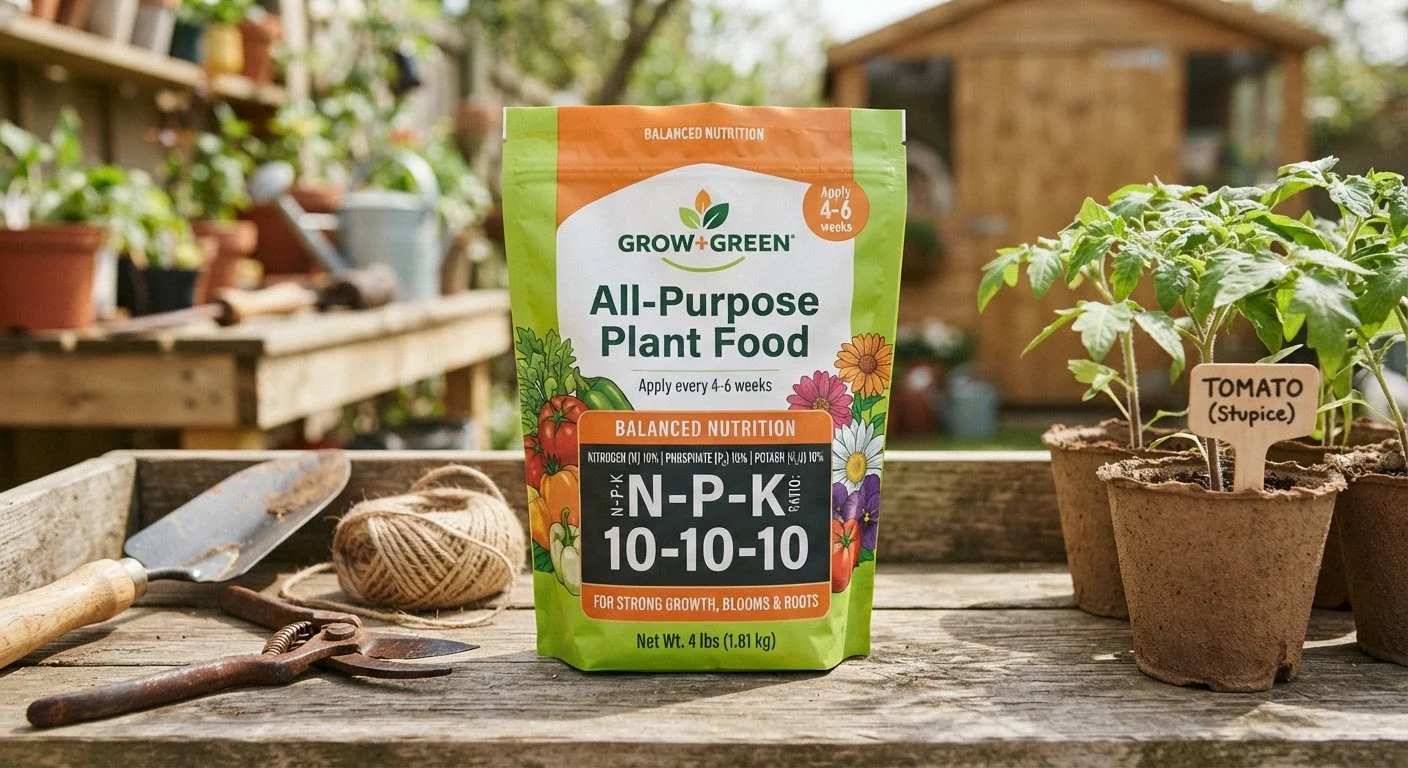
Every fertiliser sold in the US displays three numbers on its label — something like 10-10-10 or 5-10-5. These represent the percentage by weight of three primary nutrients: nitrogen (N), phosphorus (P), and potassium (K), always listed in that order. A bag labeled 10-10-10 contains 10% nitrogen, 10% phosphorus (as phosphate, P₂O₅), and 10% potassium (as potash, K₂O). The remaining weight is filler material and secondary nutrients.
These numbers are regulated by state agricultural departments, so the analysis printed on the bag is a guaranteed minimum — not a marketing estimate. Understanding them helps you match the fertiliser to what your plants and soil actually need, rather than guessing at the garden center.
| N-P-K order | Always nitrogen, then phosphorus, then potassium |
| What the numbers represent | Percentage by weight of each nutrient in the bag |
| Regulatory body | State departments of agriculture (varies by state) |
| Best tool for choosing a ratio | Soil test from a university extension service |
| Phosphorus form on label | Expressed as available phosphate (P₂O₅) |
| Potassium form on label | Expressed as soluble potash (K₂O) |
For a deeper dive into how soil composition affects nutrient uptake, see our guide to garden soil types.
What Each Nutrient Does
Knowing the role of each macronutrient helps you read the ratio with purpose rather than picking numbers at random.
N-P-K
The three-number ratio on fertiliser labels representing the percentage by weight of nitrogen, phosphorus, and potassium. These are the three primary macronutrients plants need in the largest quantities.
Guaranteed Analysis
The regulated section of a fertiliser label that states the minimum percentages of each nutrient. These values are legally enforceable minimums verified by state agricultural authorities.
Slow-Release Fertiliser
A fertiliser formulated to break down gradually over weeks or months, delivering nutrients steadily rather than all at once. It reduces the risk of plant burn and nutrient runoff.
Micronutrients
Nutrients plants need in very small amounts, such as iron, zinc, manganese, and boron. Deficiencies can cause specific symptoms but are less common than primary macronutrient shortfalls.
Soil Test
A laboratory analysis of a soil sample that reveals existing nutrient levels and pH. It helps gardeners choose the right fertiliser type and ratio for their specific conditions.
Chlorosis
A condition in which plant leaves turn yellow while the veins remain green, often indicating an iron or other micronutrient deficiency. It can also result from pH imbalance affecting nutrient availability.
Nitrogen (N) drives leafy, vegetative growth. It's the nutrient most responsible for the rich green color of grass and foliage. Lawns, leafy vegetables like spinach and lettuce, and established trees benefit most from higher nitrogen ratios.
Phosphorus (P) supports root development, flowering, and fruiting. Young transplants and bulbs benefit from phosphorus-rich formulas because strong root establishment is the priority early in a plant's life. Tomatoes and roses, for example, are often fed with higher-phosphorus fertilisers during bloom.
Potassium (K) strengthens overall plant resilience — it helps regulate water use, supports disease resistance, and improves the quality of fruit and vegetables. It works best when the other two nutrients are in balance.
How to Match the Ratio to Your Situation
There is no single "correct" N-P-K ratio for every garden. The right choice depends on what you're growing, the stage of growth, and what your soil already contains.
3
Primary macronutrients in every fertiliser ratio
Nitrogen, phosphorus, and potassium are universally required by plants and regulated on all fertiliser labels sold in the US.
~50%
Typical filler content in a granular fertiliser bag
A 10-10-10 fertiliser contains 30% active nutrients by weight; the balance is carrier material that aids even distribution.
- Established lawns: A high-nitrogen formula (such as 30-0-4 or 28-3-10) encourages dense, green turf. Avoid excess phosphorus on lawns unless a soil test has confirmed a deficiency.
- Vegetable gardens: A balanced ratio like 10-10-10 works as a general-purpose starting point. Boost phosphorus and potassium at flowering and fruiting stages.
- Flowering plants and bulbs: A formula with higher middle numbers (e.g., 5-10-5) encourages blooming.
- Seedlings and transplants: Low-nitrogen, higher-phosphorus mixes support root establishment without pushing premature top growth.
- Acid-loving plants (blueberries, azaleas): Look for fertilisers formulated specifically for them — pH affects nutrient availability as much as the ratio itself.
A soil test, available through most university extension services, tells you what your soil already has. This prevents over-application, which can damage plants and run off into waterways. For more on how fertiliser type affects soil health over time, see our comparison of organic and synthetic fertilisers.
Always Start with a Soil Test
Applying fertiliser without knowing your soil's existing nutrient levels can waste money and potentially harm plants. Most US cooperative extension services offer inexpensive soil testing kits or mail-in services. A soil test takes the guesswork out of ratio selection and can also flag pH problems that prevent nutrient absorption regardless of what you apply.
What Else Is on the Label
Beyond the N-P-K numbers, fertiliser labels include additional information worth scanning before you use a product.
- Secondary nutrients: Calcium, magnesium, and sulfur may be listed below the guaranteed analysis. These are important for specific crops — calcium for tomatoes, magnesium for peppers and roses.
- Micronutrients: Iron, zinc, manganese, and boron appear in trace amounts. Deficiencies are less common but can cause distinct symptoms like yellowing between leaf veins (chlorosis).
- Application rate and timing: Labels specify how much to apply per square foot or gallon of water, and how frequently. Following these instructions matters — more is not better with fertiliser, and over-application can burn plants or leach into groundwater.
- Release type: "Slow-release" or "controlled-release" formulas feed plants gradually over weeks or months. Quick-release products act fast but require more careful dosing.
Reading a fertiliser label is a practical skill much like reading any product label. If label literacy on other products interests you, our guide to reading food nutrition labels applies many of the same analytical habits to packaged food.