

Key Takeaways
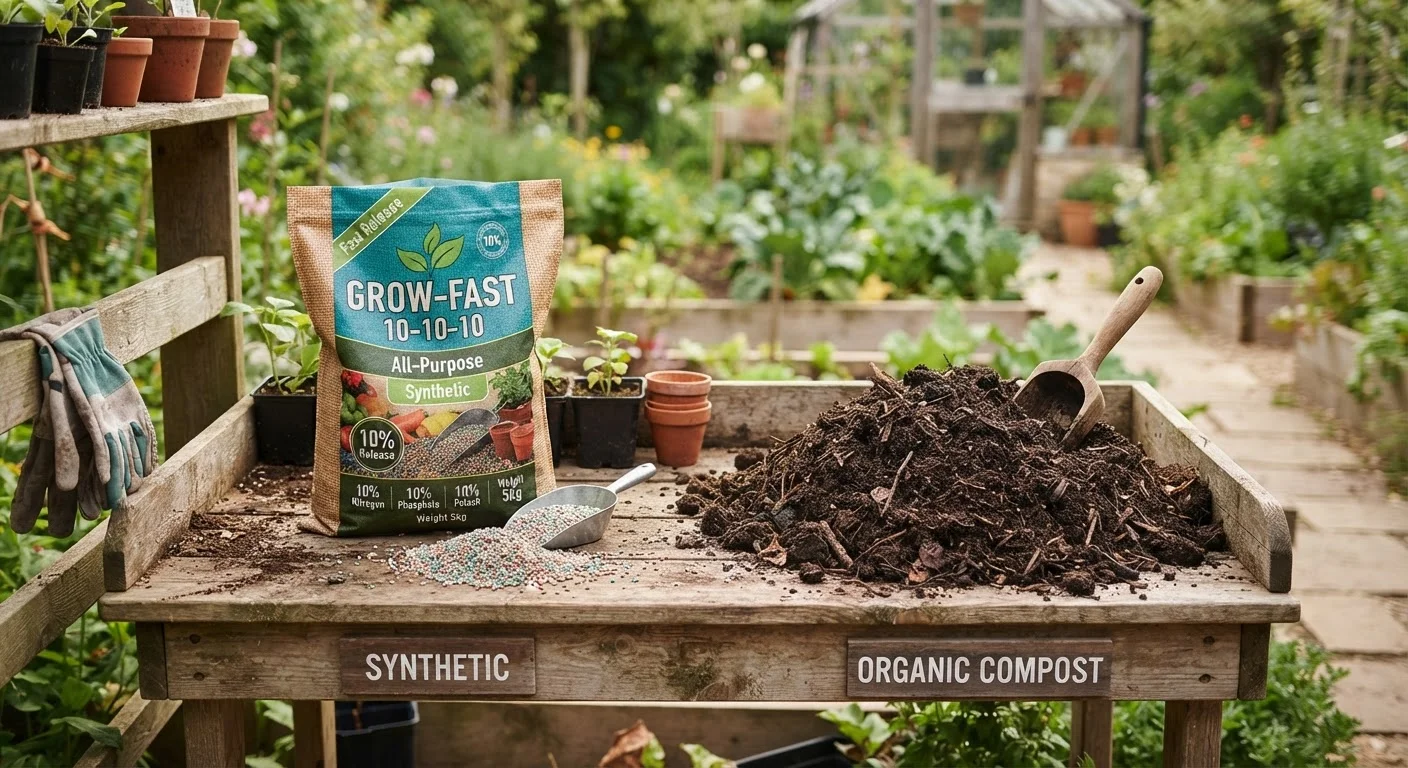
- Synthetic fertilizers deliver nutrients quickly; organic fertilizers release them slowly over time.
- Organic options improve long-term soil structure and microbial health; synthetics generally do not.
- Neither type is universally superior — the right choice depends on your soil, plants, and goals.
- Over-application of either type can harm plants and contribute to nutrient runoff.
- Understanding N-P-K ratios helps you use both types more effectively and responsibly.
Our Verdict
Synthetic fertilizers excel when plants need a rapid, targeted nutrient boost, while organic fertilizers build the soil ecosystem that supports long-term garden health. Most experienced gardeners find value in both, used strategically rather than exclusively.
| Best for | Recommended |
|---|---|
| Gardeners who need fast results or precise nutrient correction | Synthetic fertilizer |
| Those focused on building healthy, productive soil over multiple seasons | Organic fertilizer |
| Vegetable gardeners wanting a balanced, low-input approach | Organic fertilizer |
| Lawn care with visible nutrient deficiency mid-season | Synthetic fertilizer |
How Each Type Delivers Nutrients
Both organic and synthetic fertilizers supply the three macronutrients plants need most — nitrogen (N), phosphorus (P), and potassium (K) — but their delivery mechanisms are fundamentally different. Understanding those differences explains most of the practical trade-offs gardeners face.
Synthetic fertilizers are manufactured from mineral salts and chemical compounds. Nutrients are water-soluble and immediately available when dissolved in soil moisture, meaning plants can absorb them within days of application. This makes synthetics useful when a deficiency needs correcting fast.
Organic fertilizers come from natural sources — compost, bone meal, blood meal, fish emulsion, worm castings, and similar materials. Soil microorganisms must first break these materials down before plants can access the nutrients. This process is slower, often taking weeks, but it releases nutrients steadily rather than all at once. For a deeper look at how to decode the numbers on any fertilizer bag, see Reading a Fertiliser Label: What N-P-K Numbers Tell You.
Impact on Soil Health Over Time
This is where the two approaches diverge most significantly for long-term garden success.
Organic matter from compost-based fertilizers feeds the bacteria, fungi, and earthworms that create good soil structure. Over seasons, this biological activity improves drainage in clay soils, improves water retention in sandy soils, and raises cation exchange capacity — the soil's ability to hold onto nutrients rather than losing them to runoff.
Synthetic fertilizers feed the plant directly but bypass soil biology almost entirely. Repeated heavy use without organic matter additions can gradually reduce microbial diversity and, in some cases, compact soil structure. This doesn't mean synthetics are always harmful, but relying on them exclusively while neglecting organic inputs tends to make soil more dependent on continued fertilizer applications over time.
Combine Both for Seasonal Results
Many experienced gardeners use organic matter as a foundation — working compost into beds each spring — and reserve synthetic fertilizers for targeted mid-season corrections when a specific deficiency appears. This hybrid approach gets the long-term soil benefits of organics without sacrificing the responsiveness of synthetics when plants need immediate support.
If you're deciding between raised beds or in-ground planting, keep in mind that raised beds often start with purchased soil mixes that benefit especially from organic matter additions in the first few seasons.
Side-by-Side Comparison
The table below summarizes the key practical differences across the criteria most homeowners care about.
| Organic Fertilizer | Synthetic Fertilizer | |
|---|---|---|
| Nutrient release speed | Slow (weeks to months) | Fast (days) |
| Soil biology impact | Feeds and supports microbes | Minimal effect on microbes |
| Risk of over-application | Lower, but still possible | Higher; salt burn risk |
| Nutrient precision | Variable; depends on source | Precise, consistent ratios |
| Long-term soil improvement | Yes, builds structure over time | Minimal without added organic matter |
| Cost per application | Often higher upfront | Generally lower upfront |
| Ease of use | Requires timing knowledge | Straightforward; label-driven |
Common Mistakes and How to Avoid Them
Both fertilizer types are frequently misused in home gardens, sometimes with worse results than using no fertilizer at all.
More Fertilizer Is Not Always Better
Both organic and synthetic fertilizers can damage plants and contribute to nutrient runoff when over-applied. A soil test from your local cooperative extension service is the most reliable way to know what your soil actually needs before adding any fertilizer. Applying without testing means you may be correcting a problem that doesn't exist.
With synthetics, over-application is the most common problem. High salt concentrations in soil can draw moisture out of plant roots — a condition sometimes called fertilizer burn — leaving brown, crispy leaf margins. Always follow label rate instructions and measure rather than estimate.
With organics, gardeners sometimes assume that because the source is natural, more is always better. Excess nitrogen from blood meal or manure, for example, can still cause nutrient imbalances or contribute to groundwater contamination through runoff. Timing matters too: applying slow-release organics just before cold weather can mean nutrients never reach plants before the season ends.
Choosing the right starting approach for your garden connects naturally to other foundational decisions, including whether to grow from seeds or seedlings — both of which have distinct early-season nutrient needs.