

Key Takeaways
- Serving size is the foundation of every other number on the label — always check it first.
- The % Daily Value column shows how much a nutrient contributes to a 2,000-calorie reference diet.
- Nutrients to limit include saturated fat, sodium, and added sugars; prioritize fiber, vitamins, and minerals.
- The ingredient list is ordered by weight — the first few ingredients dominate the product.
- Front-of-package claims like 'natural' or 'light' are marketing language, not regulated nutrition guarantees.
What you will need
Why the Label Exists — and What It's Actually Telling You
The Nutrition Facts panel is a standardized format mandated by the U.S. Food and Drug Administration (FDA). Its purpose is to give consumers consistent, comparable data across packaged foods. The FDA updated the label format in 2016 to reflect newer nutritional science — among the most significant changes were a mandatory line for added sugars and a larger, bolder calorie display.
Before diving into any individual number, it helps to understand the label's logic: every value listed applies to one serving of the product, not necessarily the whole package. Misreading this single detail is the most common way people underestimate how much of a given nutrient — or how many calories — they're actually consuming. See our guide to nutrient density vs. calorie density for a broader framework on assessing food value.
What you will need
A Step-by-Step Walkthrough of the Label
Follow these steps the next time you pick up a packaged food. With a little practice, scanning a label takes under a minute.
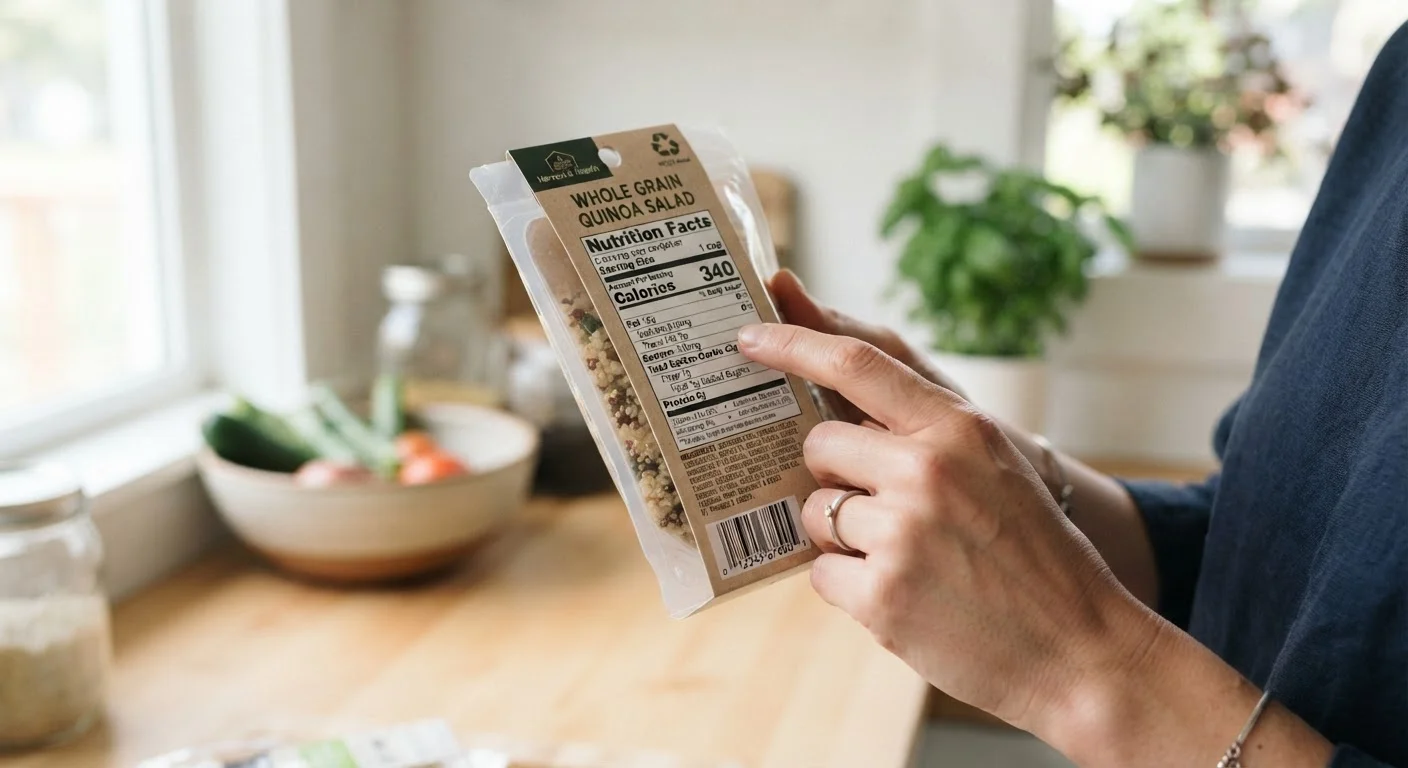
Start with serving size and servings per container
At the very top of the panel you'll find Serving Size (in familiar household units, such as cups or pieces, with the gram equivalent in parentheses) and Servings Per Container. Every number that follows is calculated for one serving. If the container holds 2.5 servings and you eat the whole thing, multiply all values by 2.5.
Check the calories
The Calories figure (displayed in large, bold type) tells you how much energy one serving provides. This number alone doesn't determine whether a food is 'good' or 'bad,' but it gives essential context when you're thinking about overall energy intake across the day.
Read the % Daily Value column
The % Daily Value (%DV) column appears on the right side of the panel. It shows how much of the recommended daily amount of each nutrient a single serving provides, based on a 2,000-calorie reference diet. A general rule: 5% DV or less is considered low; 20% DV or more is considered high. Use this column to quickly compare similar products or identify nutrients a food is particularly rich — or lacking — in.
Identify nutrients to limit
Below the calorie line, the label lists Total Fat (broken into saturated and trans fat), Cholesterol, and Sodium. Current dietary guidance generally supports keeping saturated fat, trans fat, and sodium low. Trans fat has no established safe level — look for products listing 0g. Also note the Added Sugars line under Total Carbohydrate; this figure separates sugars added during processing from those naturally present in ingredients. For more on how different fats compare, see our guide to saturated, unsaturated, and trans fats.
Look for nutrients to prioritize
The lower section of the panel lists nutrients many Americans need more of: Dietary Fiber, Vitamin D, Calcium, Iron, and Potassium. Higher %DV values here are generally favorable. These nutrients support bone health, immune function, oxygen transport, and blood pressure regulation, among other roles.
Use %DV to Compare, Not Calculate
You don't need to track milligrams of sodium or grams of fiber manually. The % Daily Value column does the comparative work for you. When choosing between two similar products, look at the %DV for the nutrients you care about most — it's the fastest way to make a meaningful comparison at the shelf.
The Numbers Worth Watching — and Why
Not every row on a Nutrition Facts label deserves equal attention. Here's a practical hierarchy:
- Added sugars: Distinct from naturally occurring sugars in fruit or dairy, added sugars contribute calories with little nutritional benefit. Added sugar appears under dozens of ingredient names — the label makes the total visible at a glance.
- Dietary fiber: Most U.S. adults fall short of recommended fiber intake. A food providing 10% or more of the Daily Value per serving is a meaningful contribution. Fiber supports digestion and long-term health in ways that go well beyond regularity.
- Saturated fat and sodium: Both are associated with cardiovascular risk at high intake levels. Aim to keep foods with high % Daily Values for these as occasional rather than everyday choices.
- Vitamins and minerals: The label is required to show vitamin D, calcium, iron, and potassium. These are nutrients that many Americans underconsume. For a deeper reference, see our article on essential vitamins and minerals.
Single-Serving Packages Can Mislead
Many items that appear to be single-serving — a bottled drink, a small bag of crackers — actually contain two or more servings according to the label. Always verify servings per container before assuming the calorie or nutrient totals apply to what you've just consumed. The FDA's updated label rules require more realistic serving sizes for some categories, but it's still worth checking.
The Ingredient List and Front-of-Package Claims
The ingredient list sits below or beside the Nutrition Facts panel and follows a simple rule: ingredients are listed in descending order by weight. If refined flour or sugar appears first or second, that ingredient makes up the largest portion of the product. What refining removes from a grain is worth understanding when comparing bread or cereal options.
Front-of-package language is a different matter. Terms like natural, clean, light, and wholesome are largely marketing descriptors with limited regulatory definition. Low sodium, reduced fat, and high fiber do carry specific FDA-regulated definitions — but even these apply per serving, so package size still matters. Don't let front claims substitute for reading the panel itself.
For a broader look at how popular nutrition ideas hold up to scrutiny, see our examination of common nutrition myths.
This article is for general informational and educational purposes only and is not a substitute for personalized dietary advice. Consult a registered dietitian or qualified healthcare professional for guidance tailored to your individual health needs.