

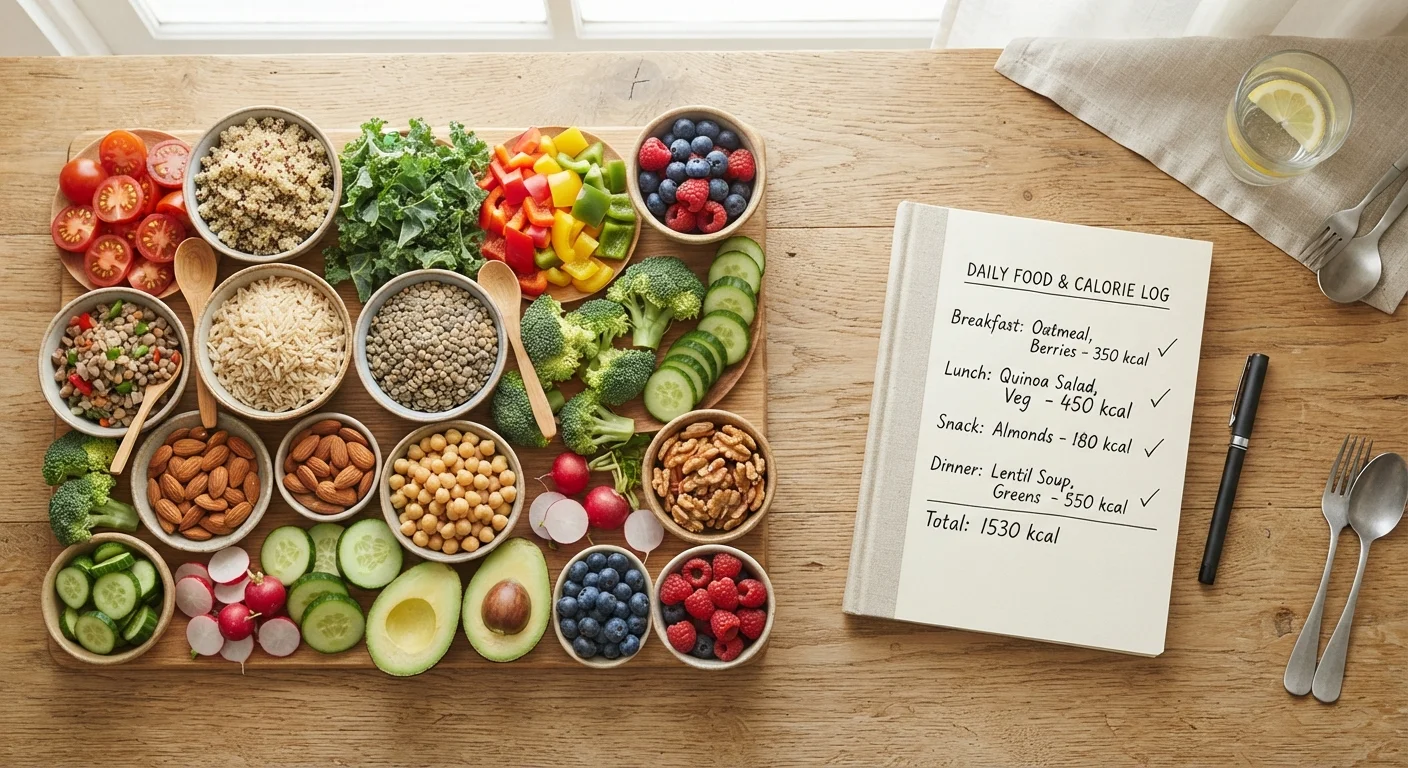
Key Takeaways
- Nutrient density measures how many beneficial nutrients a food provides per calorie.
- Calorie density measures how many calories are packed into a given weight or volume of food.
- Neither framework alone fully captures what makes a diet healthy — both offer useful but incomplete pictures.
- Foods with low calorie density tend to promote fullness, while high nutrient density indicates greater micronutrient value.
- Understanding both concepts helps you read food choices more critically without rigid rules.
- Always consult a qualified healthcare or nutrition professional for personalized dietary guidance.
Option A
Nutrient Density
The quality-first lens for evaluating food.
Best for: Understanding how much vitamins, minerals, fiber, and protein a food delivers relative to its calorie count.
Option B
Calorie Density
The quantity-and-satiety lens for evaluating food.
Best for: Understanding how many calories are packed into a given weight or volume of food, useful for satiety and portion awareness.
If you want to maximize vitamins, minerals, and fiber in your diet
Nutrient Density
Focusing on nutrient-dense foods helps ensure your calories are working hard for your health, delivering micronutrients alongside energy.
If managing portion sizes and hunger levels is your primary concern
Calorie Density
Low-calorie-density foods like vegetables and broth-based soups take up more space in the stomach per calorie, which can support satiety.
If you are trying to build a well-rounded understanding of what you eat
Nutrient Density
Nutrient density integrates multiple dimensions of food quality and aligns closely with dietary guidelines emphasizing whole, minimally processed foods.
If you have higher energy needs, such as during athletic training
Calorie Density
Calorie-dense foods can help meet elevated energy requirements without requiring uncomfortably large meal volumes.
What Each Concept Actually Means
Nutrient density describes the concentration of beneficial nutrients — vitamins, minerals, fiber, protein, and beneficial fats — relative to the number of calories a food contains. A food is considered nutrient-dense when it delivers a significant amount of these components without an excessive calorie load. Leafy greens, legumes, and whole grains are classic examples.
Calorie density (sometimes called energy density) takes a different angle entirely. It asks: how many calories are contained in a given weight or volume of food? Foods with high water or fiber content — like most vegetables and fruits — tend to have low calorie density. Foods with high fat or refined carbohydrate content tend to have high calorie density. A cup of raw spinach and a tablespoon of oil both have a role in the diet, but their calorie densities are vastly different.
These two frameworks often overlap but do not always agree. Nuts, for instance, are both nutrient-dense and calorie-dense — rich in healthy fats, minerals, and protein, but also compact in energy. Understanding this distinction matters when you are reading a nutrition label or building a mental model of food value.
| Criterion | Nutrient Density | Calorie Density |
|---|---|---|
| Core question | How many nutrients per calorie? | How many calories per gram/volume? |
| Primary use | Assessing nutritional quality | Assessing satiety and portion impact |
| Key influencing factors | Vitamin, mineral, fiber, protein content | Water, fat, and fiber content |
| Example: high score food | Spinach, lentils, salmon | Butter, nuts, dried fruit |
| Example: low score food | Sugary beverages, refined snacks | Cucumber, celery, broth-based soup |
| Limitation | Doesn't account for how filling a food is | Doesn't reflect micronutrient quality |
| Alignment with dietary guidelines | Directly referenced in U.S. guidelines | Implicitly supported via whole food guidance |
When Each Lens Is Most Useful
Nutrient density is the more informative framework when the central question is nutritional quality. It underpins dietary guidelines in the U.S., which broadly encourage people to choose foods that deliver more micronutrients and fiber per calorie. This lens is particularly valuable if you are trying to address potential nutrient gaps — for example, ensuring adequate intake of iron, calcium, or folate through food choices rather than supplements.
Calorie density becomes more relevant when satiety and meal volume are the key concerns. Research in nutrition science suggests that people tend to eat a relatively consistent weight of food over the course of a day, regardless of calorie content. Choosing lower-calorie-density foods can mean eating a satisfying volume of food while consuming fewer total calories — a principle sometimes called volumetrics. Dietary fibre plays a significant role here, as it adds bulk and promotes fullness.
~95%
Americans not meeting vegetable intake recommendations
According to the U.S. Dietary Guidelines Advisory Committee, the vast majority of Americans fall short of recommended vegetable and fruit consumption — foods that score highly on both density measures.
~3x
Calorie density difference: vegetables vs. processed snacks
General nutrition research indicates that calorie-dense packaged snack foods can contain roughly three or more times the calories per gram compared to most non-starchy vegetables.
17g
Average daily fibre intake in U.S. adults
The U.S. Dietary Guidelines report an average adult fibre intake of around 17 grams per day, well below the 25–38 gram recommendation — illustrating a gap that nutrient-dense, low-calorie-density foods could help address.
Neither lens should be treated as a universal rule. Both are educational tools, not prescriptions. Nutrition science itself is nuanced — something worth keeping in mind when headlines flip-flop on foods.
Practical Implications for Everyday Eating
Applying both frameworks together tends to produce a more balanced picture than either alone. A food can score well on one measure and poorly on the other. Consider white rice versus kale: white rice is relatively low in calorie density compared to, say, crackers, but it is also lower in micronutrients than kale. Kale is both low in calorie density and high in nutrient density — it outperforms on both scales. But no single food defines a diet.
When thinking about protein sources across different diets, both frameworks apply: lentils, for example, are nutrient-dense and relatively low in calorie density, while cheese is calorie-dense but also a meaningful source of calcium and protein. Context — including total dietary pattern, individual health needs, and life stage — shapes which metric deserves more weight.
Special Populations Need Individual Guidance
Infants, children, pregnant individuals, older adults, and people managing chronic conditions often have specific energy and nutrient requirements that standard density frameworks do not capture. For these groups, applying broad concepts like calorie density could be misleading without professional context. Always seek individualised guidance from a registered dietitian or physician when dietary decisions involve a specific health condition or life stage.
It is also worth noting that calorie density alone does not distinguish between foods with very different nutritional profiles but similar energy concentrations. Two foods can have identical calorie density while one delivers substantial fiber and micronutrients and the other delivers almost none. This is where nutrient density fills the gap. Similarly, other tools like the glycaemic index add yet another dimension — and come with their own set of limitations.
This article is for general informational and educational purposes only and does not constitute medical or nutritional advice. For guidance tailored to your individual health circumstances, please consult a registered dietitian or qualified healthcare professional.