

Key Takeaways
- Carbohydrates are the body's preferred and most efficient energy source.
- Proteins supply amino acids needed to build, repair, and maintain virtually every tissue.
- Dietary fats support hormone production, brain function, and absorption of fat-soluble vitamins.
- No single macronutrient is inherently harmful; balance and food quality both matter.
- Individual macronutrient needs vary based on age, activity level, and health status.
Macronutrients
Macronutrients are the three major classes of nutrients — carbohydrates, proteins, and fats — that the body needs in relatively large amounts to function. Unlike vitamins and minerals, macronutrients provide calories, which the body converts into energy. Every food you eat contains some combination of these three building blocks.
Carbohydrates and proteins each provide approximately 4 kilocalories per gram, while fats provide approximately 9 kilocalories per gram — making fats the most energy-dense macronutrient.
Carbohydrates: Your Body's Primary Fuel
Carbohydrates are the body's preferred energy source — particularly for the brain and during high-intensity physical activity. When you eat carbohydrates, the digestive system breaks them down into glucose, which cells use directly for fuel or store in the liver and muscles as glycogen for later use.
There are two broad categories worth understanding:
- Simple carbohydrates — sugars found naturally in fruit and milk, or added to processed foods. They digest quickly and cause a faster rise in blood glucose.
- Complex carbohydrates — starches and fiber found in whole grains, legumes, and vegetables. These digest more slowly, providing sustained energy and supporting digestive health.
Fiber, technically a carbohydrate, deserves special mention. It isn't absorbed for energy but plays a key role in gut health, blood sugar regulation, and satiety. Most Americans fall short of recommended fiber intake.
The idea that carbohydrates are inherently fattening is a persistent myth. Nutrition claims examined against the evidence show that food quality and overall caloric balance are far more meaningful than singling out any one macronutrient.
Choose Whole Food Carbohydrate Sources
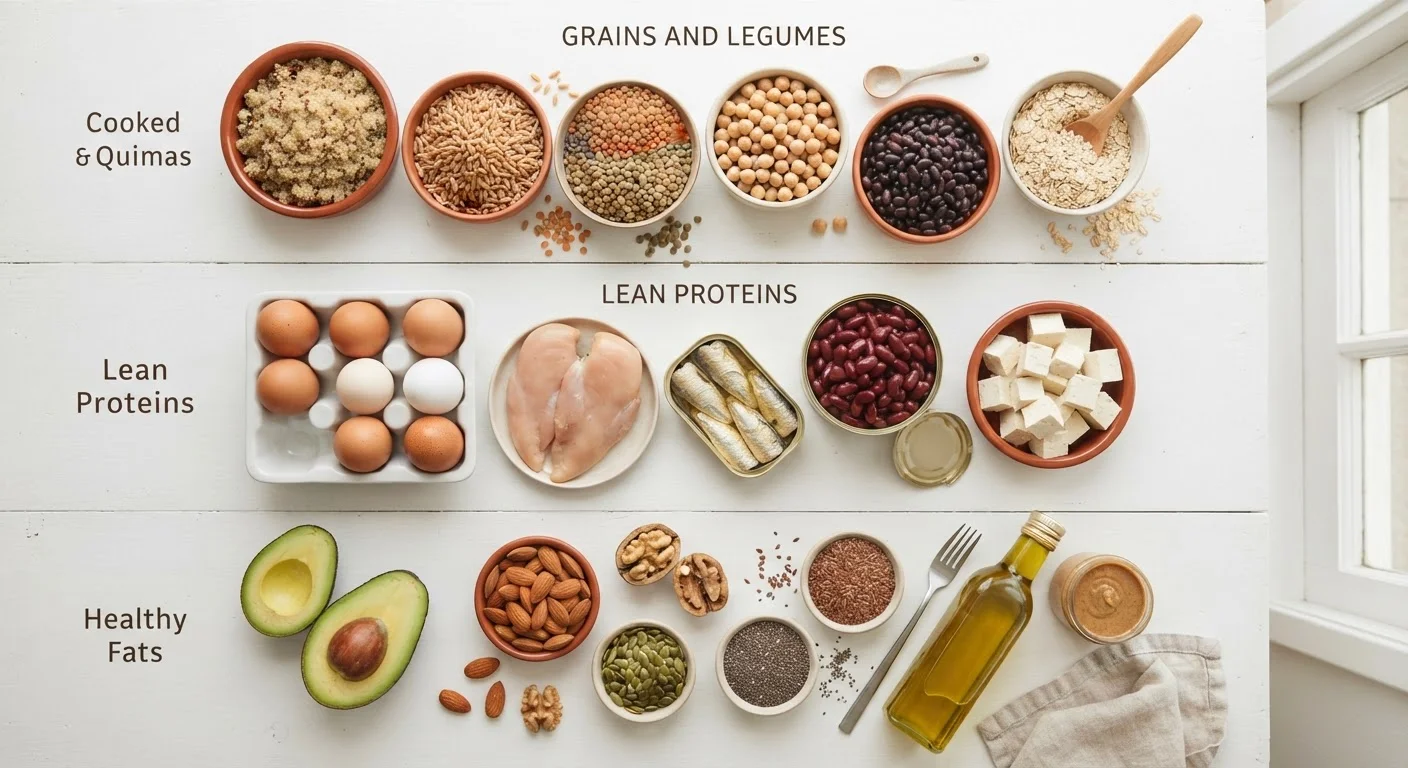
Rather than avoiding carbohydrates, consider the source. Whole grains, legumes, fruits, and vegetables deliver fiber, vitamins, and minerals alongside their carbohydrate content. These nutrient-dense choices support sustained energy and overall health in a way that refined, low-fiber carbohydrate sources generally do not.
Proteins: The Body's Building Material
Proteins are made of chains of amino acids — organic compounds the body uses to build and repair muscle, produce enzymes and hormones, support immune function, and maintain the structure of skin, hair, and connective tissue. Of the 20 amino acids involved in human metabolism, nine are considered essential, meaning the body cannot synthesize them and must obtain them through food.
Complete proteins — found in animal sources such as meat, fish, eggs, and dairy — supply all nine essential amino acids. Plant-based sources like beans, lentils, nuts, and seeds are often lower in one or more essential amino acids, though combining a variety of plant proteins over the course of a day meets the body's needs for most healthy people.
Protein needs aren't fixed: older adults, people recovering from illness or injury, and those engaging in regular strength training generally require more than the baseline recommendation. Always consult a qualified healthcare provider or registered dietitian for guidance tailored to your circumstances.
0.8 g/kg
Baseline daily protein recommendation for sedentary adults
Per the National Academies of Sciences, Engineering, and Medicine Dietary Reference Intakes — needs increase with activity level and age.
45–65%
Recommended share of daily calories from carbohydrates
According to the U.S. Dietary Guidelines for Americans, reflecting carbohydrates' role as the body's primary energy source.
20–35%
Recommended share of daily calories from fat
The National Academies' Acceptable Macronutrient Distribution Range for fat in adults, acknowledging its essential physiological functions.
Fats: More Than Just Stored Energy
Dietary fat is frequently misunderstood. Beyond providing a concentrated energy source, fats serve critical structural and regulatory roles: they form cell membranes, enable the body to absorb fat-soluble vitamins (A, D, E, and K), insulate and protect organs, and are used to produce hormones including those that regulate inflammation and reproductive function.
The type of fat matters. Research broadly supports that unsaturated fats — found in olive oil, avocados, nuts, and fatty fish — are associated with favorable cardiovascular markers, while industrially produced trans fats are associated with harm. Saturated fat sits in a more nuanced scientific space; for a thorough breakdown, see our dedicated piece on different fat types and what research says about each.
Low-fat diets that replaced fat with refined carbohydrates — popular in the 1980s and 1990s — did not produce the expected health benefits, a reminder that eliminating any macronutrient wholesale rarely leads to better outcomes.
How the Three Macronutrients Work Together
In practice, macronutrients don't operate in isolation. A meal containing carbohydrates alongside protein and fat digests more slowly than carbohydrates alone, producing a more gradual rise in blood glucose. Fats aid the absorption of vitamins that carbohydrate-rich vegetables contain. Protein signals satiety hormones that help regulate appetite.
This interdependence is one reason nutrition scientists emphasize dietary patterns over individual nutrients. The Mediterranean dietary pattern, for example, is not defined by a single macronutrient ratio but by the quality and variety of foods across all three categories.
Macronutrients also work alongside micronutrients — the vitamins and minerals the body cannot make itself — a pairing that reinforces why whole foods, which naturally bundle macronutrients with micronutrients, generally outperform processed alternatives.
“There are no good or bad foods, only good or bad diets. Context — overall dietary pattern, portion sizes, and individual health — matters far more than any single nutrient.”
— Marion Nestle, Professor Emerita of Nutrition, Food Studies, and Public Health, New York University
Once you understand what each macronutrient does, reading a food label becomes considerably more useful. Our guide to reading a nutrition label without getting lost in the small print walks through exactly what the numbers mean.
This article is for general informational and educational purposes only and is not a substitute for personalized medical or dietary advice. Consult a qualified healthcare professional or registered dietitian before making significant changes to your diet.