

| Fat calories per gram | 9 calories (Consistent across all fat types) |
| Artificial trans fat phase-out (U.S.) | Required by 2020 (U.S. Food and Drug Administration (FDA)) |
| Fat types | Saturated, monounsaturated, polyunsaturated, trans |
| Essential fatty acids | Omega-3 and omega-6 (must come from diet) (National Institutes of Health) |
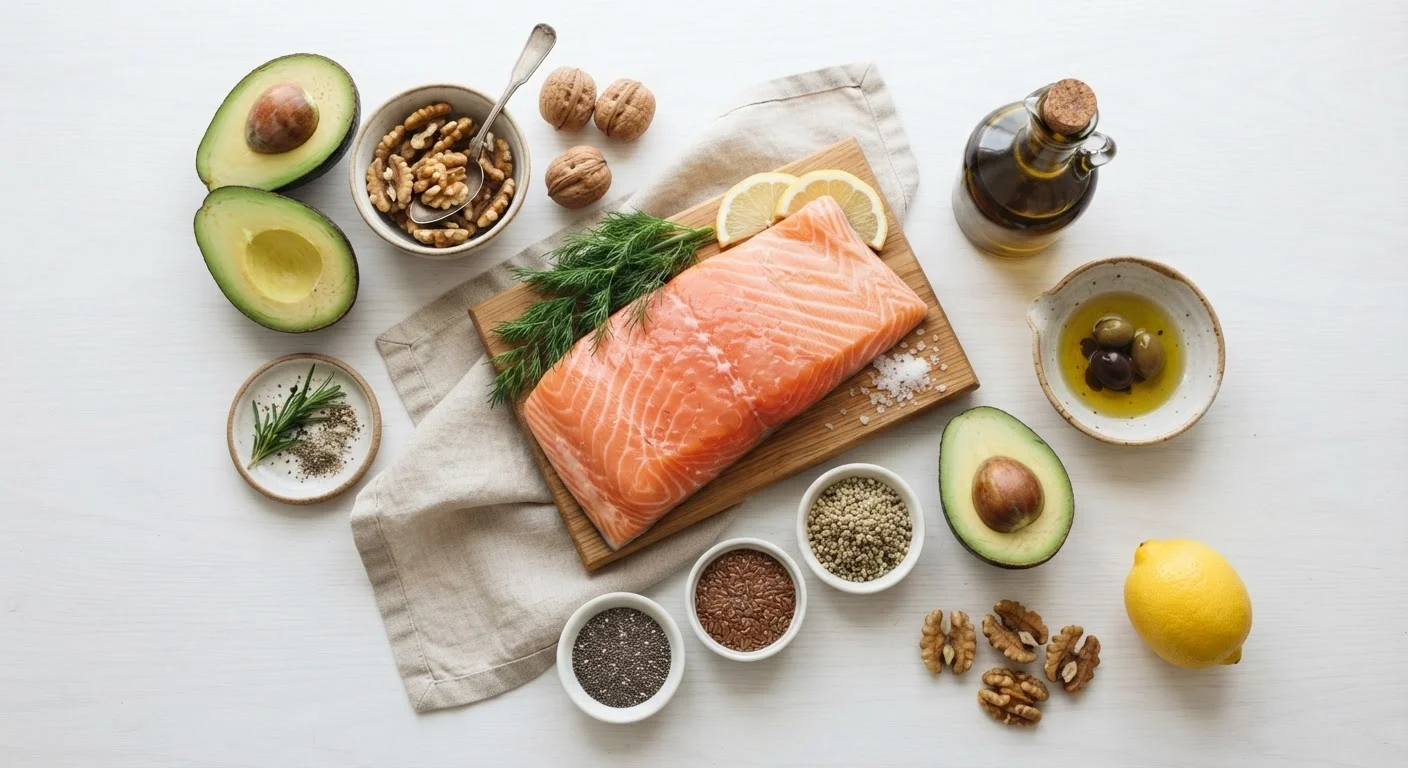
| Primary unsaturated fat sources | Olive oil, nuts, seeds, avocados, fatty fish |
| Primary saturated fat sources | Butter, red meat, full-fat dairy, coconut oil |
Why Fat Type Matters More Than Fat Amount
For decades, dietary fat was treated as a single villain to be minimized. That framing has largely been revised by nutrition research, which now emphasizes that the type of fat consumed matters more than the total amount. Fats serve essential biological roles — they carry fat-soluble vitamins, support cell membrane integrity, and provide a concentrated energy source — but different fat structures behave very differently in the body.
Understanding those differences helps cut through a lot of nutrition noise. For a broader look at how conflicting headlines get produced in the first place, see why nutrition advice keeps changing.
| Fat calories per gram | 9 calories (Consistent across all fat types) |
| Artificial trans fat phase-out (U.S.) | Required by 2020 (U.S. Food and Drug Administration (FDA)) |
| Fat types | Saturated, monounsaturated, polyunsaturated, trans |
| Essential fatty acids | Omega-3 and omega-6 (must come from diet) (National Institutes of Health) |
| Primary unsaturated fat sources | Olive oil, nuts, seeds, avocados, fatty fish |
| Primary saturated fat sources | Butter, red meat, full-fat dairy, coconut oil |
Saturated, Unsaturated, and Trans Fats: What Each One Is
Fats are classified by their chemical structure — specifically, how many double bonds exist between carbon atoms in the fatty acid chain.
Saturated Fat
A type of fat in which all carbon atoms in the fatty acid chain are bonded to hydrogen atoms, with no double bonds. These fats are solid at room temperature and are found mainly in animal products and some tropical oils.
Unsaturated Fat
Fats that contain one or more double bonds between carbon atoms. They are typically liquid at room temperature and include both monounsaturated and polyunsaturated varieties, generally associated with more favorable health profiles than saturated fat.
Trans Fat
A fat formed when liquid vegetable oils are partially hydrogenated to become solid. Artificial trans fats raise harmful LDL cholesterol and lower protective HDL cholesterol, and have been phased out of the U.S. food supply.
Omega-3 Fatty Acids
A subtype of polyunsaturated fat found in fatty fish, flaxseed, chia seeds, and walnuts. Associated in research with cardiovascular benefits and anti-inflammatory properties; considered an essential nutrient the body cannot produce on its own.
LDL Cholesterol
Low-density lipoprotein cholesterol, often called 'bad' cholesterol. Elevated LDL levels are a recognized risk factor for cardiovascular disease. Saturated and artificial trans fats tend to raise LDL levels.
Partial Hydrogenation
An industrial process that adds hydrogen to liquid vegetable oil, making it more solid and shelf-stable but producing artificial trans fats as a byproduct. This process created the trans fats that were phased out of U.S. foods.
Saturated Fat
Found predominantly in animal products (red meat, full-fat dairy, butter) and some tropical oils (coconut, palm), saturated fats are solid at room temperature. Research has consistently linked high saturated fat intake with elevated LDL cholesterol levels, a recognized risk factor for cardiovascular disease. Major health organizations generally recommend limiting saturated fat, though scientific debate continues about whether all saturated fatty acids carry equal risk.
Unsaturated Fat
Unsaturated fats are liquid at room temperature and come in two broad categories. Monounsaturated fats (MUFAs) — found in olive oil, avocados, and many nuts — are associated with favorable effects on LDL and HDL cholesterol. Polyunsaturated fats (PUFAs) include omega-3 and omega-6 fatty acids. Omega-3s (from fatty fish, flaxseed, walnuts) have robust evidence supporting cardiovascular and anti-inflammatory benefits. Omega-6s are widely available in vegetable oils and are also essential, though balance with omega-3 intake is considered important by many researchers.
Trans Fat
Artificial trans fats — created through partial hydrogenation of vegetable oils — raise LDL cholesterol while simultaneously lowering HDL cholesterol, a particularly unfavorable combination. The U.S. Food and Drug Administration (FDA) removed artificial trans fats from the Generally Recognized as Safe (GRAS) list in 2015, and food manufacturers were required to phase them out by 2020. Small amounts of naturally occurring trans fats exist in ruminant animal products (beef, lamb, dairy) and appear to behave differently from artificial varieties, though research is ongoing.
When reading packaged foods, the nutrition label is your primary tool — learn what each line actually signals with our guide to reading a nutrition label.
~70%
Of calories from fat that can still raise LDL
Research published in nutrition journals suggests saturated fat's effect on LDL varies by individual fatty acid chain length and dietary context.
2015
Year FDA removed artificial trans fat from GRAS list
The FDA's determination led to a mandatory phase-out of partially hydrogenated oils in the U.S. food supply, completed by 2020.
2:1 to 4:1
Omega-6 to omega-3 ratio suggested by some researchers
Some nutrition researchers suggest modern Western diets skew heavily toward omega-6, with ratios estimated as high as 15:1 or more.
Putting Fat Choices Into Everyday Context
Nutrition science rarely produces simple one-to-one rules, and dietary fat is no exception. A useful general principle supported by population studies: replacing saturated fat with unsaturated fat — particularly polyunsaturated fat — is associated with reduced cardiovascular risk in most adults. Replacing saturated fat with refined carbohydrates, by contrast, appears to offer little if any benefit.
This context matters when evaluating trendy dietary frameworks that either demonize all fat or elevate saturated fat without nuance. Many popular nutrition claims deserve careful scrutiny — for a look at some that persist despite weak evidence, see nutrition myths that refuse to die.
Practical takeaways for everyday eating: favor sources of unsaturated fat (nuts, seeds, olive oil, fatty fish) as your primary fat sources; keep saturated fat moderate rather than eliminating it entirely; and check ingredient labels for the term partially hydrogenated oil, which indicates artificial trans fat that may still appear in some imported or legacy products. Diet patterns — not individual foods — determine long-term health outcomes, and individual needs vary considerably. Always consult a qualified healthcare professional or registered dietitian before making significant changes to your diet, especially if you have existing health conditions.
Label Reading Can Reveal Hidden Trans Fats
A nutrition label may list 0 grams of trans fat even when partially hydrogenated oil appears in the ingredient list. Under FDA rules, products containing less than 0.5 g per serving can be rounded down to zero. If you see 'partially hydrogenated oil' in the ingredients, some artificial trans fat is present. Our nutrition label guide explains how to read ingredient lists alongside the facts panel.
This article is for general informational and educational purposes only and does not constitute medical or dietary advice. Consult a qualified healthcare professional for guidance specific to your health situation.