

Key Takeaways
- You must register your vehicle within a state-mandated window after purchase — deadlines vary.
- Key documents typically include the title, proof of insurance, odometer disclosure, and a valid ID.
- Registration fees depend on factors such as vehicle weight, model year, and purchase price.
- Some states require a smog check or safety inspection before issuing registration.
- After completing registration, you receive a certificate and license plates to display on your vehicle.
What you will need
Why First-Time Registration Matters
Registering your vehicle with your state's motor vehicle agency is a legal requirement in every U.S. state. Until that registration is complete, driving the car on public roads is either prohibited or restricted to a short grace period granted by a temporary placard. Missing your state's deadline can result in fines or complications during a routine traffic stop — for more on those consequences, see what happens when registration lapses.
First-time registration differs from annual renewal because it typically involves transferring or establishing a title in your name at the same time. If you purchased from a dealership, the dealer often handles the title transfer paperwork — but you are still responsible for understanding the process and verifying that everything was completed correctly. If you bought from a private seller, the full process generally falls to you. This article covers both scenarios.
Schedule a DMV Appointment When Possible
Walk-in wait times at DMV offices can stretch to several hours, particularly at the start or end of a month when registration deadlines cluster. Booking an appointment online often cuts the wait to a fraction of that time. Check your state agency's website for availability.
What You Need Before You Go
Gathering the right documents before visiting your local Department of Motor Vehicles (DMV) or equivalent agency saves significant time. Requirements vary by state, so check your state's official motor vehicle agency website to confirm the exact list. However, the following items are needed in most jurisdictions:
What you will need
Your vehicle's title is the most critical document. It proves ownership and must be signed over to you by the seller. If there is a lien (meaning a lender has a financial interest in the car), the lender typically holds the title until the loan is paid off — your state may have a specific process for registering a liened vehicle. Your Vehicle Identification Number (VIN) will appear on the title and must match the number on your car's dashboard and door jamb.
Vehicle Title
Establishes legal ownership of the vehicle and must be transferred into your name.
Proof of Auto Insurance
Required by all states before registration is issued; must meet state minimum coverage levels.
Government-Issued Photo ID
Verifies your identity at the DMV counter.
Bill of Sale
Documents the purchase price, which some states use to calculate sales tax and fees.
Emissions or Safety Inspection Certificate
Required in many states before registration can be issued; obtained at a licensed inspection station.
Payment Method
Used to pay registration fees, taxes, and title transfer costs at the agency.
The Registration Process, Step by Step
The steps below reflect the typical process for registering a newly purchased vehicle. Always verify the specific requirements with your state's motor vehicle agency, as procedures differ.
Check your state's specific requirements
Visit your state's official DMV or motor vehicle agency website before doing anything else. Confirm the required documents, the registration deadline after purchase, applicable fees, and whether an emissions or safety inspection is mandatory. Requirements vary considerably from state to state.
Complete any required inspections
If your state requires an emissions test (smog check) or a safety inspection, schedule and complete this before your DMV appointment. You will receive a certificate or sticker as proof of passing. Note that certain vehicle types — such as brand-new cars or older vehicles below a certain weight — may be exempt in some states.
Gather all required documents
Collect your signed title, proof of insurance, photo ID, bill of sale, odometer disclosure, and inspection certificate (if applicable). If the vehicle is financed, obtain the lienholder's name and address, as this information will appear on the registration. Double-check each document for completeness and signatures before leaving home.
Visit the DMV or submit online
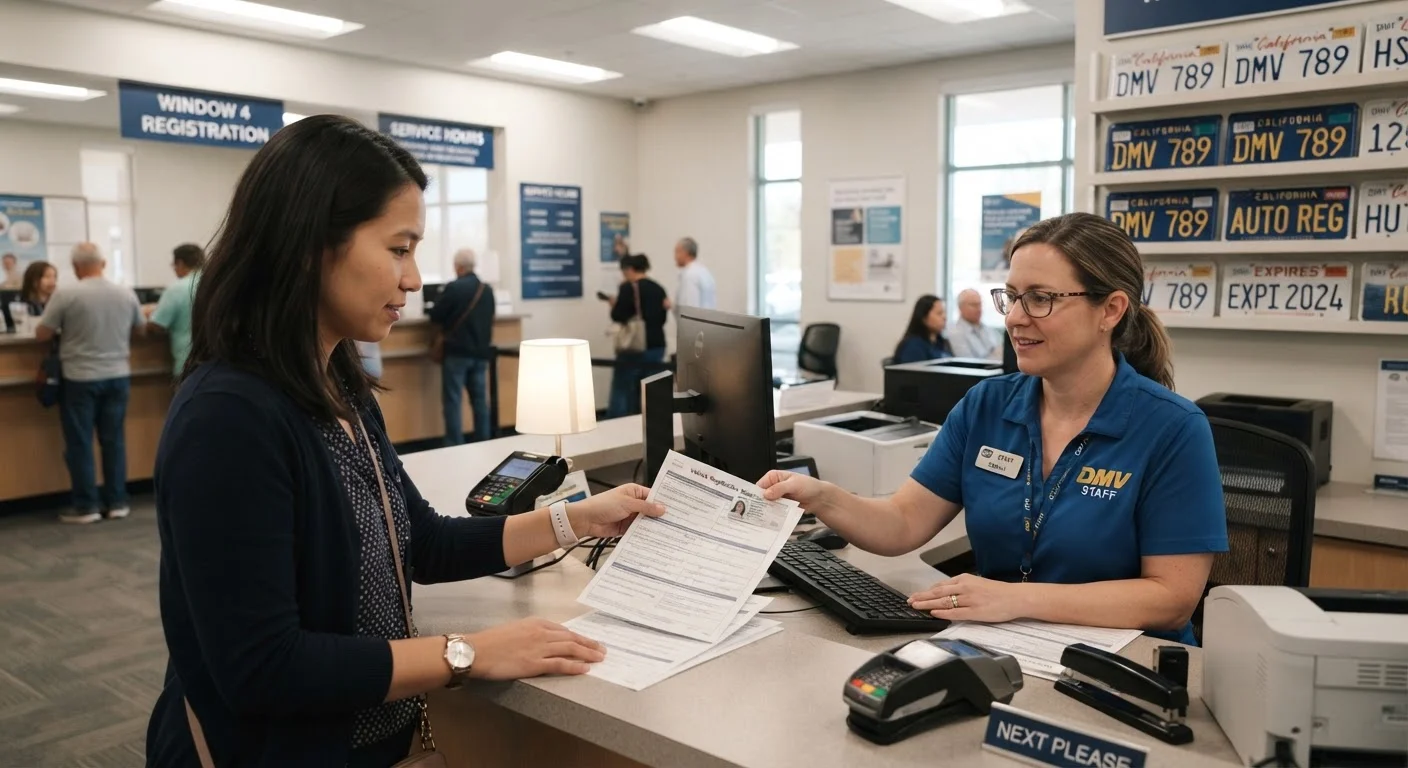
Some states allow first-time registration to be completed fully online or by mail; others require an in-person visit. If visiting in person, consider making an appointment to reduce wait times. At the counter, the clerk will review your documents, enter your vehicle information into the system, calculate the fees owed, and collect payment.
Pay registration fees and applicable taxes
Registration fees are set by your state and typically calculated based on the vehicle's weight, age, and declared value or purchase price. You may also owe state and local sales tax on the purchase price if it hasn't already been collected. Ask for an itemized receipt so you understand exactly what each charge covers.
Receive your registration certificate and plates
Once processing is complete, you will receive a registration certificate, a registration sticker (decal) for your license plate, and — if the vehicle is newly registered in your state — a license plate or plates. Install the plate(s) on your vehicle as directed by your state, and affix the sticker to the correct corner of the plate. Store the registration certificate in your vehicle's glove box.
Registration Deadlines Are Strictly Enforced
Most states require first-time registration within a short window after purchase — commonly 10 to 30 days, though this varies. Driving with an expired or missing registration can result in fines, and the vehicle may be flagged during a traffic stop. If your situation is complicated by a lien, out-of-state purchase, or inherited vehicle, contact your state DMV promptly rather than waiting to sort out the details.
Once registration is complete, store your registration certificate somewhere accessible in the vehicle. Our guide on documents to always keep in your car explains exactly what to carry and why. And if you want to avoid the broader administrative missteps that trip up new owners, common first-year mistakes is worth a read.