

What Is a VIN and Why Does It Matter?
A Vehicle Identification Number (VIN) is a standardized 17-character code assigned to every motor vehicle manufactured or sold in the United States since 1981. No two vehicles in operation share the same VIN, which makes it the definitive identifier for your car throughout its entire life — from the factory floor to the salvage yard.
You'll encounter your VIN more often than you might expect: when registering a vehicle, filing an insurance claim, ordering recall notices, financing a purchase, or running a vehicle history report. Keeping it handy alongside your other key documents is smart practice. See our guide to the documents you should always keep in your car for a full checklist of what to carry.
Decoding the 17 Characters
The VIN is divided into three logical sections, each carrying specific information about the vehicle's origin, attributes, and production sequence.
VIN
Vehicle Identification Number — a unique 17-character alphanumeric code assigned to every motor vehicle, used to identify it throughout its lifespan for registration, insurance, recalls, and ownership records.
World Manufacturer Identifier (WMI)
The first three characters of a VIN, identifying the country of manufacture and the specific manufacturer or brand that produced the vehicle.
Check Digit
The ninth character of a VIN, mathematically derived from the other 16 characters using a U.S. Department of Transportation formula. It allows verification that the VIN has not been falsified or transcribed incorrectly.
Vehicle Descriptor Section (VDS)
Characters four through eight of a VIN, which encode manufacturer-specific details about the vehicle such as body style, engine type, and model line.
Vehicle Identifier Section (VIS)
Characters ten through seventeen of a VIN, encoding the model year, assembly plant, and the vehicle's unique sequential production number.
Positions 1–3: World Manufacturer Identifier (WMI)
The first three characters identify the country of manufacture and the specific manufacturer. The first character indicates the country (for example, 1, 4, or 5 signals the United States; J indicates Japan; W indicates Germany). Characters two and three narrow the identification down to the specific manufacturer and vehicle division.
Positions 4–8: Vehicle Descriptor Section (VDS)
These five characters describe the vehicle itself — body style, engine type, restraint systems, and model line. The exact meaning of each character varies by manufacturer, so the same digit can mean different things across different brands.
Position 9: Check Digit
This single character is mathematically calculated from the other 16 using a formula defined by the U.S. Department of Transportation. It exists specifically to detect transcription errors or fraudulent VINs — a useful built-in verification tool.
Positions 10–17: Vehicle Identifier Section (VIS)
Position 10 always encodes the model year using a defined letter or number (for example, K = 2019, L = 2020). Position 11 identifies the manufacturing plant. Positions 12–17 are the sequential production number — essentially the vehicle's serial number off the assembly line.
Where to Find Your VIN
Your VIN appears in several locations on and around your vehicle:
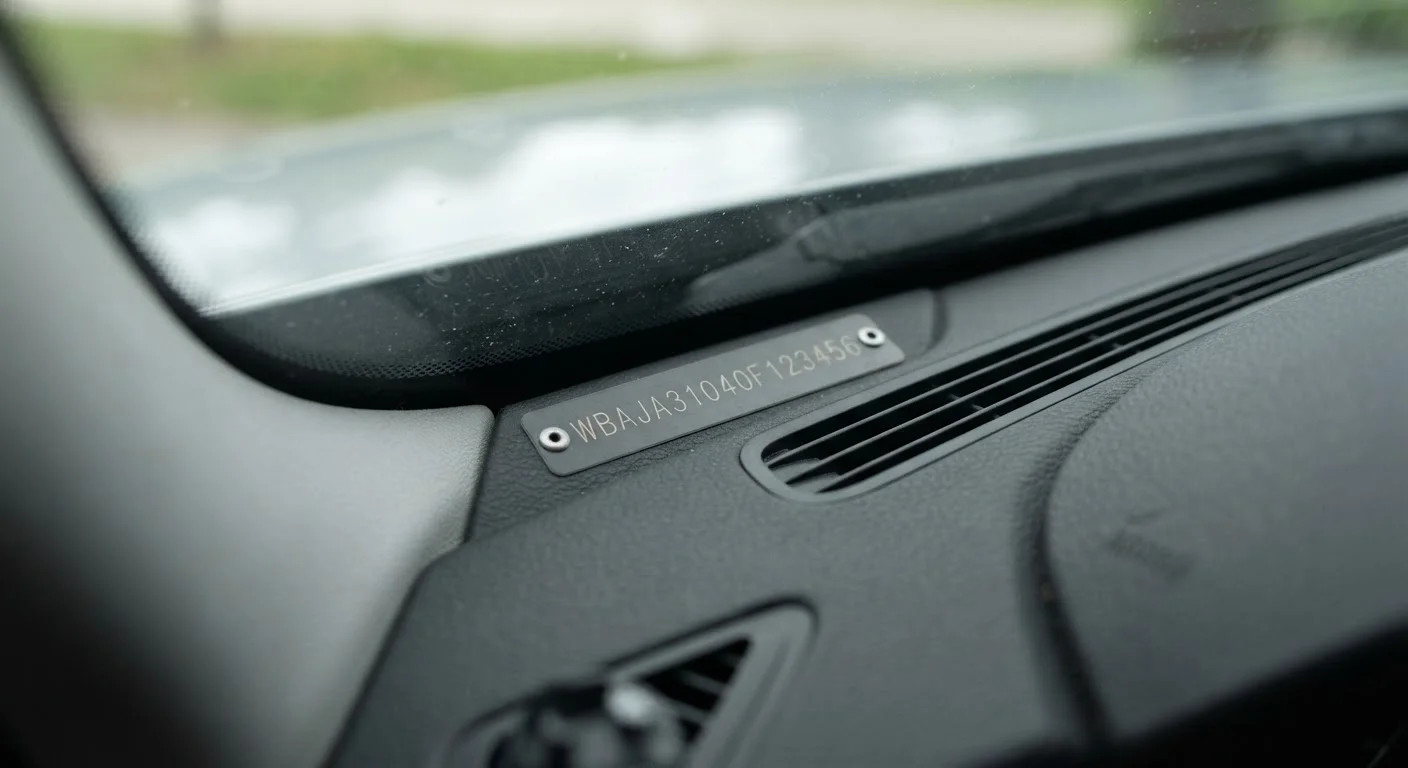
- Driver's side dashboard: Visible through the windshield at the base of the windshield on the driver's side — the most common and accessible location.
- Driver's side door jamb: A sticker or plate on the door frame or the door itself often includes the VIN alongside tire pressure and weight ratings.
- Under the hood: Many vehicles stamp the VIN on the firewall or engine block.
- Vehicle title and registration: Your state-issued title and registration documents both list the VIN.
- Insurance card and policy: Your insurer records it for each covered vehicle.
If the VINs across these locations don't match, that's a serious red flag — particularly when evaluating a used vehicle purchase. A mismatched or altered VIN may indicate the vehicle has been involved in fraud or is stolen.
Practical Uses for Your VIN
Understanding your VIN unlocks several important capabilities as a vehicle owner:
392M+
Vehicles covered by NHTSA's VIN recall database
The NHTSA public VIN lookup tool covers hundreds of millions of vehicles going back decades, according to NHTSA.gov.
17
Characters in every modern VIN
The standardized 17-character format has been required for all vehicles sold in the U.S. since the 1981 model year.
Recall checks: The National Highway Traffic Safety Administration (NHTSA) maintains a free public database at nhtsa.gov where you can enter your VIN to see any open safety recalls affecting your specific vehicle. Recalls are tied to individual VINs, so a recall on a particular model may not apply to every unit produced.
Vehicle history reports: Services that compile accident history, title changes, odometer readings, and service records rely entirely on the VIN to pull the correct records. This is particularly important when buying a used car.
Parts ordering: When ordering replacement parts, providing your VIN ensures compatibility — even vehicles of the same model year can have different engine configurations or trim specifications that affect which parts fit.
Your VIN is also a useful anchor for your vehicle maintenance records. Our vehicle maintenance log guide explains exactly what service details to track and why a thorough history protects your car's long-term value.