

Key Takeaways
- Driving with an expired registration is illegal in all 50 U.S. states and can result in fines.
- Law enforcement can identify expired registrations via license plate scanners even without pulling you over.
- Some states impound vehicles if registration has been expired for an extended period.
- Late fees accumulate the longer you wait, making prompt renewal far less costly.
- An expired registration can complicate vehicle sales and insurance claims.
Expired Car Registration
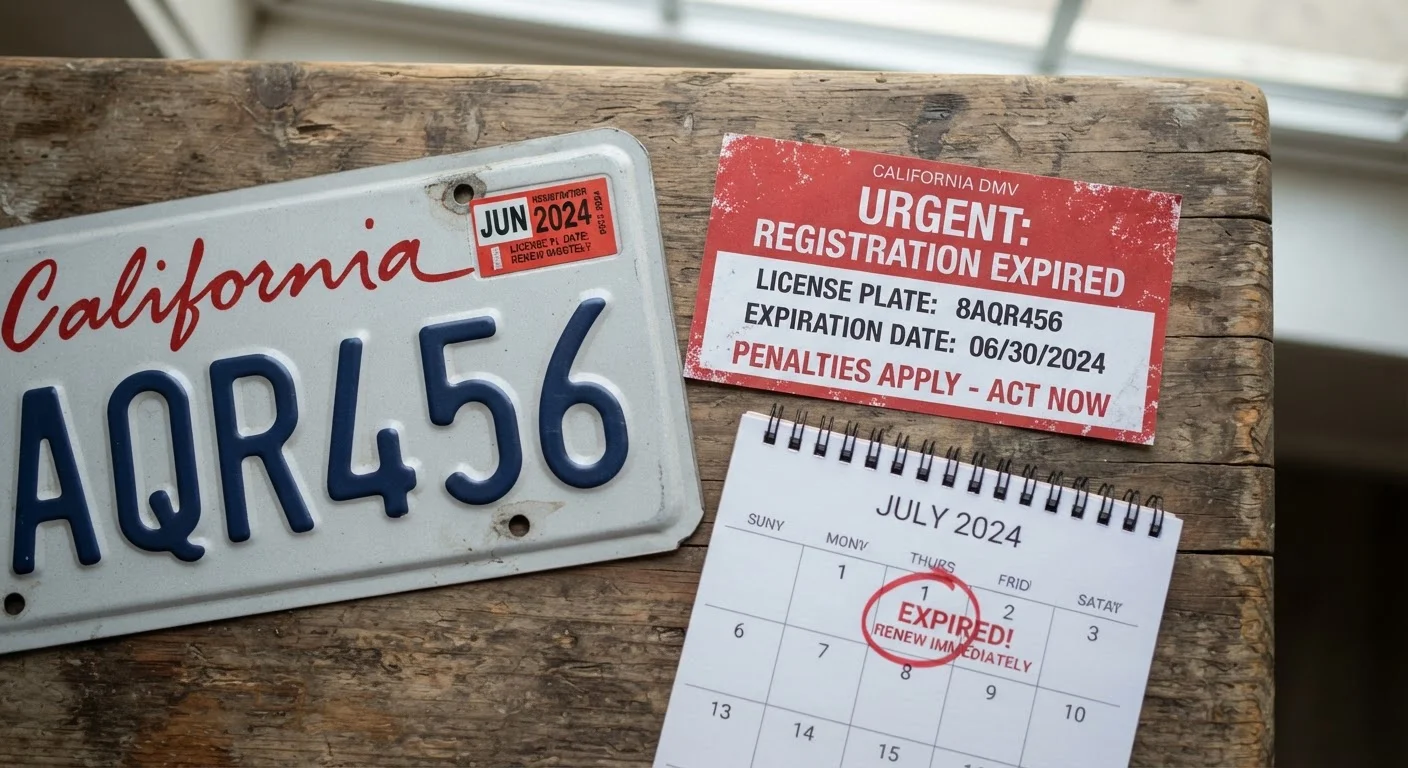
Car registration is the government-issued authorization that allows you to legally operate a vehicle on public roads. When you fail to renew it by the deadline printed on your registration documents or sticker, your vehicle is considered unregistered — meaning you're driving without legal permission. Most states require annual or biennial renewal, and the expiration date is tracked in law enforcement databases.
In most U.S. states, driving with an expired registration is a moving or non-moving infraction that can appear on your driving record, depending on local law.
The Immediate Legal Consequences
The moment your registration expires, you are technically operating an unregistered vehicle — a violation in every U.S. state. The consequences depend heavily on where you live and how long the registration has lapsed, but the most immediate risk is a traffic citation.
Modern patrol vehicles are commonly equipped with automated license plate readers (ALPRs), which scan plates and instantly cross-reference them against state databases. This means an officer doesn't need to have any other reason to stop you — an expired plate can trigger an alert before they even pull behind you.
Fines vary widely. Some states charge as little as $25 for a first offense; others impose penalties exceeding $200, particularly if the registration has been expired for several months. A citation also typically requires a court appearance or proof of corrected registration to have the charge dismissed.
Renew Online to Reduce Risk
If your registration is already expired, renewing online is the safest option. It keeps you off the road while unregistered and most states process online renewals within a few business days. Check your state's DMV website for eligibility — vehicles requiring a current inspection may not qualify for online renewal.
Late Fees and the Cost of Waiting
Beyond the risk of a ticket on the road, most state DMVs automatically add late renewal penalties to your registration fee. These penalties are usually calculated as a percentage of your base renewal fee and increase the longer you wait.
For example, a state might charge an additional 10% after 30 days, rising to 20% after 60 days, and so on. Combined with a traffic fine, delaying renewal can cost several times what you would have paid on time. This pattern closely mirrors what happens in other financial contexts — similar to how overdue debt accumulates fees and consequences the longer it goes unaddressed.
~$100–$250
Typical fine range for expired registration
Fines vary significantly by state; some jurisdictions also add court fees on top of the base citation amount.
10–25%
Common late renewal penalty added to base fee
Many state DMVs apply tiered late penalties that increase the longer the registration remains expired.
6 months
Threshold for potential vehicle impoundment
In several U.S. states, officers may impound a vehicle whose registration has been expired for six months or longer.
Inspections, Impoundment, and Other Complications
In states that tie vehicle safety or emissions inspections to registration renewal, an expired registration may indicate an overdue inspection. Some states will not allow you to renew until you pass a current inspection — meaning you could face a compounding situation where you can't legally drive to get the inspection done.
If your registration has been expired for an extended period — often six months or more — some jurisdictions allow officers to impound the vehicle. Reclaiming an impounded car involves towing fees, storage fees, and proof of corrected registration, making it one of the more expensive outcomes of neglecting a renewal.
An expired registration also affects paperwork trails. If you're involved in an accident while unregistered, the lapse may complicate insurance claims or liability disputes. And if you plan to sell the vehicle, some buyers and dealerships will flag an expired registration as a red flag during the transaction process. Always keep your current registration document in the vehicle — for a full checklist of what to carry, see the documents you should always keep in your car.
Rules Vary Significantly by State
Registration renewal deadlines, grace periods, late fee structures, and enforcement policies differ from state to state. Some states mail renewal notices well in advance; others rely on you to track your own expiration date. Always verify the specific rules for your state directly through its official DMV website.
How to Get Back on Track
If your registration has already lapsed, the straightforward path forward is to renew as quickly as possible through your state's DMV — most states allow online renewal, which reduces any additional risk from driving to an office. You'll need your current vehicle information, proof of insurance, and payment for the renewal fee plus any applicable late penalties.
If your registration requires a passed inspection first, schedule that appointment immediately. Some states offer temporary operating permits that allow you to drive legally to an inspection station — check your state DMV's website to see if that option is available to you.
Going forward, set a calendar reminder at least 30 days before your registration expiration date. Many states also offer email or text renewal reminders if you opt in through your DMV account. Treating registration renewal like any other recurring bill — planned, budgeted, and handled early — is the simplest way to avoid fines, citations, and unnecessary stress.