

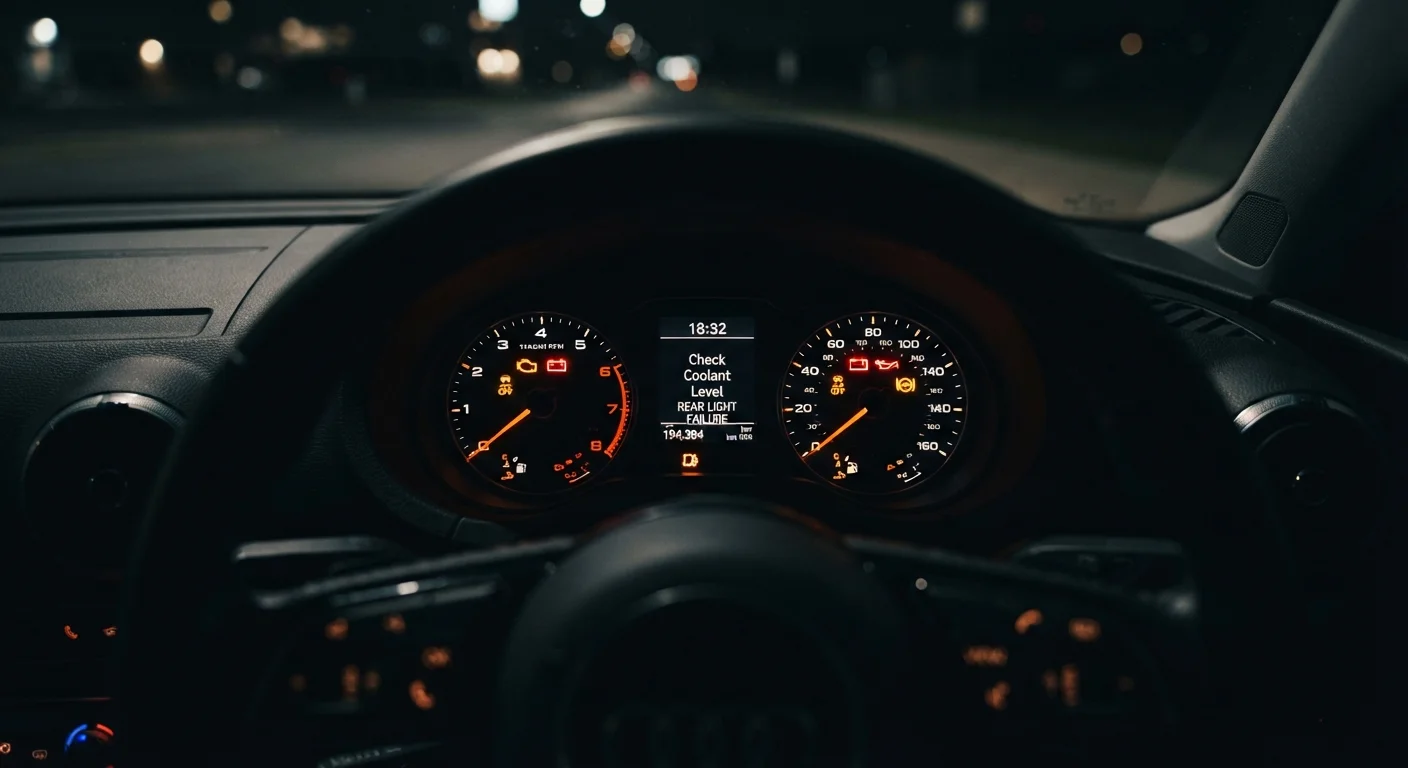
How the Warning Light System Works
Modern vehicles use an onboard diagnostics system (OBD) that continuously monitors dozens of sensors throughout the engine, transmission, brakes, and emissions equipment. When a sensor reading falls outside its expected range, the system triggers a corresponding dashboard warning light. Think of it as your car's way of flagging an issue before it becomes a breakdown.
Warning lights generally fall into three urgency tiers based on color:
- Red — Requires immediate attention. Pull over safely if driving.
- Amber/Yellow — Needs attention soon, but you can typically drive to a shop.
- Green or Blue — Informational only; confirms a system is active (e.g., high beams, cruise control).
The exact appearance of icons varies by manufacturer, so consulting your owner's manual is always worthwhile — especially for unfamiliar symbols.
The Warning Lights You're Most Likely to See
Below are the most commonly encountered warning lights, what triggers them, and how urgently to respond.
Check Engine (Amber)
Arguably the most misunderstood light on any dashboard, the check engine light can signal anything from a loose gas cap to a misfiring cylinder. A solid amber light usually means a non-emergency issue detected by the emissions or engine management system. A flashing check engine light, however, indicates an active misfire that can damage the catalytic converter — reduce speed and seek service promptly.
Oil Pressure (Red)
This light signals that engine oil pressure has dropped dangerously low. Driving with insufficient oil pressure can destroy an engine within minutes. Stop the vehicle safely as soon as possible, turn off the engine, and check the oil level before proceeding. If the level is adequate and the light persists, have the vehicle inspected immediately — do not continue driving.
Battery (Red)
When this appears while driving, your vehicle is running on battery reserve rather than the alternator. Electrical accessories will drain the battery rapidly. Minimize electrical loads, drive directly to a service location, and avoid turning the engine off until you arrive. For more detail on what precedes this scenario, see our guide to early battery warning signs.
Brake Warning (Red)
This light can indicate the parking brake is engaged, low brake fluid, or a fault in the braking system itself. If releasing the parking brake doesn't extinguish it, do not ignore it. Brake system faults are safety-critical. Our companion article on understanding brake wear covers the physical symptoms that often accompany this light.
Tire Pressure (TPMS) — Amber
The tire pressure monitoring system (TPMS) alerts you when one or more tires falls roughly 25% below the recommended pressure. Underinflated tires affect handling, fuel economy, and tire longevity. Check and inflate tires to the pressure listed on the driver's door jamb sticker — not the number on the tire sidewall, which is the maximum pressure.
Temperature Warning (Red)
Engine coolant temperature has reached a dangerous level. Pull over safely, turn off the engine, and allow it to cool before checking coolant levels. Never open the radiator cap on a hot engine. If coolant appears full, a leak or thermostat fault may be the cause — towing is safer than driving.
OBD (Onboard Diagnostics)
A standardized system built into vehicles that monitors engine, transmission, and emissions performance. When a fault is detected, it stores a diagnostic trouble code (DTC) and triggers a warning light.
TPMS
Tire Pressure Monitoring System — a sensor-based system that alerts the driver when tire pressure drops significantly below the recommended level.
Catalytic Converter
An emissions control device in the exhaust system that converts harmful combustion byproducts into less harmful gases. It can be damaged by prolonged engine misfires.
Diagnostic Trouble Code (DTC)
A standardized alphanumeric code stored by the OBD system when a sensor reading indicates a fault. A mechanic reads these codes with a scan tool to identify the source of a warning light.
Alternator
A generator driven by the engine that recharges the battery and powers electrical systems while the vehicle is running. A failed alternator causes the battery warning light to illuminate.
When to Wait and When to Act Now
Not every warning light demands roadside action. The table below summarizes response guidance for common lights:
| Light | Color | Urgency |
|---|---|---|
| Oil Pressure | Red | Stop immediately |
| Engine Temperature | Red | Stop immediately |
| Brake System | Red | Stop immediately |
| Battery | Red | Drive directly to service |
| Check Engine (flashing) | Amber | Reduce load, seek service soon |
| Check Engine (solid) | Amber | Schedule service within days |
| TPMS | Amber | Check tires when safe to stop |
Before any extended drive, it's worth doing a quick systems check — our pre-trip inspection guide walks through exactly what to look at. And if you ever need to describe a warning light to a mechanic or insurer, having your VIN on hand helps them pull accurate vehicle-specific diagnostic data.
A Warning Light Cleared Itself — Is It Gone?
Some lights extinguish on their own after a fault resolves or a sensor resets — for example, the TPMS light after you inflate a tire. However, a check engine light that clears itself may still have a stored fault code in the OBD system. A mechanic can retrieve stored codes even when no light is currently on, which can help identify intermittent issues before they worsen.