

Key Takeaways
- Squealing is usually an early-warning signal built into the brake pad design — not immediate danger.
- Grinding almost always means metal-on-metal contact and requires prompt professional service.
- Pulling to one side when braking points to uneven pad wear or a stuck caliper.
- Ignoring brake wear warnings typically leads to more expensive rotor or caliper damage.
- Most brake pads need replacement every 25,000–70,000 miles depending on driving habits and pad type.
Brake Wear
Brake wear refers to the gradual deterioration of your vehicle's braking components — primarily the brake pads and rotors — through normal friction-based use. Over time, the friction material on brake pads thins down, reducing stopping effectiveness. Most vehicles are designed to produce audible and physical warning signs as pads approach their service limit.
Brake pads typically include a metal wear indicator tab that contacts the rotor once pad thickness drops below a safe threshold (commonly around 2–3 mm), producing the characteristic squealing sound drivers recognize as a service warning.
How Brakes Work and Why They Wear
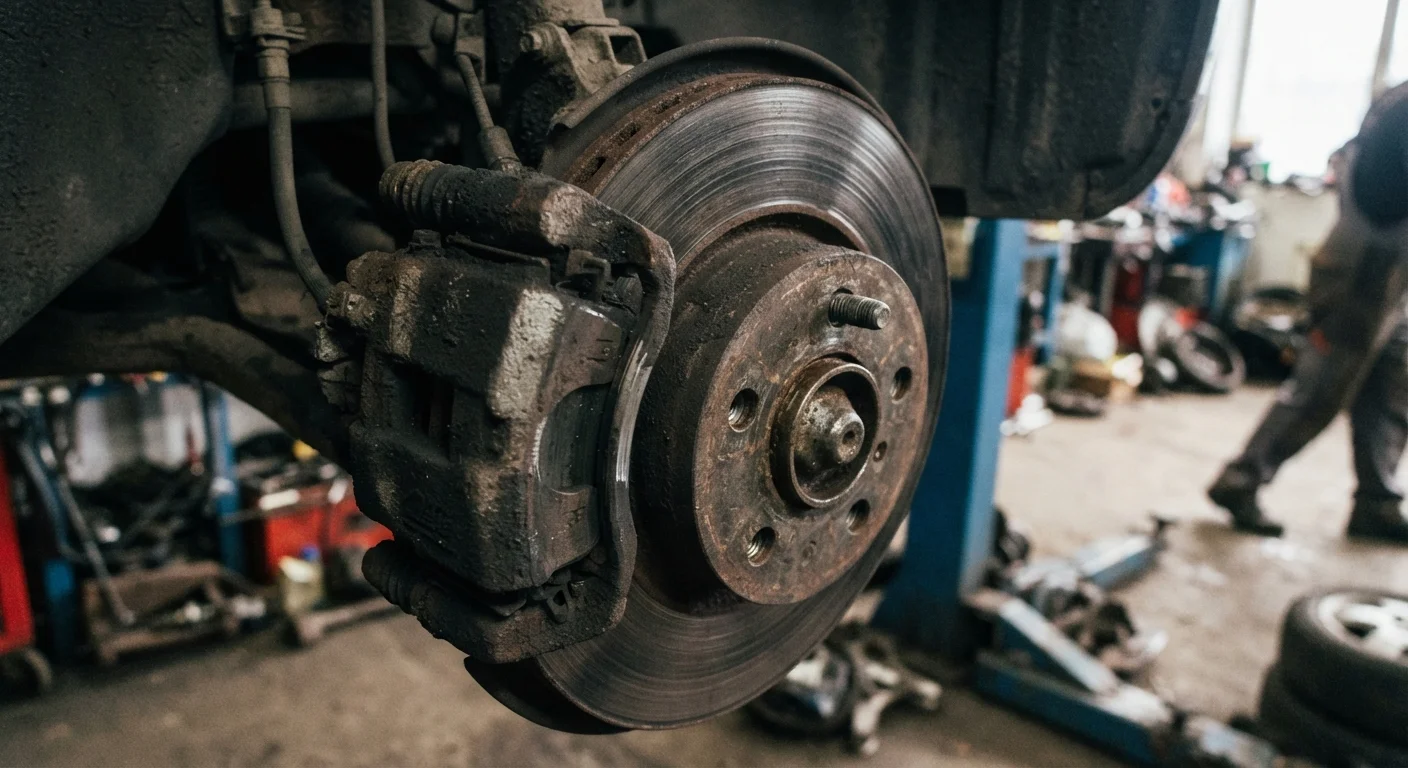
Your vehicle's disc brakes work by clamping friction material — the brake pad — against a spinning metal rotor. Every time you press the brake pedal, a hydraulic caliper squeezes the pads against the rotor surface, converting kinetic energy into heat and slowing the vehicle. This process is remarkably reliable, but it consumes the pad material over time.
The rate of wear depends on several factors: how aggressively you brake, the weight of your vehicle, the type of pads installed, and local driving conditions. Stop-and-go city commuting accelerates wear compared with steady highway miles. Understanding this process helps explain why the warning signs your car produces are so predictable — the system is essentially designed to tell you when it needs attention.
For a broader look at service intervals across your whole vehicle, see our guide to routine maintenance milestones that every car owner should know.
Squealing: The Early Warning You Shouldn't Ignore
A high-pitched squeal or squeak when you apply the brakes is the most common — and intentionally engineered — brake warning. Most brake pads include a small hardened metal tab called a wear indicator. When the friction material wears thin, this tab contacts the rotor and produces that distinctive squealing sound.
Squealing is an early warning, not a crisis. It signals that your pads still have some life left but need inspection soon. However, not all squealing is from wear indicators. Surface rust on rotors after wet weather, dusty conditions, or even certain aftermarket pad compounds can produce noise on an otherwise healthy brake system.
Morning Squeal vs. Wear Indicator Squeal
Surface rust squealing disappears after the first few stops; wear indicator squealing recurs consistently every time you brake. If you're unsure which you're hearing, pay attention for a full day of driving — persistent squealing that doesn't clear up is your cue to book an inspection.
The key distinction: occasional squealing that disappears after a few stops is often benign. Persistent squealing on every stop is the wear indicator doing its job — book a brake inspection promptly.
Grinding: A More Serious Signal
If squealing progresses to a harsh metallic grinding sound, the situation has become more urgent. Grinding almost always indicates that the friction material has worn away entirely, and the metal backing plate of the pad is now contacting the rotor directly. Metal-on-metal contact damages the rotor surface, turning what would have been a straightforward pad replacement into a more expensive job involving rotor resurfacing or replacement.
Grinding can also result from road debris trapped between the pad and rotor, or — less commonly — from a severely corroded rotor. Regardless of the cause, grinding warrants prompt professional attention. Continuing to drive on grinding brakes compromises your stopping distance and risks damaging the caliper itself, which is considerably more costly to replace.
25,000–70,000 mi
Typical brake pad lifespan range
Pad longevity varies significantly based on driving style, vehicle weight, and pad compound — city drivers often land at the lower end of this range.
~2–3 mm
Pad thickness that triggers wear indicators
Most manufacturers engineer wear indicator tabs to contact the rotor when usable friction material drops to roughly 2–3 mm, triggering the audible squeal warning.
3x
Cost increase when rotors need replacing alongside pads
Allowing pads to wear past the grinding stage frequently requires rotor replacement in addition to new pads, significantly increasing total repair cost compared with a timely pad swap.
Pulling, Pulsing, and Other Physical Clues
Brake wear and brake problems don't always announce themselves through sound. Two other important signals are pulling and pedal pulsation.
- Pulling to one side: If your vehicle drifts left or right during braking, it often indicates uneven brake pad wear between the two front wheels, a stuck or seized caliper, or a collapsed brake hose that unevenly restricts fluid pressure. A seized caliper may also cause that wheel to drag continuously, generating heat you can sometimes smell.
- Pedal pulsation or vibration: A brake pedal that pulses underfoot during normal (non-ABS) braking typically points to warped or uneven rotors. Rotors can warp from repeated heavy braking or from rapid cooling — such as driving through a puddle immediately after hard use.
- A soft or spongy pedal: This is a brake fluid or hydraulic system issue — potentially air in the lines or a failing master cylinder — rather than pad wear, and it needs immediate professional diagnosis.
If your dashboard brake warning light illuminates alongside any of these sensations, treat it as an urgent signal. Our guide to dashboard warning lights explains what that light specifically indicates and when it demands immediate action.
ABS Activation Feels Different
If your vehicle has anti-lock brakes (ABS), you may feel the pedal pulse and vibrate during a hard emergency stop — this is the system working normally, not a brake defect. ABS pulsation only occurs during threshold braking; pulsation during ordinary stops is a different matter and warrants inspection.
What to Do When You Notice These Signs
When brake symptoms appear, the appropriate response depends on the severity. Occasional light squealing warrants scheduling an inspection at your next convenience. Persistent squealing should be booked within a week or two. Grinding, pulling, pedal pulsation, or a soft pedal should be addressed as soon as possible — ideally within days, or immediately if the symptom is severe or worsening.
Routine brake inspections are straightforward for a qualified mechanic and are often included as part of tire rotation services. A technician will measure pad thickness, examine rotor condition, check caliper function, and inspect brake fluid condition and level. Catching wear early — at the squeal stage rather than the grind stage — almost always results in a lower repair bill and better safety.
Understanding what your brakes are communicating is especially important to review before a long drive. If brake fade or a brake failure does occur at speed, knowing how to respond matters just as much as regular maintenance — our guide to emergency maneuvers at speed covers exactly that scenario.