

Key Takeaways
- Most carry-on weight limits range from 15 to 22 lbs depending on the airline and route.
- Packing errors are almost always habitual, not random — the same patterns repeat trip after trip.
- Liquids, shoes, and "just in case" items account for a disproportionate share of excess weight.
- Weighing your bag at home before departure is the single most effective corrective step.
- Airline weight rules for carry-ons vary significantly and are not always clearly communicated upfront.
The Weight Adds Up Faster Than You Think
You've packed what feels like a reasonable bag — a few outfits, some toiletries, a pair of backup shoes. Then you heft it onto the airline's scale at the gate, and the number staring back at you is anything but reasonable. Sound familiar? You're not alone, and this isn't really about self-discipline. It's about a set of deeply ingrained packing habits that quietly sabotage even the most organized travelers.
Carry-on weight limits vary by airline — many US carriers don't enforce weight limits on domestic carry-ons at all, while international flights and budget carriers frequently cap bags between 15 and 22 lbs. That gap between "assumed" and "actual" rules is itself part of the problem. When you don't know the specific limit, you pack to a vague internal standard that almost always runs heavy.
The good news: once you understand why this keeps happening, fixing it becomes much more straightforward. The patterns below show up across countless trips — and each one has a practical solution.
Ignoring the specific airline's carry-on weight policy before packing.
Why it happens: Travelers often assume all airlines follow the same general standard, especially if they fly the same domestic carrier regularly and have never been stopped.
Packing full-size toiletry bottles instead of travel-sized or decanted containers.
Why it happens: It feels more convenient to grab the bottle already sitting on your bathroom shelf, and the TSA 3-1-1 liquid rule focuses attention on volume per container rather than total weight.
Bringing multiple pairs of shoes "just in case" different occasions arise.
Why it happens: Shoes feel like an insurance policy — one for walking, one for dinner, one for the beach. The weight of each pair gets mentally minimized because they're thought of as individual items.
Adding "just in case" items that duplicate things already available at the destination.
Why it happens: Anxiety about being unprepared pushes travelers toward over-provisioning — extra medications, backup chargers, a second umbrella, reading material they may not open.
Not using a luggage scale at home before heading to the airport.
Why it happens: Most people estimate weight by feel, which is unreliable. A bag that felt manageable last trip may have quietly gotten heavier as packing habits crept upward.
Packing for hypothetical scenarios rather than the actual itinerary.
Why it happens: Travelers imagine unlikely situations — a sudden formal event, an unexpected cold snap, a spontaneous hike — and pack for those instead of the trip they've actually planned.
Building Better Habits Before You Zip Up
Awareness of the mistakes is only half the equation. The other half is building a pre-departure routine that makes weight visible before it becomes a problem at the airport. A luggage scale — an inexpensive tool available at most general merchandise stores — is arguably the most useful travel accessory most people don't own. Weighing your bag the night before departure, then making deliberate cuts, transforms packing from a guessing game into an informed process.
Check Every Airline on Your Route
If your trip involves a connection on a different carrier — including regional partners — each airline's carry-on weight rules apply independently. A bag that cleared the first carrier's standards may still be flagged on a codeshare or connecting flight. Always verify the baggage policy for every operating carrier listed on your ticket, not just the one you booked through.
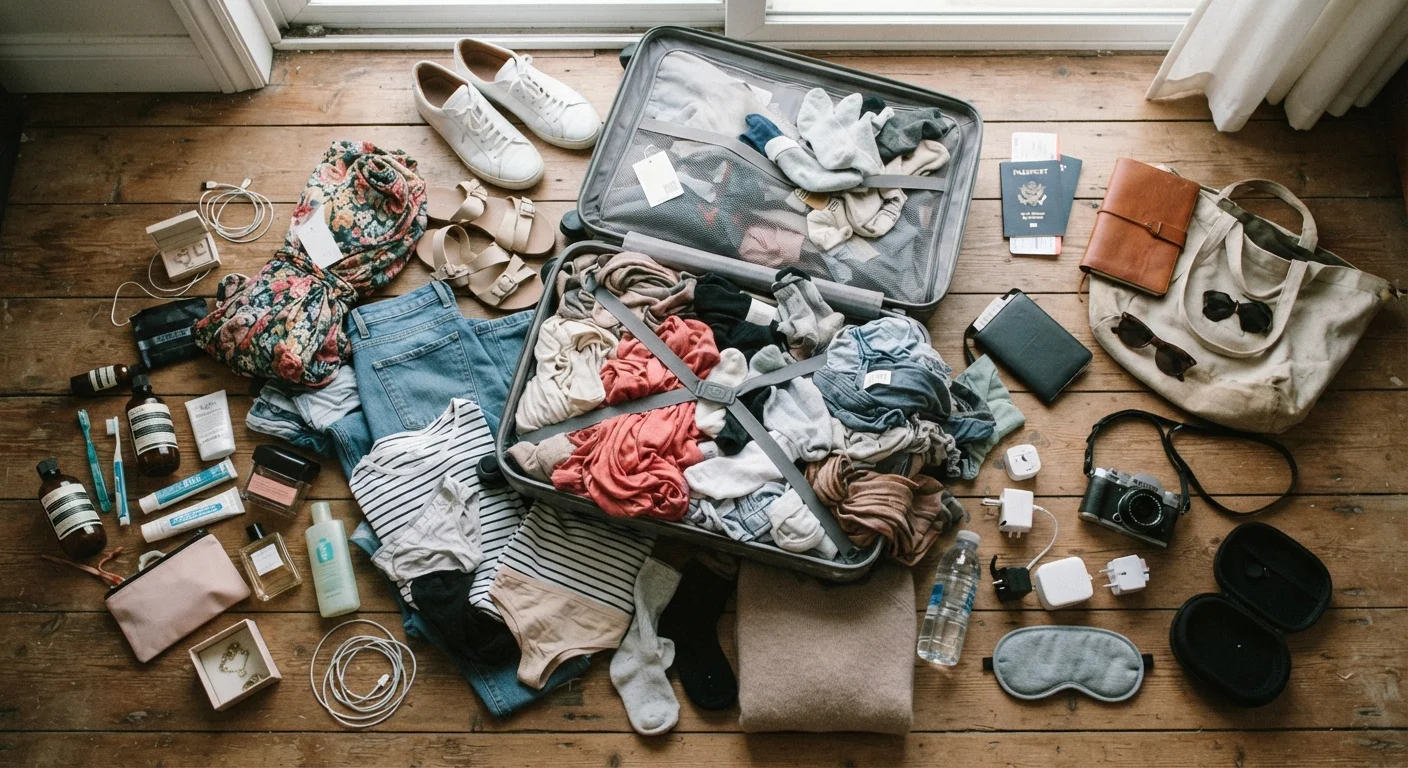
It also helps to think of packing in categories rather than just tossing items in. Lay everything out first, then weigh the full pile before a single thing goes in the bag. This makes it far easier to identify which category is the real culprit — is it the shoes? The "just in case" layer? The liquids that could have been decanted into smaller containers?
If you want to go further, step-by-step capsule packing guidance can show you exactly how experienced light travelers fit two weeks into a single compact bag. And if your bigger challenge is fitting too much into your actual itinerary rather than your bag, overloading your schedule has its own set of consequences worth understanding before you go. For a broader look at the habits that keep travel running smoothly, experienced travelers rely on a consistent set of preparation routines that go well beyond packing alone.
~40%
Travelers who pack items they never use
Surveys of returning travelers consistently find that a significant share of packed items go unused — contributing dead weight throughout the trip.
1.5–3 lbs
Average weight added per extra pair of shoes
Shoes are one of the densest packing categories; even lightweight sneakers add meaningful carry-on weight when packed rather than worn.