

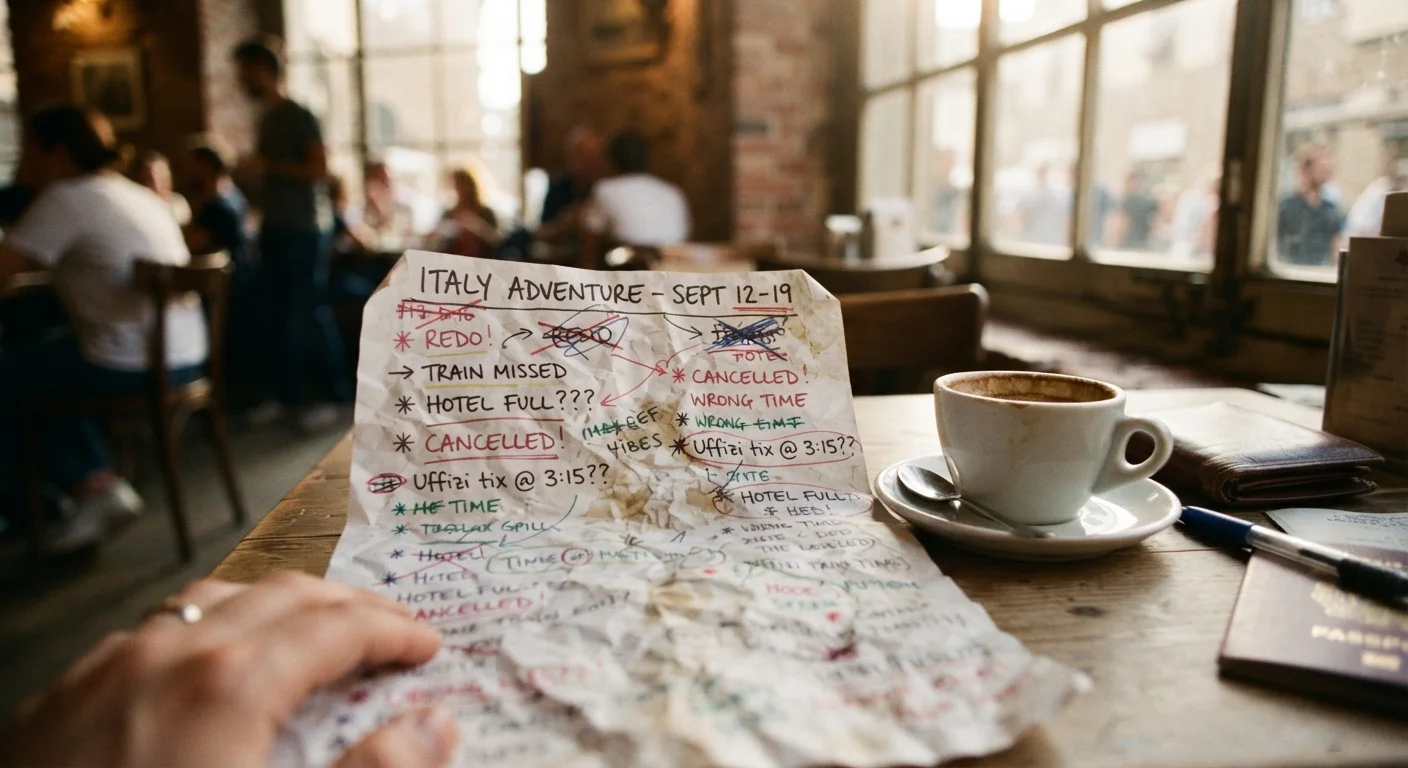
Key Takeaways
- Cramming too many activities into a single day consistently leads to stress and diminished enjoyment.
- Unscheduled time is not wasted time — spontaneous moments often become a trip's best memories.
- Realistic travel time estimates between sites are one of the most overlooked planning steps.
- Building buffer days or afternoons off gives you genuine flexibility when things go sideways.
- Smarter itinerary planning means choosing depth over breadth at each destination.
The Illusion of the Perfect Packed Day
Picture this: day three of your Roman holiday. You've got the Colosseum at 9 a.m., the Vatican by noon, the Borghese Gallery at 3 p.m., and a cooking class at 7 p.m. It looks magnificent on paper. By 2:30 p.m., you're sunburned, running late, and snapping at your travel companion over which metro exit to take. The day that promised to be unforgettable is becoming one you'd rather forget.
Over-scheduling is one of the most common — and most avoidable — trip-planning errors. It doesn't come from laziness or poor judgment; it comes from genuine enthusiasm and the very human desire to make the most of precious time away. But there's a difference between making the most of a trip and squeezing every last drop from it until nothing feels good anymore.
Understanding why we overpack our itineraries is the first step toward planning smarter. For a broader foundation, explore what goes into a well-planned trip before you build your next schedule.
Common Itinerary Mistakes — and How to Avoid Them
The mistakes below aren't rare edge cases. They show up repeatedly across trip styles, destinations, and experience levels. Recognizing them in your own planning is where better travel begins.
Scheduling activities back-to-back with no buffer time between them.
Why it happens: Travelers want to maximize every paid vacation day and feel guilty leaving gaps in the schedule, so they fill every hour.
Underestimating how long travel between sites actually takes.
Why it happens: Map apps show driving or transit time, but don't account for parking, queuing, getting lost, or simply walking from the station to the attraction.
Planning the same number of activities every single day, including arrival and departure days.
Why it happens: Itineraries are often built on a spreadsheet where every row looks identical, making it easy to forget that travel days are inherently tiring and unpredictable.
Prioritizing quantity of sights over depth of experience.
Why it happens: Social media and travel listicles celebrate the number of destinations visited, creating pressure to check off as many landmarks as possible.
Failing to account for rest, meals, and basic human needs in the schedule.
Why it happens: Planning sessions happen at a desk, where hunger and fatigue are easy to forget — real travel involves real bodies that need food, rest, and downtime.
Exhaustion Is a Real Trip Killer
Decision fatigue and physical exhaustion from an over-scheduled trip don't just make the vacation less fun — they can affect your health, judgment, and safety. If you find yourself dreading the next item on your list, that's a signal your itinerary needs trimming. A trip that leaves you needing a vacation from your vacation hasn't served its purpose.
If you're working from scratch, building your itinerary step by step with balance built in from the start is far easier than retrofitting flexibility into an already-crammed plan.
What Breathing Room Actually Gives You
Empty space in an itinerary isn't a planning failure — it's a planning feature. Those unscheduled pockets of time are where the best travel stories tend to come from: the tiny bookshop you ducked into during a rainstorm, the conversation with a local that sent you to a neighborhood you'd never have found on a list, the afternoon nap that meant you actually enjoyed dinner instead of nodding off through it.
52%
Travelers who report vacation stress
A survey by the American Psychological Association found roughly half of U.S. adults experience stress related to travel logistics and time pressure during vacations.
1 in 3
Vacationers needing recovery time after returning
Research published in the Journal of Happiness Studies found that post-trip wellbeing dropped sharply when trips were experienced as hectic or overly demanding.
The difference between a fixed minute-by-minute schedule and one with genuine flexibility shapes not just your mood, but the kinds of experiences you're open to. Understanding when to plan tightly and when to leave room can help you match your approach to your actual travel style — and the destination itself.
For practical day-to-day habits that support a more relaxed travel rhythm, see the habits experienced travelers rely on to keep things running smoothly without over-engineering every hour. You can also browse general travel tips for ideas that apply across destinations and trip types.