

Key Takeaways
- Ingredients are listed by weight before processing, so moisture content affects their order.
- The guaranteed analysis shows minimum or maximum nutrient percentages, not exact amounts.
- An AAFCO nutritional adequacy statement tells you whether a food is complete and balanced.
- Feeding guidelines on labels are starting points, not precise prescriptions for every individual animal.
- Marketing terms like 'natural' and 'premium' have limited or no regulatory definitions.
Pet Food Label
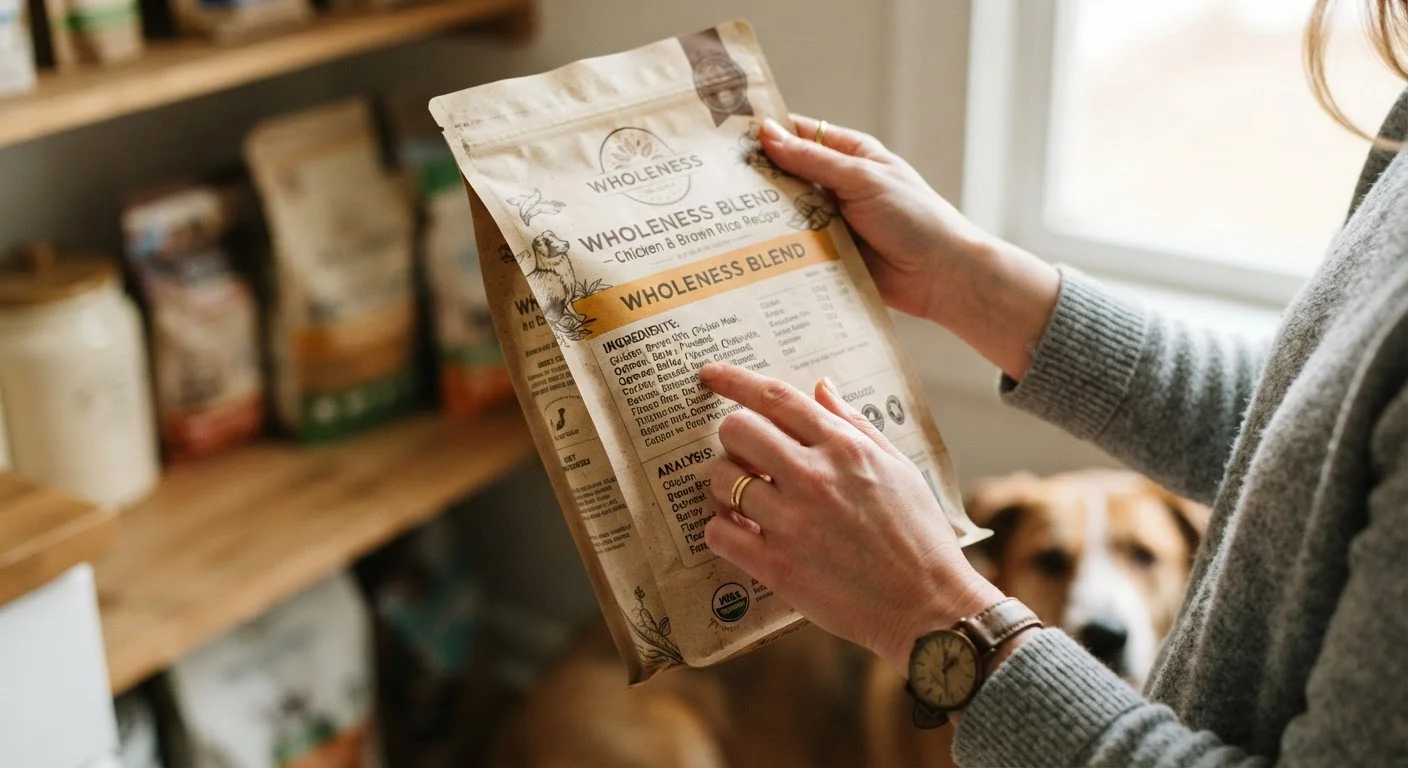
A pet food label is the regulated set of information printed on commercial pet food packaging. It includes the product name, ingredient list, guaranteed analysis, nutritional adequacy statement, and feeding guidelines. In the United States, pet food labeling is governed by the Association of American Feed Control Officials (AAFCO) and overseen at the state level.
AAFCO sets the model regulations and nutrient profiles that most states adopt; the FDA enforces federal safety standards for pet food under the Federal Food, Drug, and Cosmetic Act.
The Ingredient List: Order Matters, But Context Is Everything
The ingredient list on pet food runs from highest to lowest by weight before cooking. That sounds straightforward, but water content complicates the picture significantly. A whole meat like chicken contains roughly 70% moisture, so it weighs a lot raw. After processing, that same chicken shrinks to a fraction of its original weight. Meanwhile, chicken meal — a concentrated, pre-dried protein — may appear third or fourth on the list yet contribute more actual protein to the finished product.
This is why reading the first five ingredients alone can mislead you. Look at the protein sources as a group: are they named (chicken, salmon, beef) or generic (poultry, meat)? Named sources indicate a single, identifiable species, which is a sign of greater transparency. Also watch for ingredient splitting, where a single ingredient like peas appears in multiple forms (pea protein, pea flour, pea starch) spread across the list to make each entry look smaller than it is.
For a deeper look at how ingredient lists work across different food categories, see reading a pet food label without getting lost in the fine print.
Focus on the First Five Protein Sources
When scanning a new pet food, look at where protein sources appear within the first five ingredients and whether they are named (e.g., 'salmon') rather than generic (e.g., 'fish'). Named, species-specific proteins reflect greater ingredient transparency. If multiple forms of the same ingredient appear spread across the list, factor them together when estimating their total contribution.
Guaranteed Analysis: The Numbers Behind the Nutrients
Every pet food label in the US must include a guaranteed analysis panel listing at minimum: crude protein (minimum), crude fat (minimum), crude fiber (maximum), and moisture (maximum). These are legal guarantees, not precise nutritional values — actual content may be higher or lower within regulatory limits.
The biggest practical challenge is comparing foods with different moisture levels. A wet food at 78% moisture and a dry kibble at 10% moisture look wildly different on paper, but that gap is largely water. To compare them fairly, convert both to a dry-matter basis: divide each nutrient percentage by the percentage of dry matter (100 minus moisture), then multiply by 100. This gives you nutrient density on an equal footing.
4,000+
Commercial pet food products on the US market
The FDA oversees a large and diverse marketplace, making label literacy an important consumer skill for pet owners.
78%
Typical moisture content in canned wet pet food
This high water content is why nutrient percentages in wet foods look much lower than in dry kibble and must be converted to dry-matter basis for accurate comparison.
2 methods
Ways manufacturers can earn an AAFCO adequacy statement
Formulation against AAFCO nutrient profiles or passing a structured feeding trial — both are recognized compliance paths under US labeling rules.
The guaranteed analysis tells you nothing about digestibility — how much of a nutrient your pet's body can actually absorb and use. A food can list high crude protein while sourcing it from poorly digestible ingredients. This is why the quality and source of ingredients still matters alongside the numbers.
The AAFCO Statement: The Most Important Line on the Label
Buried near the bottom of most pet food labels is a short paragraph that carries significant weight: the nutritional adequacy statement. Issued in accordance with AAFCO guidelines, this statement tells you whether the food is formulated to be nutritionally complete and balanced, and for which life stage — adult maintenance, growth (puppies or kittens), reproduction, or all life stages.
There are two ways a manufacturer can earn this statement. The first is formulation: the recipe meets AAFCO's established nutrient profiles on paper. The second is feeding trials: actual animals ate the food for a defined period and maintained health markers within set parameters. Feeding trials provide real-world evidence, though formulation alone is still considered a valid compliance path.
If a label says the food is intended for supplemental or intermittent feeding only, that means it is not designed to serve as a sole diet. Feeding it as a primary meal long-term could create nutrient gaps. This matters most for treats, toppers, and some specialty formulas.
Life Stage Matters for Nutritional Adequacy
A food labeled 'for adult maintenance' is not formulated to meet the higher nutrient demands of growing puppies or kittens, nor of pregnant or nursing animals. Feeding a maintenance food to a puppy long-term could lead to nutritional shortfalls during a critical growth window. Always match the AAFCO life stage on the label to your pet's actual life stage, and confirm the choice with your veterinarian.
Feeding Guidelines and Marketing Language
Feeding guidelines give daily amounts based on a pet's weight. They are calculated for average animals under average conditions — useful as a starting point, not a fixed rule. Factors like age, reproductive status, activity level, and concurrent health conditions can shift actual caloric needs significantly up or down. Your veterinarian is the right person to help calibrate amounts for your specific animal.
Marketing language occupies a separate, largely unregulated space on the label. Terms like premium, gourmet, and holistic have no legal definitions in pet food and carry no guaranteed nutritional meaning. Natural does have a loose AAFCO definition — it generally means no artificial colors, flavors, or preservatives — but it doesn't imply organic sourcing or superior nutrition. Human-grade is a stronger claim that requires all ingredients to have been handled in facilities approved for human food; this is verifiable and more meaningful.
For a broader look at how pet nutrition claims stack up against the evidence, visit the truth behind common pet nutrition myths. If you're also weighing food formats, dry food, wet food, and raw diets breaks down the practical trade-offs.
This article is for general informational purposes only and does not constitute veterinary or nutritional advice. Always consult a licensed veterinarian for guidance specific to your pet's health and dietary needs.