

Key Takeaways
- Ingredients are listed by weight before cooking, so moisture content can skew apparent rankings.
- The guaranteed analysis shows minimum or maximum nutrient levels, not exact amounts.
- An AAFCO nutritional adequacy statement tells you whether a food is complete and balanced.
- Feeding guidelines on labels are starting points, not precise prescriptions for every individual pet.
- Marketing terms like 'natural' and 'premium' have limited regulatory meaning on pet food labels.
What you will need
Why Pet Food Labels Are Worth Decoding
A pet food label packs a remarkable amount of information into a small space — and a surprising amount of that information is regulated. In the United States, pet food labeling is governed by the Food and Drug Administration (FDA) and the Association of American Feed Control Officials (AAFCO), with individual states adding their own requirements. Together, these rules create a standardized format that, once you know how to read it, gives you genuine insight into what you're feeding your animal.
The challenge is that marketing language and regulatory language sit side by side on the same package, and they serve very different purposes. Manufacturers are free to use evocative words like wholesome or premium alongside tightly controlled terms like complete and balanced. Knowing which words carry regulatory weight — and which don't — is the core skill this guide builds.
Marketing Language Can Be Misleading
Terms like 'holistic,' 'premium,' 'gourmet,' and 'human-grade' are not defined or regulated by the Association of American Feed Control Officials (AAFCO) or the FDA for pet food. They tell you nothing reliable about ingredient quality or nutritional adequacy. Focus on the guaranteed analysis, ingredient list, and AAFCO statement instead.
For a broader look at how label claims can diverge from nutritional reality, our article on common pet nutrition myths unpacks several widely held misconceptions. And if you're weighing different food formats altogether, dry food, wet food, and raw diets offers a balanced comparison of each approach.
How to Read Each Section of the Label
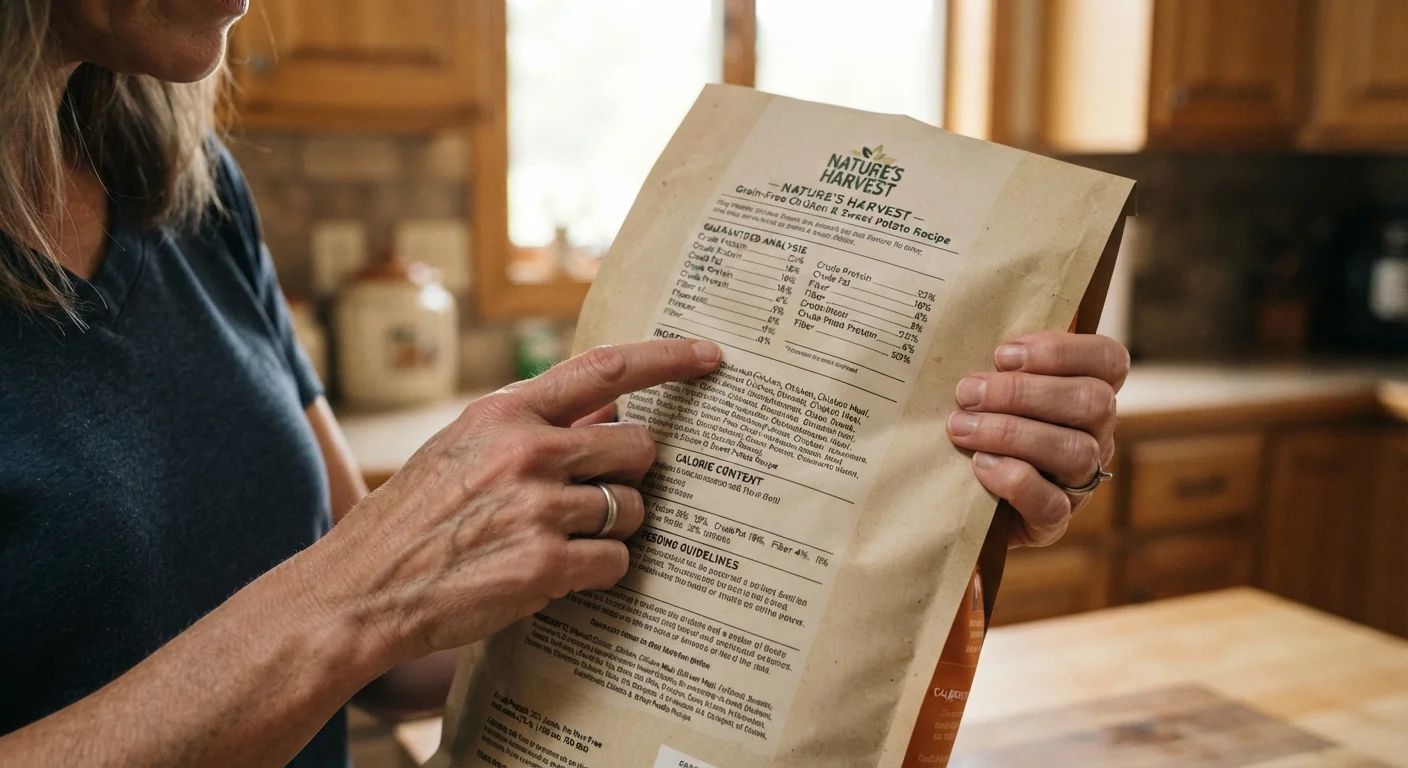
Every regulated pet food label includes the same core sections. Working through them in order — from the product name down to the feeding guidelines — gives you a complete picture of what you're considering. Gather your tools and your label, then follow the steps below.
What you will need
Pet food bag or can
The physical or digital label you'll practice reading through each step.
AAFCO guidelines reference
AAFCO publishes nutrient profiles for dogs and cats; understanding its standards helps you interpret the adequacy statement.
Veterinarian or veterinary nutritionist
A professional who can interpret label information in the context of your specific pet's health needs.
Find the Product Name and Species Designation
The product name isn't just branding — it contains regulated information. AAFCO rules dictate that if a single ingredient is named (e.g., Salmon for Cats), that ingredient must make up at least 95% of the product by weight, excluding water. If the name says Salmon Dinner or Salmon Entrée, the named ingredient only needs to be 25% of the product. A label saying with Salmon requires just 3%. Confirm the label clearly states the intended species — food formulated for dogs is not appropriate for cats, and vice versa.
Check the AAFCO Nutritional Adequacy Statement
This is one of the most important lines on the label. Look for a statement such as: "[Product name] is formulated to meet the nutritional levels established by the AAFCO Dog Food Nutrient Profiles for adult maintenance." This tells you two things: whether the food is nutritionally complete and balanced, and for which life stage. Life stage categories include growth (puppies/kittens), adult maintenance, reproduction, or all life stages. A food labeled for supplemental feeding only is not complete nutrition and should not be a pet's sole diet. Critically, also note whether the food was substantiated through feeding trials or formulated to meet a nutrient profile — feeding trials are a higher level of evidence.
Read the Ingredient List Carefully
Ingredients are listed in descending order by pre-cooked weight. This means a meat listed first may drop lower in the ranking after water is removed during cooking. Watch for ingredient splitting, where a single ingredient (like grain) appears multiple times under different names (e.g., corn flour, corn gluten meal, ground corn) — each entry appears lower individually, but their combined total may be higher than the first ingredient. Look for a named protein source (e.g., chicken, beef) rather than vague terms like meat by-products if specificity matters to you. For more context on how proteins compare across different sources, see our guide to protein sources.
Interpret the Guaranteed Analysis
The guaranteed analysis panel lists minimum percentages of crude protein and crude fat, and maximum percentages of crude fiber and moisture. Note that these are guarantees, not exact values — the actual nutrient content may be higher or lower. For cats, a minimum crude protein of around 26% in dry food is a general reference point, though needs vary. High moisture content in wet food can make protein percentages look lower than they really are on a dry matter basis. For a parallel look at how nutrition labels work for human foods, reading a human nutrition label follows similar interpretive logic.
Review the Feeding Guidelines and Adjust Accordingly
Feeding guidelines on labels are population-level averages based on typical activity and body weight. They are a reasonable starting point, but your specific pet's needs will differ based on age, activity, metabolism, and health status. Use the chart as an initial guide, then monitor body condition over two to four weeks and adjust portions up or down. Overfeeding is a common contributor to pet weight gain — for a fuller look at why weight management is more complex than it appears, see why pets gain weight. For more structured guidance on feeding routines, feeding schedules and portion sizes covers the fundamentals in detail.
Use the Dry Matter Basis for Fair Comparisons
When comparing a wet food to a dry food, the guaranteed analysis percentages aren't directly comparable because moisture content differs widely. Converting values to a 'dry matter basis' removes moisture from the equation and gives you a fair nutritional comparison. Your vet or a veterinary nutritionist can walk you through this calculation.
Labels Don't Replace Veterinary Guidance
Understanding a pet food label helps you ask better questions, but it doesn't substitute for a veterinarian's assessment of your specific animal's health needs. Life stage, health conditions, body weight, and activity level all influence what a given pet actually requires. Always consult your vet before making significant changes to your pet's diet.
Once you're comfortable reading individual labels, the Pet Care Basics hub offers additional guidance on feeding, grooming, and general wellness across pet types.