

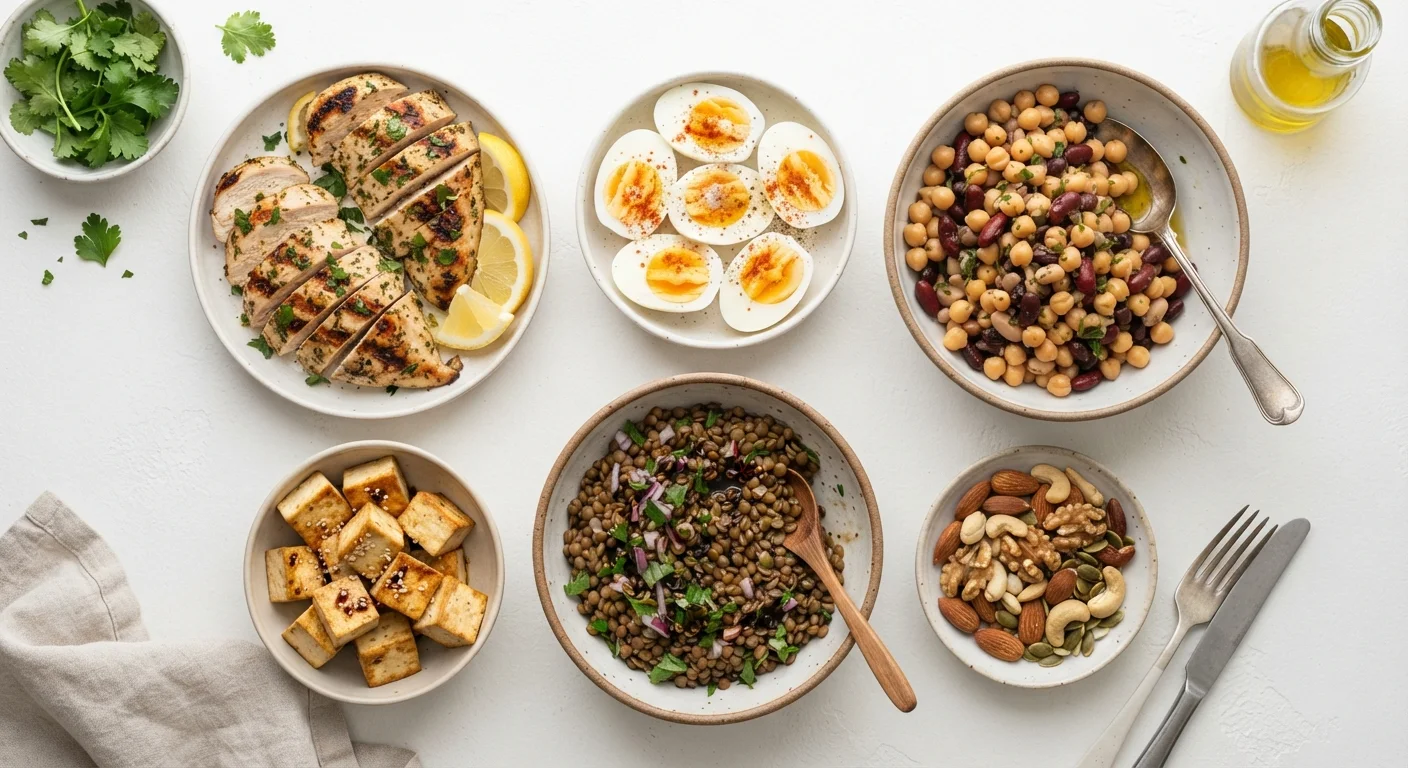
Key Takeaways
- Animal proteins are generally 'complete,' containing all nine essential amino acids in sufficient quantities.
- Most plant proteins are low in one or more essential amino acids, but combining sources across meals addresses this.
- Bioavailability — how well the body absorbs and uses protein — tends to be higher for animal sources, though the gap is smaller than commonly assumed.
- Both animal and plant protein sources can support healthy diets when chosen thoughtfully and balanced with overall nutrition.
- Individual health needs, ethical values, and dietary patterns all influence which protein sources are right for a given person.
Our Verdict
Neither animal nor plant protein is universally superior — each category has genuine strengths and trade-offs. Animal proteins offer complete amino acid profiles and high bioavailability, while plant proteins bring fiber, phytonutrients, and lower environmental impact. A well-planned diet can meet protein needs from either source, or from a combination of both.
| Best for | Recommended |
|---|---|
| Those seeking maximum protein efficiency with minimal meal planning | Animal protein sources |
| Those prioritising fiber intake, phytonutrients, and plant-forward eating | Plant protein sources |
| Most general readers looking for flexibility and overall dietary balance | Mixed protein approach |
What Makes a Protein 'Complete'?
Proteins are built from amino acids — 20 in total, nine of which the human body cannot synthesize and must obtain from food. These nine are called essential amino acids. A protein source is considered "complete" when it provides all nine in amounts sufficient to support the body's needs.
Animal proteins — including meat, poultry, fish, eggs, and dairy — are consistently complete. This makes them straightforward building blocks for tissue repair, enzyme production, and immune function. Plant proteins are a more varied story. Soy and quinoa are notable exceptions that provide all nine essential amino acids. Most other plant sources — legumes, grains, nuts, seeds — are low in at least one essential amino acid. Beans tend to be low in methionine; grains tend to be low in lysine.
This doesn't mean plant-based eaters fall short. Eating a variety of plant proteins across the day — rice and beans being the classic example — naturally covers the full amino acid spectrum without requiring precise meal-by-meal calculation. This is sometimes called protein complementation, and most nutrition researchers agree it doesn't need to happen at every meal, just consistently over time.
Bioavailability: How Much Protein Actually Gets Used?
Eating protein and using protein aren't the same thing. Bioavailability describes how efficiently the body digests and absorbs a protein source. One common measure is the Protein Digestibility-Corrected Amino Acid Score (PDCAAS), which accounts for both amino acid content and digestibility.
| Animal Protein | Plant Protein | Mixed Approach | |
|---|---|---|---|
| Amino acid completeness | Complete in most sources | Incomplete in most; complete in soy, quinoa | Complete when sources are varied |
| Bioavailability (PDCAAS) | Generally high (0.9–1.0) | Variable; moderate to high when prepared | High overall with variety |
| Fiber content | None | Significant | Moderate to significant |
| Vitamin B12 | Naturally present | Absent (needs fortification/supplement) | Present via animal sources |
| Saturated fat | Present in many sources | Generally absent | Depends on animal choices |
| Phytonutrients & antioxidants | Minimal | Abundant | Moderate |
| Meal planning complexity | Low | Moderate (requires variety) | Low to moderate |
Animal proteins — eggs, dairy, and meat — typically score near the top of PDCAAS rankings. Many plant proteins score lower, partly because plant cell walls and compounds like phytates can interfere with digestion. However, cooking, soaking, sprouting, and fermentation all improve plant protein bioavailability meaningfully. Tofu and tempeh, for instance, are significantly more digestible than raw soybeans.
It's worth noting that the differences in bioavailability between well-prepared plant proteins and animal proteins are smaller in practice than headline comparisons suggest, especially in the context of a varied diet. See our guide to evaluating nutrition research for context on how these measurements are derived and debated.
Boosting Plant Protein Absorption
Soaking dried beans overnight and rinsing them before cooking reduces phytates, which can inhibit mineral absorption. Fermenting soy into tempeh substantially increases its digestibility compared to whole soybeans. Pairing iron-rich plant foods with a source of vitamin C at the same meal also improves non-heme iron uptake.
Beyond Protein: What Else Comes With Each Source?
Protein sources are never just protein. Choosing between a chicken breast and a cup of lentils also means choosing between their broader nutritional packages.
- Animal proteins often deliver vitamin B12, heme iron (highly absorbable), zinc, and omega-3 fatty acids (particularly in fatty fish). They typically contain no fiber and may carry saturated fat depending on the cut.
- Plant proteins come packaged with dietary fiber, phytonutrients, folate, and antioxidants. They contain non-heme iron (less absorbable than heme, but pairing with vitamin C helps) and generally no saturated fat.
For people following entirely plant-based diets, vitamin B12 deserves specific attention — it is found reliably only in animal foods and fortified products, and supplementation is often appropriate. This is an area where consulting a registered dietitian is genuinely useful rather than optional.
For a broader look at how to proportion these food groups at mealtimes, see Building a Balanced Plate.
~0.8g/kg
General adult daily protein recommendation
The Recommended Dietary Allowance (RDA) for protein in healthy adults is approximately 0.8 grams per kilogram of body weight per day, according to the National Academies of Sciences, Engineering, and Medicine.
~30%
Reduction in meat consumption if U.S. diets shifted plant-forward
Research published in peer-reviewed environmental nutrition journals suggests meaningful reductions in dietary greenhouse gas emissions when animal protein is partially replaced by plant protein.
This article is for general informational and educational purposes only. It is not medical or nutritional advice. Consult a qualified healthcare professional or registered dietitian for guidance tailored to your individual health needs.