

Key Takeaways
- Stress triggers an automatic hormonal response involving cortisol and adrenaline.
- Short-term (acute) stress can be protective; chronic stress poses distinct health risks.
- Chronic stress affects the immune system, cardiovascular system, digestion, and mood.
- The brain's threat-detection center, the amygdala, plays a central role in the stress response.
- Recognizing the difference between normal pressure and chronic stress is an important health skill.
Stress Response
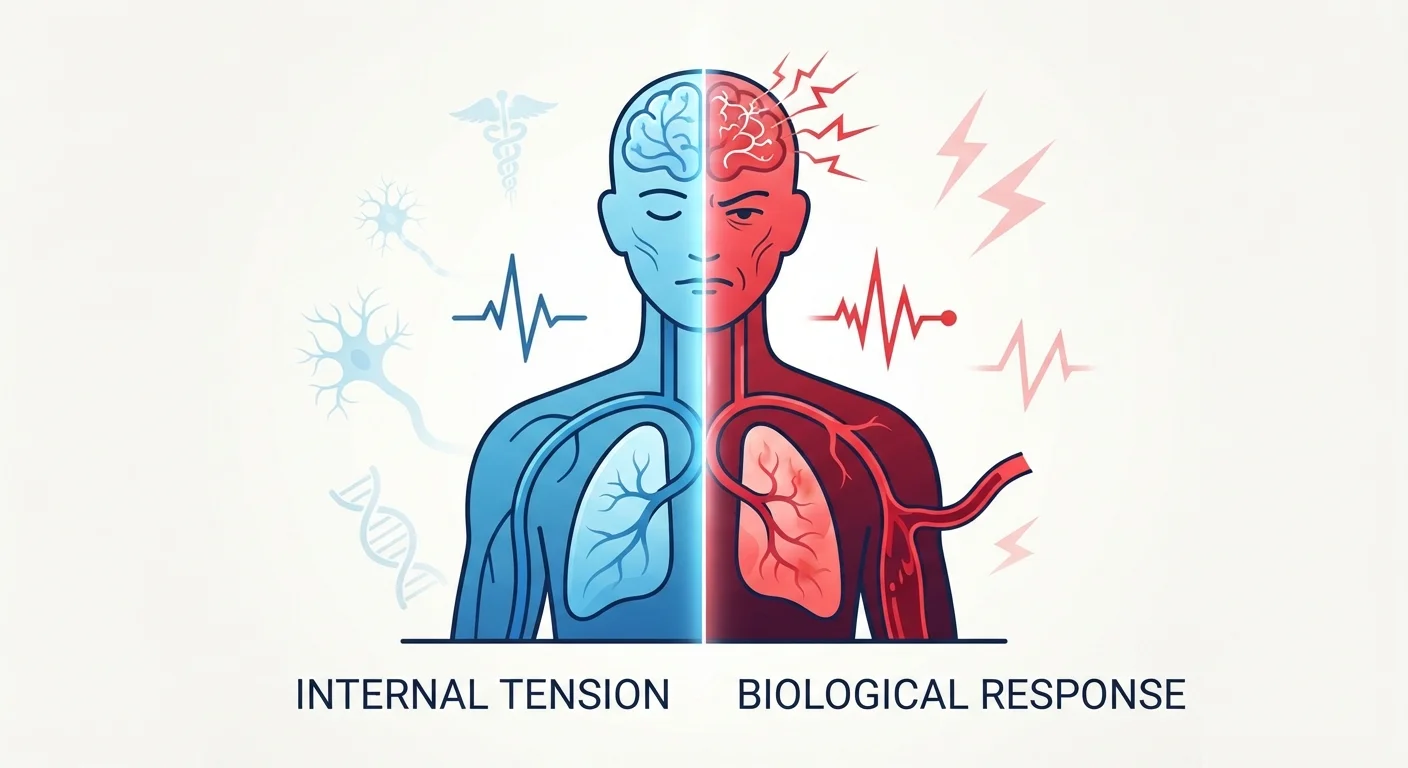
The stress response is the body's automatic reaction to any demand or perceived threat. It triggers a cascade of hormonal and physical changes designed to help you cope with challenges. While short-term stress can be useful, repeated or prolonged activation of this system can affect both physical health and mental well-being.
The response is mediated primarily by the hypothalamic-pituitary-adrenal (HPA) axis and the sympathetic nervous system, coordinating the release of cortisol and adrenaline.
The Biology of Stress: What Happens in the First Few Seconds
When your brain perceives a threat — whether a charging animal or a tense email from your boss — a tiny region called the amygdala fires an alert. Within milliseconds, the hypothalamus signals the adrenal glands to flood the bloodstream with adrenaline. Heart rate climbs. Breathing quickens. Muscles tense. Blood is redirected away from digestion toward the limbs.
This is the classic fight-or-flight response. It evolved to help our ancestors escape genuine physical danger. The prefrontal cortex — the rational, decision-making part of your brain — temporarily takes a back seat so your body can react fast.
Seconds later, the hypothalamic-pituitary-adrenal (HPA) axis activates a slower but sustained wave: cortisol. This hormone keeps blood sugar elevated, suppresses non-essential functions, and maintains heightened alertness until the perceived threat passes.
77%
Adults reporting physical stress symptoms
According to the American Psychological Association's Stress in America survey, a substantial majority of adults regularly experience physical symptoms they associate with stress.
2–3×
Increased cardiovascular risk with chronic stress
Research published in peer-reviewed cardiology literature suggests chronic psychosocial stress is associated with a meaningfully elevated risk of cardiovascular events, though individual risk varies widely.
~20 min
Time for cortisol to peak after a stressor
Studies on the HPA axis response show cortisol typically reaches its highest blood concentration roughly 15–20 minutes after the onset of a stressor, then gradually declines in healthy individuals.
Acute vs. Chronic Stress: Why the Difference Matters
Acute stress — the kind tied to a specific, time-limited event — is not inherently harmful. In fact, it can sharpen focus and improve short-term performance. Once the stressor resolves, the parasympathetic nervous system (sometimes called the "rest-and-digest" system) brings the body back to baseline.
Chronic stress is a different matter. When the alarm system stays switched on for weeks or months, cortisol remains elevated. Over time, this sustained activation begins to interfere with normal physiological processes. Research broadly links chronic stress to:
- Reduced immune function, making infections harder to fight off
- Elevated blood pressure and cardiovascular strain
- Disrupted sleep patterns and fatigue
- Gastrointestinal symptoms including nausea, cramping, and appetite changes
- Hormonal imbalances affecting reproductive health
To understand the broader picture of how these factors connect to overall well-being, see The Complete Picture: Mental Wellness Across Body, Mind, and Relationships.
Knowing Your Stress Pattern Helps
Not everyone responds to stress identically. Some people show more physical symptoms; others experience mostly mood or cognitive changes. Tracking when and how stress shows up for you — even informally — can help you and a healthcare provider identify patterns and appropriate support strategies.
What Chronic Stress Does to the Brain
The brain is particularly sensitive to prolonged cortisol exposure. High cortisol levels over time can shrink the hippocampus — the region critical for memory and learning — and reduce communication between the prefrontal cortex and the amygdala. The result: decisions feel harder to make, emotions feel harder to regulate, and small setbacks feel disproportionately large.
Chronic stress also alters neurotransmitter systems, including those involving serotonin and dopamine, which can contribute to symptoms of anxiety and low mood. This is not a moral failing — it is biology. Signs Your Stress Levels May Be Affecting Your Daily Life for a practical look at what these changes can look like in everyday functioning.
“Stress is not something that happens to us. It is a response we generate — and understanding that response is the first step toward working with it rather than against it.”
— Robert Sapolsky, Professor of Biology and Neurology, Stanford University, and author on the biology of stress
Stress and the Body: Less Obvious Connections
Beyond the headline effects, stress touches systems you might not expect. The gut contains an extensive network of neurons — sometimes called the "second brain" — that communicates bidirectionally with the central nervous system. Stress can disrupt this gut-brain axis, contributing to conditions like irritable bowel syndrome (IBS) and changes in appetite.
Even your environment plays a role. Physical disorder in living spaces has been linked to elevated cortisol levels. The Psychology Behind Clutter: Why Mess Affects Your Mind explores this connection in more detail.
It is also worth noting the contrast: regular physical activity broadly counteracts many physiological stress effects by lowering baseline cortisol and improving mood-regulating neurotransmitters. What Happens to Your Body When You Start Exercising Regularly.
This article is for general informational and educational purposes only and is not a substitute for professional medical advice, diagnosis, or treatment. If you have concerns about stress or its effects on your health, please consult a qualified healthcare provider.