

Key Takeaways
- New drivers crash more often because of attention management failures, not just poor vehicle control.
- Hazard perception — the ability to spot dangers before they become emergencies — takes years of practice to develop.
- Teen drivers carry additional risk factors tied to adolescent brain development and social influences.
- The first six months of solo driving represent the highest-risk window for new drivers.
- Graduated licensing programmes measurably reduce early crash rates by limiting high-risk exposures.
- Building deliberate habits early has a lasting effect on lifetime driving safety.
Novice Driver Crash Risk
New drivers — regardless of age — crash at significantly higher rates than experienced drivers, particularly in their first 12 to 24 months behind the wheel. This elevated risk isn't simply about lacking technical skill; research shows it stems from how the brain processes unfamiliar driving situations, manages attention, and evaluates hazards. Understanding the specific mechanisms behind this risk is the first step toward addressing it.
Researchers distinguish between 'driving skill' (vehicle control) and 'driving competence' (hazard perception, situation awareness, and risk calibration) — and it is the latter that takes years of exposure to develop fully.
The Gap Between Passing a Test and Driving Safely
Earning a driver's license confirms that a new driver can demonstrate basic vehicle control and knowledge of traffic laws. It does not confirm they can consistently perceive hazards, manage competing demands, or make sound judgements under pressure — all of which are central to avoiding crashes.
Research from the National Highway Traffic Safety Administration (NHTSA) and independent traffic safety organisations consistently shows that crash rates are highest in the first 12 to 24 months of independent driving, then fall sharply with accumulated experience. The pattern holds across age groups, though it is most pronounced for teen drivers.
This isn't a failure of driver education alone. It reflects a fundamental truth about how driving competence is built: most of it comes from real-world exposure, not classroom instruction or supervised practice on familiar routes.
Novice Risk Affects All Age Groups
While teen drivers receive the most research attention, adult new drivers also show elevated crash rates in their first year. Age-related experience in other domains does not transfer to driving — the road-specific hazard perception and attention management skills that reduce crash risk must be built through driving itself.
What's Actually Happening in the Novice Brain
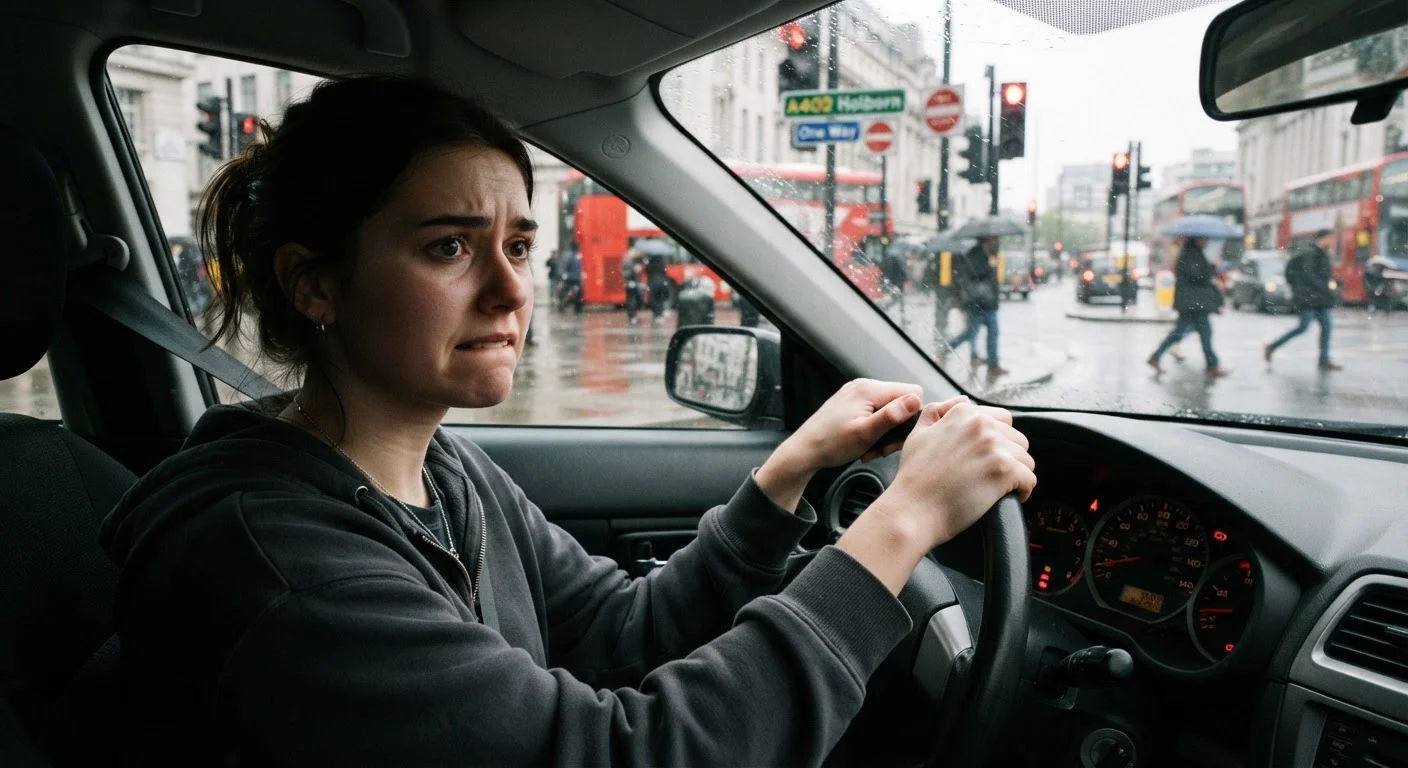
Experienced drivers perform many driving tasks automatically — reading traffic flow, maintaining lane position, anticipating intersections — freeing up cognitive capacity for new or unexpected inputs. New drivers perform those same tasks consciously, consuming most of their available attention just managing the basics.
This limited cognitive bandwidth is a primary crash risk factor. When an unexpected hazard appears — a car stopping suddenly ahead, a cyclist emerging from a blind spot — a novice driver has less spare capacity to respond quickly because routine tasks are still occupying working memory.
Hazard perception research makes this particularly clear. Studies using eye-tracking technology show that experienced drivers systematically scan further ahead, identify potential conflicts earlier, and allocate visual attention more efficiently than novices. New drivers tend to fixate on the immediate road surface rather than scanning the broader environment for developing threats.
For teen drivers, an additional layer of risk is present: the prefrontal cortex — the brain region associated with impulse control, risk evaluation, and long-term thinking — is not fully mature until the mid-20s. This means teens are neurologically more susceptible to risk-taking, peer influence, and in-the-moment decision-making that bypasses longer-term consequences.
“The hazard perception skill gap between new and experienced drivers is one of the most consistent findings in traffic safety research. New drivers aren't less careful — they're seeing less of what matters.”
— Traffic Safety Research Community, Established finding across multiple peer-reviewed driving safety studies
High-Risk Conditions New Drivers Underestimate
Research points to specific driving conditions where novice crash risk spikes sharply. These aren't edge cases — they are common, everyday scenarios that new drivers regularly encounter before they've developed the skills to handle them safely.
- Night driving: Reduced visibility compounds hazard perception challenges that already affect new drivers. Night driving carries a distinct risk profile that novices are rarely prepared for after limited supervised exposure after dark.
- Passenger distraction: Studies show crash risk for teen drivers increases measurably with each additional peer passenger in the vehicle. Social dynamics — conversation, peer pressure, showing off — compete directly with the sustained attention driving demands.
- Highway and high-speed driving: Gap acceptance when merging, lane-change decisions, and maintaining safe following distances at speed all require calibrated spatial judgement that takes time to develop.
- Fatigue: New drivers are often less attuned to the early signs of driver fatigue. Fatigue impairs reaction time and judgement in ways that compound the existing vulnerabilities of inexperience.
~50%
Higher crash rate in first year vs. subsequent years
Traffic safety research consistently finds crash rates are roughly twice as high during a new driver's first year of independent driving compared to later years, reflecting the steep learning curve of real-world exposure.
3x
Teen crash risk vs. drivers aged 20+
According to the Insurance Institute for Highway Safety (IIHS), teen drivers (16–19) have crash rates approximately three times higher per mile driven than drivers aged 20 and older.
44%
Crash rate increase with two or more teen passengers
NHTSA data indicates that teen drivers carrying two or more peer passengers experience substantially elevated crash risk compared to driving alone, underscoring the role of social distraction.
What the Evidence Says About Reducing the Risk
Graduated Driver Licensing (GDL) programmes represent the most evidence-backed intervention available. By restricting high-risk conditions — late-night driving, multiple passengers, highway travel — during the early solo driving phase, GDL systems allow novices to build foundational competence before facing compounding risk factors. Different graduated licensing approaches carry different evidence bases, but the broad consensus supports phased exposure as effective.
Beyond licensing structure, the habits formed in the early driving years tend to persist. Deliberately practising scanning technique, maintaining consistent following distances, and limiting distractions aren't just good ideas for beginners — they shape the mental models drivers rely on for decades. See our guidance on safe driving habits worth building from your first year for specific practices worth embedding early.
New drivers who understand why certain conditions are more dangerous — not just that they are — make better in-the-moment decisions. Awareness of cognitive load limits, hazard perception gaps, and risk miscalibration is itself a protective factor. It's also worth noting that new car ownership introduces its own learning curve; new car owners often underestimate the non-driving adjustments required in the first year.
Build Experience Deliberately, Not Just Passively
Logging hours on familiar, low-demand routes builds less transferable skill than practising in varied conditions — different weather, times of day, traffic levels, and road types. New drivers who actively seek out diverse exposure under low-stakes conditions develop hazard perception skills faster than those who stick to comfortable routes.