

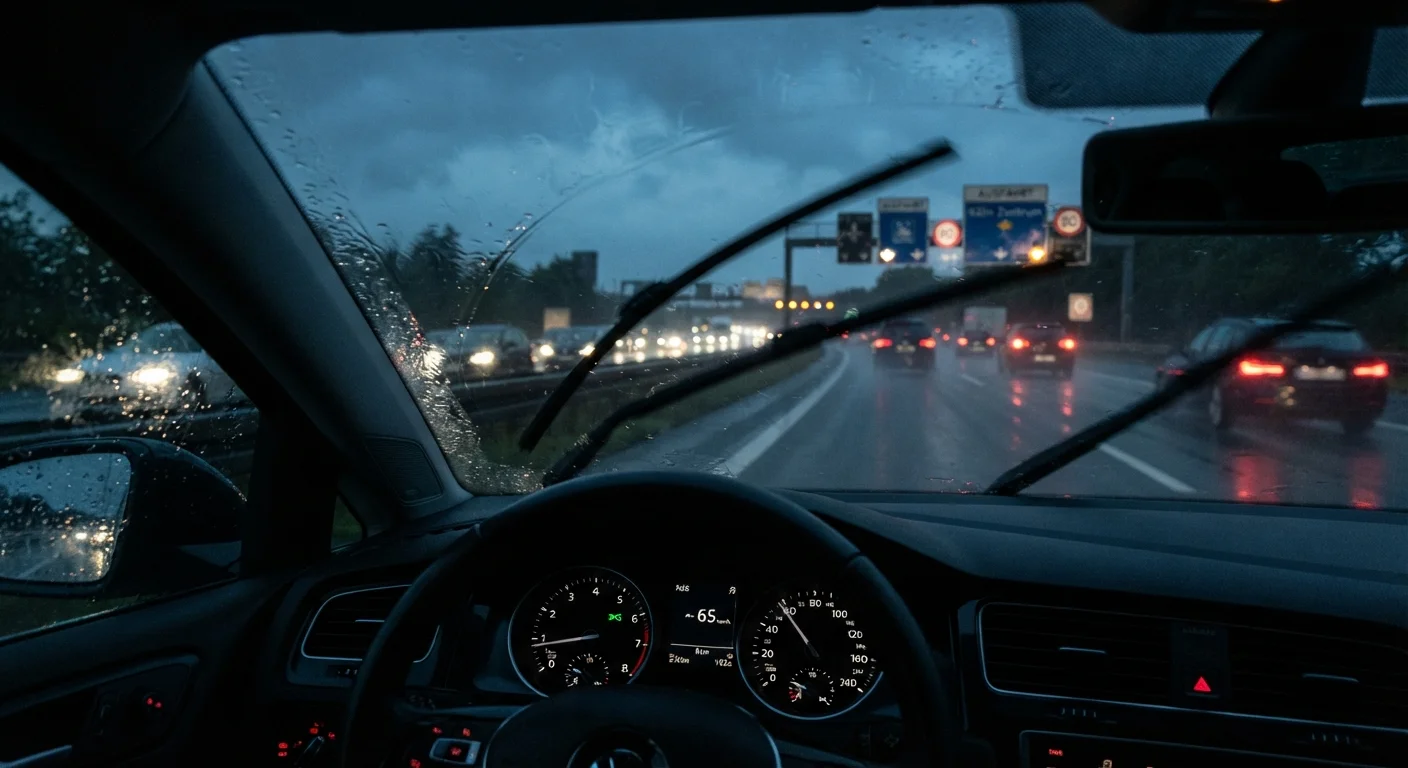
Key Takeaways
- Reduce speed significantly below the posted limit whenever rain, fog, or ice is present.
- Increase following distance to at least double your normal gap in wet or icy conditions.
- Use headlights in fog and rain even during daylight — never use high beams in fog.
- Black ice is nearly invisible; treat any road surface near freezing as potentially icy.
- Smooth, gradual inputs to steering, braking, and acceleration are critical on slippery roads.
- If conditions become too dangerous, it is always safer to pull over and wait them out.
What you will need
Why Adverse Conditions Demand a Different Approach
Rain, fog, and ice each attack a different aspect of safe driving. Rain reduces traction and visibility simultaneously. Fog can collapse your effective sightline to a matter of meters. Ice undermines the fundamental friction that makes steering and braking possible at all. Understanding what each condition actually does to your vehicle's physics — rather than treating all bad weather as vaguely dangerous — lets you apply the right responses with precision.
Weather-related crashes are among the most common on U.S. roads. The Federal Highway Administration has documented that wet pavement and rain alone account for a significant share of annual crash fatalities. Yet these crashes are largely preventable when drivers make deliberate adjustments. The steps below address each condition specifically, but several principles — reduced speed, increased following distance, smooth inputs — apply across all of them.
It is also worth noting that adverse weather compounds other risk factors. Fatigue, distraction, and impairment all become more dangerous when traction and visibility are already compromised. If you're managing tiredness alongside bad conditions, consult guidance on driver fatigue before setting out.
The 12-Second Visibility Rule in Fog
In dense fog, aim to keep your speed low enough to stop within the distance you can actually see — not the distance your headlights theoretically reach. A practical target: if you cannot see 12 seconds of road ahead at your current speed, slow down until you can. When visibility drops below roughly 100 meters, consider pulling off safely.
What You'll Need Before You Start
Safe adverse-weather driving begins before the ignition is turned. Your vehicle's condition matters as much as your technique behind the wheel. At a minimum, verify the following before driving in challenging conditions:
What you will need
Properly Inflated Tires
Correct tire pressure maximizes contact with wet or icy pavement and reduces the risk of aquaplaning.
Functional Windshield Wipers
Clear wipers are essential for maintaining visibility in rain or sleet; worn blades streak and smear.
Defrost and Dehumidifier System
Rear and front defrosters clear ice and condensation that block critical sightlines.
Winter or All-Season Tires
Winter tires maintain grip below 45°F (7°C); all-season tires offer a practical year-round compromise.
For more on keeping your vehicle prepared for variable conditions throughout the year, the car maintenance hub covers essential upkeep in depth.
Step-by-Step: Adjusting Your Driving
Work through these steps in sequence. Steps 1 and 2 apply before and as you set off; the remaining steps are active techniques for while you are driving.
Prepare before you leave
Check the weather forecast and road conditions before every trip in uncertain weather. Clear all snow, ice, and condensation from every window, mirror, and light — not just a small patch of windshield. Allow extra travel time so that schedule pressure does not tempt you to drive faster than conditions allow. Before setting out, consult the pre-drive checklist to verify your vehicle is road-ready.
Reduce your speed meaningfully
Posted speed limits reflect ideal conditions. In rain, slow to at least 10–15 mph below the limit on open roads; in fog or ice, reduce further based on actual visibility and feel. The gap between posted limits and safe speeds is substantial in adverse weather. Braking distances roughly double on wet pavement and can increase tenfold on ice compared to dry roads.
Increase your following distance
The standard three-second following rule applies to dry conditions only. In rain, extend to at least six seconds. On ice or packed snow, use eight to ten seconds or more. Count from when the vehicle ahead passes a fixed reference point to when your front bumper reaches the same point. Longer gaps give you time to brake gently rather than sharply — essential on surfaces with reduced friction.
Set your lights correctly for each condition
In rain or reduced light, switch on your low-beam headlights — many states legally require this when wipers are in use. In fog, use dedicated fog lights if your vehicle has them, combined with low beams. Never use high beams in fog: the light reflects off water droplets and creates a white-out effect that reduces your own visibility. In all adverse conditions, confirm your taillights are active so following drivers can see you.
Brake and steer smoothly
Abrupt steering or heavy braking on a slippery surface can cause a skid almost instantly. Apply brakes progressively and early — well before you need to stop. If your vehicle has ABS, apply firm, continuous pressure during an emergency stop and let the system modulate for you; do not pump the pedal. If you begin to skid, ease off the accelerator and steer gently in the direction you want the front of the car to go. See also emergency manoeuvre techniques for handling skids at speed.
Manage aquaplaning if it occurs
Aquaplaning (also called hydroplaning) happens when your tires ride on a film of water faster than they can displace it, causing a sudden loss of steering control. If it occurs: do not brake hard, do not steer sharply. Ease off the accelerator, hold the wheel steady, and allow speed to drop naturally until tires regain contact with the road. Aquaplaning is most likely above 35 mph on standing water with worn or under-inflated tires.
Know when to stop and wait
Sometimes the right decision is not to adjust your driving — it is to stop driving. If visibility in fog drops to near zero, if freezing rain coats the road surface, or if you feel persistently unable to maintain control, find a safe place to pull off the road and wait for conditions to improve. Turn on your hazard lights and move well clear of the travel lanes if possible. No destination is worth the risk of driving in genuinely unmanageable conditions.
Black Ice Offers Almost No Warning
Black ice — a thin, transparent layer of ice on pavement — looks like a wet road surface. It forms most often on bridges, overpasses, and shaded stretches when air temperatures hover around or below 32°F (0°C). If your vehicle suddenly feels unnaturally quiet under the tires and steering feels weightless, you may be on black ice. Ease off the accelerator gently and avoid any sharp steering or braking input.
Never Use Cruise Control on Wet or Icy Roads
Cruise control cannot detect wheel spin or loss of traction. If you begin to aquaplane or slide, the system may attempt to maintain speed by increasing throttle — the opposite of what you need. Disengage cruise control any time precipitation, ice, or standing water is present on the road.
Common Mistakes and How to Avoid Them
Even experienced drivers fall into predictable habits in bad weather. The most frequent errors include:
- Following at normal distances: The gap that feels safe on dry roads is dangerously short on wet or icy surfaces.
- Over-relying on all-wheel drive (AWD): AWD improves acceleration traction but does not meaningfully shorten braking distances. An AWD vehicle on ice stops no faster than a two-wheel-drive vehicle.
- Driving at traffic speed rather than safe speed: Matching the pace of surrounding traffic feels socially comfortable but is not a safety strategy. If conditions warrant slower speeds, drive slower — regardless of what others do.
- Under-using headlights: Many drivers treat lights as a nighttime-only tool. In rain or fog, lights help other drivers see you as much as they help you see the road. Lighting principles that apply at night are equally relevant when daytime visibility is degraded.
Understanding your blind spots also becomes more critical when visibility is already limited. Review how blind spots work and how to compensate as part of your overall adverse-weather preparation.