

Key Takeaways
- The Maldives is not exclusively a luxury destination — budget and mid-range options exist on local islands.
- Most resorts sit on private islands reached by speedboat or seaplane, requiring careful transfer planning.
- The Maldives has a distinct Islamic culture; modest dress and respectful behaviour are expected outside resort grounds.
- Alcohol is only legally available at licensed resort islands, not on local inhabited islands.
- Seasonal weather patterns significantly affect visibility, surf, and diving conditions — timing matters.
The Postcard Version Versus the Real Place
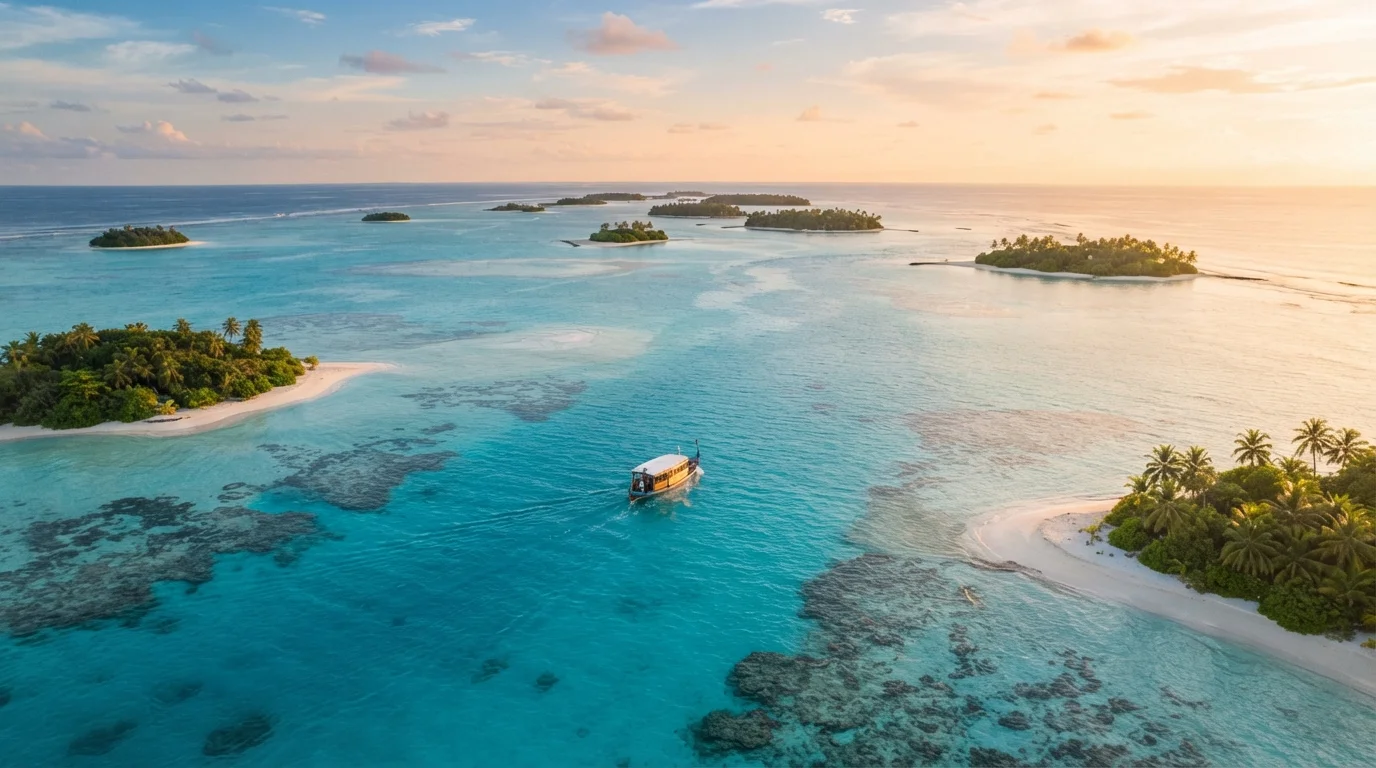
Scroll through any travel feed and the Maldives appears as a flawless loop of overwater bungalows, glassy water, and solitude. That image isn't false — but it's radically incomplete. The archipelago stretches across roughly 90,000 square kilometres of the Indian Ocean, encompassing 26 natural atolls, around 1,200 islands, and a population of more than 500,000 people living largely independent of the resort economy. Most travellers arrive with assumptions shaped entirely by luxury marketing, and those assumptions cause real planning failures.
Understanding what the Maldives actually is — a sovereign Islamic nation with a fishing and trade heritage, not simply a backdrop for honeymooners — changes how you travel there, what you pack, how you budget, and what you're able to do. The mistakes below are the ones that catch even seasoned travellers off guard.
Common Mistakes Travellers Make
Assuming the Maldives is only for luxury resort stays.
Why it happens: Resort marketing dominates how the destination is presented globally, making overwater villas appear to be the only option.
Underestimating the complexity and cost of inter-island transfers.
Why it happens: Travellers focus on flight booking and overlook that the airport is a separate island from virtually every resort or guesthouse destination.
Ignoring Islamic cultural norms because the resort environment feels secular.
Why it happens: Private resort islands operate under a special license permitting alcohol and Western dress codes, which can create the false impression that the same applies everywhere.
Choosing travel dates without understanding seasonal weather variation.
Why it happens: The Maldives is perceived as a year-round tropical paradise, and the distinction between the dry northeast monsoon (roughly November to April) and the wetter southwest monsoon (roughly May to October) is rarely front-of-mind.
Treating the Maldives purely as a beach destination and overlooking its marine ecosystems.
Why it happens: The overwater bungalow aesthetic overshadows the fact that the country sits atop some of the world's most significant coral reef systems and offers world-class diving and snorkelling.
For a broader look at how destination assumptions derail trip planning, the misconceptions travellers carry about Japan piece covers similar ground in a very different cultural context.
Logistics, Money, and Timing
1,192
Total islands in the Maldivian archipelago
According to the Maldives government, only around 200 of these islands are inhabited, with the remainder divided between resort islands and uninhabited land.
~99%
Proportion of Maldives territory that is ocean
The country's land area is roughly 300 square kilometres, making it one of the most geographically dispersed and lowest-lying nations on earth.
3 m
Average elevation above sea level
The Maldives is widely cited by researchers as among the most climate-vulnerable nations on earth due to its extremely low average elevation.
Transfer planning is where Maldives trips most visibly unravel. Velana International Airport, located near the capital Malé, is the single entry point for nearly all international visitors. From there, reaching a resort can mean a 20-minute speedboat ride or a 45-minute domestic seaplane flight — and seaplanes only operate in daylight. Arrivals after dusk typically require an overnight stay in Malé or a night transfer by speedboat, an added cost that many travellers don't factor in until they're staring at their itinerary.
Currency is another area worth scrutiny. The Maldivian rufiyaa is the local currency, but US dollars are widely accepted at resorts and guesthouses. On local islands, smaller rufiyaa transactions are common for food and transport. Airport currency exchanges and dynamic conversion at point-of-sale terminals can eat into your budget — a concern explored in detail in our piece on currency myths that cost travellers money.
The notion that the Maldives is categorically unaffordable is also worth revisiting. Since 2009, guesthouse accommodation on inhabited local islands has been legally permitted, opening up a genuinely different — and far less expensive — way to experience the country. The budget travel myths that keep people from going article addresses this kind of destination misconception more broadly. A local island stay on Maafushi or Ukulhas, for instance, costs a fraction of a private resort and offers contact with Maldivian daily life that overwater villas simply don't provide.
Verify Entry and Customs Rules Before You Travel
The Maldives enforces strict customs rules, including prohibitions on alcohol, pork products, and certain religious materials brought by visitors onto local islands. Penalties for violations can be severe. Always check the current regulations through the official Maldives Immigration and Customs Service websites, and consult your own government's travel advisory for the most up-to-date entry requirements before booking.
Travelling More Honestly in the Maldives
The Maldives rewards travellers who arrive with realistic expectations and genuine curiosity about the place beyond the lagoon. Respect for local customs — dressing modestly when walking through island villages, understanding that Friday is a day of rest and prayer, not treating inhabited islands as extensions of your resort — goes a long way. Most Maldivians are accustomed to visitors, but courtesy and cultural awareness remain meaningful.
Layover planning also deserves attention. Many US travellers connect through hubs like Doha, Dubai, or Colombo, and those connections carry their own complications. Our guide to layover realities is worth reading before you book long itineraries. Entry requirements, including visa-on-arrival rules and customs restrictions, should always be verified against official Maldivian government sources and your own country's travel advisory before departure — conditions can change, and no article can substitute for current official guidance.
Approached with honest preparation, the Maldives is far more interesting than its Instagram version. The fishing villages, the call to prayer drifting across still water at dusk, the reef ecosystems that make it one of the most biodiverse marine environments on earth — these are the details that stay with you.