

Key Takeaways
- Airport currency exchange booths typically offer significantly worse rates than alternatives available before or during your trip.
- Dynamic currency conversion — paying in your home currency abroad — almost always costs more, not less.
- Carrying some local cash remains practical in many destinations, even where cards are widely accepted.
- ATM fees vary widely; using your bank's network strategically can reduce costs considerably.
- The 'mid-market rate' is a useful benchmark to evaluate any exchange offer you receive.
Why Currency Decisions Matter More Than Most Travellers Realise
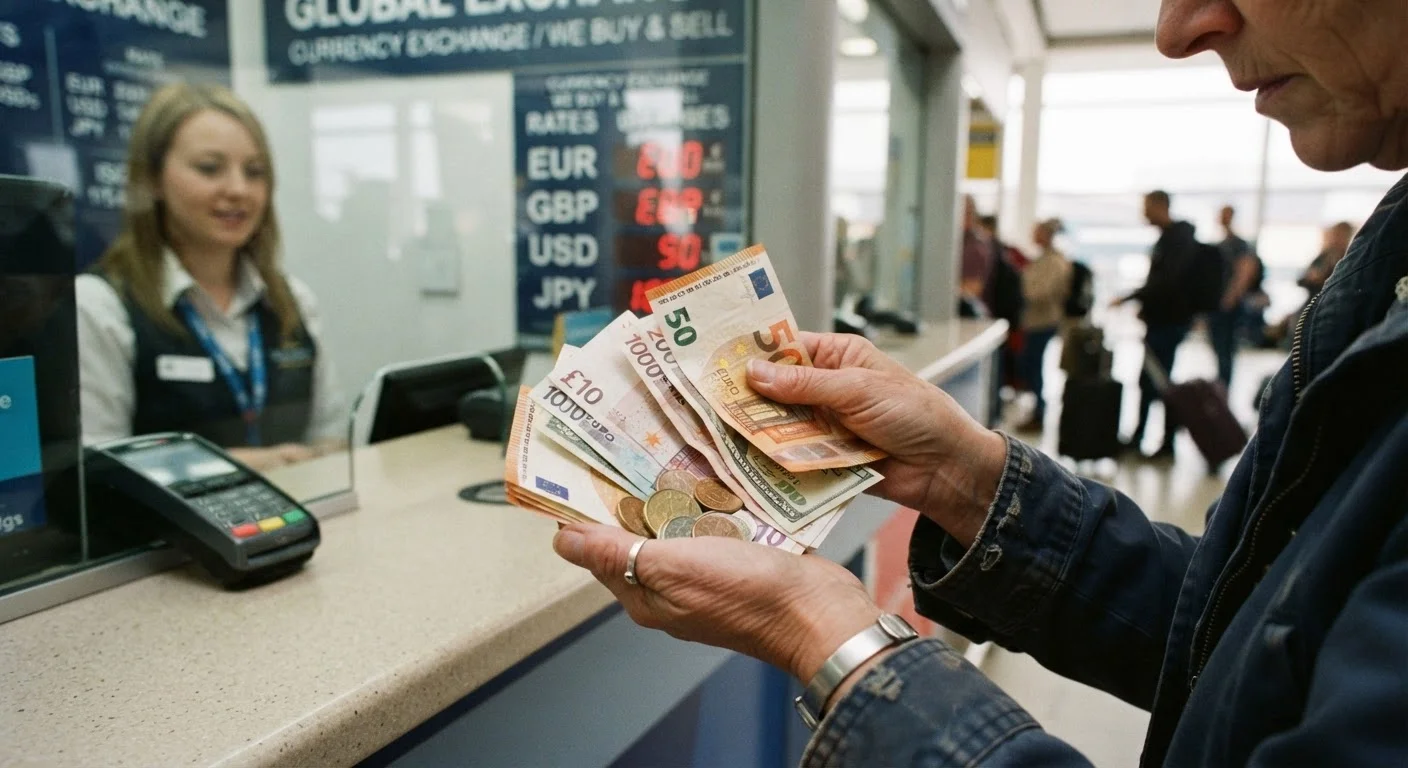
Picture this: you've just landed after a long-haul flight, bags in hand, already mentally running through your first day's itinerary. The currency exchange booth near baggage claim looks official, the queue is short, and the sign reads No Commission! It feels like a reasonable stop. What the sign doesn't tell you is that the exchange rate itself is where the cost is hidden — and that the small transaction you're about to make could cost you the equivalent of a decent meal.
Currency decisions are one of the least glamorous parts of travel planning, which is exactly why so many people make them on autopilot — and why a handful of durable myths continue to cost travellers real money. Understanding a few key principles before you go can make a meaningful difference, particularly on longer trips or in destinations with significant currency volatility.
The benchmark worth knowing is the mid-market rate (also called the interbank rate): the midpoint between global buy and sell prices for a currency pair. No retail exchange will match it exactly — there's always a spread — but it's a useful yardstick. If an offer deviates from it by more than a few percent, you're paying a premium worth examining.
~11%
Typical airport exchange rate markup above mid-market
Consumer finance researchers and comparison platforms have repeatedly found airport kiosks charging spreads in the range of 8–12% above the interbank mid-market rate, though figures vary by location and currency pair.
3–7%
Estimated cost of dynamic currency conversion
Financial regulators and consumer advocates in multiple countries have noted DCC markups in this range, in addition to any foreign transaction fees your own card may charge.
The Myths, Corrected
From airport booths to card terminals, the travel finance landscape is full of choices that seem straightforward but reward a second look. The myth-and-fact pairs below address the most common and costly misconceptions — rooted in how travellers actually behave, not hypothetical edge cases.
Myth
Airport currency exchange is the safest and most convenient option, so it's worth using even if rates aren't perfect.
Fact
Airport exchange counters are generally the most expensive place to convert money, often charging markups of 8–12% above the mid-market rate.
The convenience of exchanging cash the moment you land comes at a real cost. Airport operators pay high rents and face a captive audience, so their exchange spreads tend to be wide. A better approach for many travellers is to order a modest amount of local currency through their bank before departure, then use fee-friendly ATMs or cards once at the destination. If you do use an airport counter for a small emergency amount, check the rate being offered against the mid-market rate (easily found via a search engine) so you can see exactly what the service is costing you.
Myth
Paying in your home currency abroad saves you from surprise fees.
Fact
Dynamic currency conversion almost always results in a worse rate than paying in local currency and letting your bank handle the conversion.
This is one of the most costly myths in travel finance. When a terminal offers to charge you in US dollars instead of euros or yen, the rate being applied is controlled by the merchant's payment processor — not your bank — and it is virtually always less favourable. Your card's foreign transaction fee (if any) is a separate, usually smaller cost. Declining DCC and paying in local currency means your bank applies its own rate, which, for cards without foreign transaction fees, is typically much closer to the mid-market rate. Always decline DCC unless you have been clearly shown a competitive rate and have confirmed it in writing.
Myth
Cards are accepted everywhere, so carrying cash abroad is unnecessary.
Fact
Card acceptance varies enormously by country, region, and even type of business — cash remains essential in many travel contexts.
Japan, for instance, remains significantly cash-reliant at smaller restaurants, temples, and rural businesses — as travellers often discover firsthand. Misconceptions about Japan often include assumptions about card acceptance that don't reflect reality on the ground. Similarly, market stalls, local transit, tips, and small guesthouses across many destinations still function on cash. A practical approach is to carry a reasonable amount of local currency for smaller or unpredictable expenses, while relying on cards for larger, predictable transactions where acceptance is confirmed.
Myth
ATMs abroad always charge extortionate fees, so you should exchange everything before you leave.
Fact
ATM fees vary widely depending on your bank, the ATM operator, and how you withdraw — and can often be minimised with some planning.
Some bank accounts — particularly those designed with travellers in mind — reimburse foreign ATM fees or charge no foreign transaction fee at all. Even with standard accounts, withdrawing larger, less frequent amounts reduces the per-transaction fee burden. What universally costs more is accepting the ATM operator's offer to convert to your home currency (dynamic currency conversion again) or using currency exchange kiosks inside airports as a substitute for ATMs. Research your bank's specific fee structure before you travel, and locate ATMs affiliated with major banking networks at your destination, where operator surcharges tend to be lower.
Myth
The exchange rate advertised on a board is what you'll actually get.
Fact
Advertised rates often apply only to large transactions; smaller amounts may attract a worse rate or additional commission fees.
Exchange providers frequently display their most attractive rate — sometimes applying only to transactions above a threshold you may not reach — while smaller exchanges incur a different, less favourable rate or a flat commission. Always ask for the total amount you will receive in foreign currency before handing over your money. That figure, not the rate on the board, is the real basis for comparison. This approach — comparing final amounts rather than headline rates — is the same discipline that helps travellers see through misleading offers. It connects to a broader habit of questioning financial assumptions, whether in travel or elsewhere; credit score myths and currency myths often share the same pattern of plausible-sounding claims that quietly erode your money.
Always Verify Entry and Currency Rules Officially
Some countries restrict how much foreign or local currency you can bring in or take out. Rules change, and penalties for non-compliance can be severe. Before travel, check the official government and embassy resources for your destination — and your own country's customs declaration requirements — rather than relying on traveller forums or outdated guides.
If you're questioning other widely held travel assumptions — around budgeting, timing, or destination expectations — budget travel myths explores similar territory with the same aim: replacing assumption with workable knowledge. The pattern of misleading conventional wisdom isn't unique to currency, either; car insurance myths follows the same logic for a different high-stakes decision.
Dynamic Currency Conversion Is Almost Never in Your Favour
When a merchant's card terminal or an ATM abroad asks whether you'd like to pay in your home currency, that offer is called dynamic currency conversion (DCC). The exchange rate applied is set by the merchant or ATM operator — not your bank — and typically includes a markup of 3–7% or more. Unless you have a specific reason to need your home currency on the receipt, declining and paying in local currency is generally the lower-cost option. If you're unsure, always ask a staff member to explain the rate before confirming.
This article is for general informational purposes only and does not constitute financial or legal advice. Exchange rates, fees, and regulations vary and change frequently. Always verify current rules and rates with official sources and your financial institution before travelling.