
Under the Radar in Central America: Lesser-Known Destinations Worth Understanding

Key Takeaways
- Several Central American destinations offer rich cultural and natural experiences without the crowds of major tourist hubs.
- Smaller destinations often require more logistical planning — road conditions, seasonal access, and local infrastructure vary significantly.
- Engaging with these places thoughtfully means understanding local context, not just checking them off a list.
- Entry requirements, health precautions, and travel advisories should always be verified through official government sources before travel.
- Independent, slower travel styles tend to suit these destinations better than rushed itineraries.
Central America Beyond the Circuit
Most first-time visitors to Central America follow a familiar path — Antigua, Manuel Antonio, the Arenal volcano, maybe a beach town on each coast. These are genuinely worthwhile places. But Central America is a densely layered region, and the well-worn tourist circuit captures only a fraction of what's there.
What lies beyond it isn't hidden in any mystical sense. These destinations appear on maps, have communities with their own economies and daily rhythms, and receive visitors — just far fewer of them. That relative quiet changes the experience considerably. It also comes with trade-offs: infrastructure can be limited, English less widely spoken, and logistics genuinely more demanding. Honest travel means weighing both sides.
The destinations below aren't ranked or scored. They're offered as starting points for curious readers who want to understand a broader Central America — one shaped by Indigenous heritage, colonial history, ecological diversity, and communities that long predate any tourist economy. If you've been told that budget travel to unfamiliar places is inherently inaccessible, our look at common travel planning misconceptions might be worth reading first.
Plan for Connectivity Gaps
Several destinations in this article have limited or no reliable mobile coverage, and ATM access outside of departmental capitals can be scarce. Carrying sufficient local currency and downloading offline maps before you leave a city connection are practical steps that make a significant difference. Informing someone of your itinerary is especially worthwhile in remote areas.
Lesser-Known Destinations Worth Understanding
The Río Plátano Biosphere Reserve, Honduras
One of the largest intact tropical rainforests in Central America, Río Plátano sits in Honduras's La Mosquitia region — a remote lowland that most travelers never reach. It has been a UNESCO World Heritage Site since 1982, though it has also spent time on the endangered list due to illegal logging and encroachment pressures, reflecting the real conservation tensions that define the area.
Reaching it typically involves a combination of domestic flights, boats, and community-arranged logistics. Visits are most meaningful when coordinated through Indigenous Miskito and Pech communities who have long stewarded this landscape. There's no resort infrastructure here — the experience is immersive in the truest sense, but requires genuine preparation and flexibility.
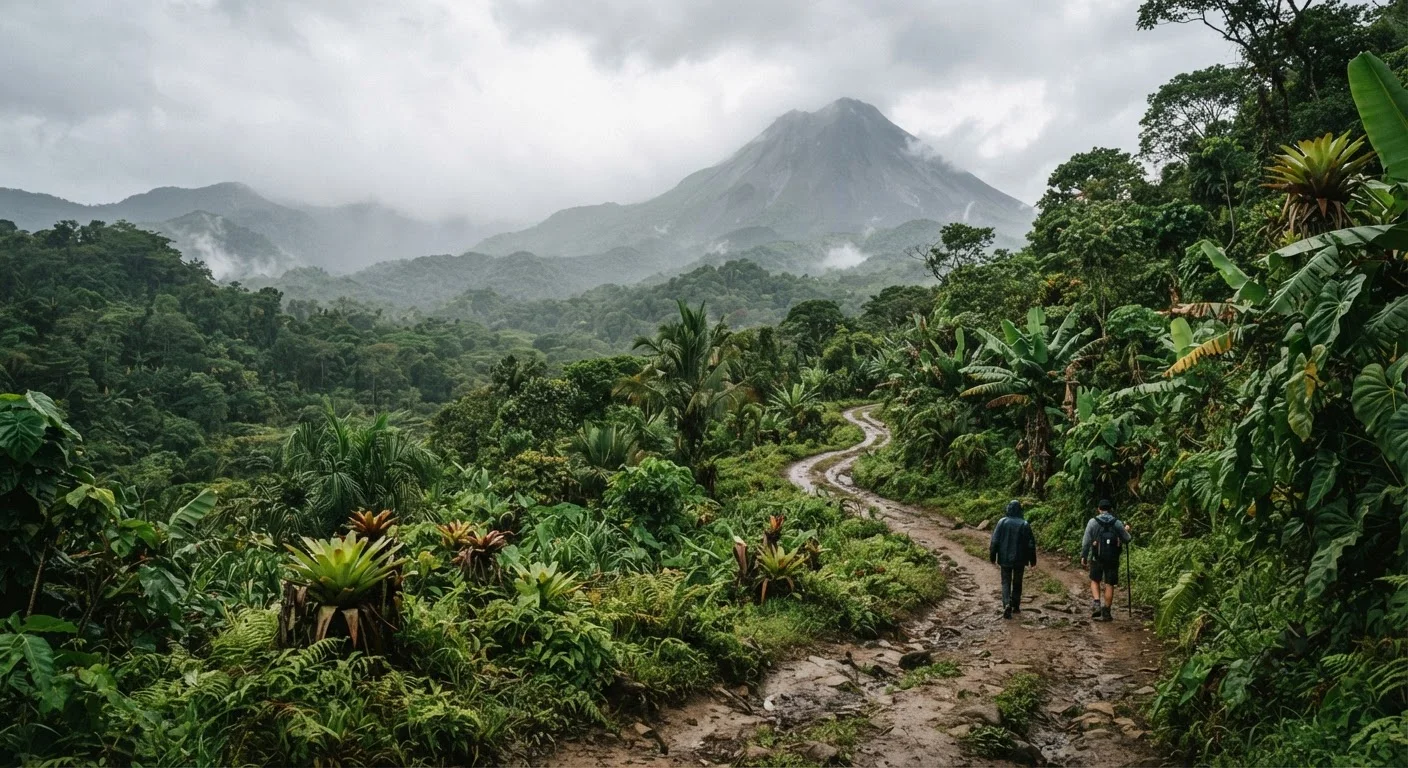
Río Plátano is one of the largest intact rainforests in Central America, shaped by Indigenous communities with deep roots.
Rivas and the Lake Nicaragua Shore, Nicaragua
Lake Nicaragua — Cocibolca — is the largest lake in Central America and contains the only freshwater shark population historically documented in the region (though the bull sharks that once famously navigated the San Juan River appear far less frequently today). The towns along its southwestern shore, including Rivas and the access point to Ometepe Island, see tourists passing through rather than staying.
Ometepe itself, formed by two volcanoes rising from the lake, receives visitors, but the agricultural communities on its flanks offer a pace and texture that feels genuinely apart from regional tourism. Nicaragua's broader political and economic context is something travelers should research carefully before making plans — the U.S. Department of State and equivalent agencies in other countries maintain current advisories that are worth consulting.
Ometepe Island's twin volcanoes rise from freshwater — the agricultural communities at their base remain largely outside tourist circuits.
The Sarstoon-Temash Region, Belize
Southern Belize is already less visited than the cayes and Cayo District, but the far south — the Sarstoon-Temash National Park area near the Guatemalan border — receives only a fraction of those visitors. It encompasses mangrove lagoons, river systems, and forest that the Q'eqchi' Maya communities have managed through their own conservation governance for decades.
The Sarstoon-Temash Institute for Indigenous Management (SATIIM) has worked to assert community land rights against external pressures including oil exploration. Understanding that context makes a visit more than scenic — it becomes an encounter with a living conservation story that's still unfolding. Access requires planning ahead, and the rainy season significantly affects boat navigation in the area.
The Sarstoon-Temash region is a living conservation story, shaped by Q'eqchi' Maya governance that predates any tourist economy.
Chiquimula and the Ch'orti' Heartland, Guatemala
Guatemala draws visitors to Antigua, Lake Atitlán, and Tikal — all of which deserve the attention they receive. But the dry corridor of eastern Guatemala, particularly the region around Chiquimula and Esquipulas, offers a different dimension of the country. Esquipulas is a major pilgrimage destination for Central American Catholics, home to the Basílica of the Black Christ, and the town's character is shaped far more by religious devotion than by backpacker infrastructure.
The surrounding hills are home to Ch'orti' Maya communities, one of the smaller Indigenous groups in the country, whose language and material culture differ substantially from the better-documented highland Maya traditions. Road access is reasonable, but travelers should be aware that this region experiences more pronounced dry-season heat and is less equipped for international tourism than western Guatemala.
Esquipulas draws Central American pilgrims more than international tourists — its identity is rooted in faith, not the tourist economy.
The Gulf of Fonseca, El Salvador and Honduras
The Gulf of Fonseca is a shared body of water bordered by El Salvador, Honduras, and Nicaragua — a tidal estuary environment with mangroves, fishing communities, and volcanic islands that almost no international travelers think to visit. The Salvadoran side, accessible from La Unión, includes islands like Meanguera and Zacatillo where small communities still rely primarily on fishing.
It's not a polished destination. Accommodation is basic, boat schedules are informal, and the draw is the texture of coastal Central American life rather than any curated experience. Travelers should factor in El Salvador's recent security and governance changes — which have significantly altered the country's travel profile — by checking current advisories rather than relying on older guidebook narratives.
The Gulf of Fonseca's island communities live by fishing rhythms that have little connection to international tourism.
The Darién Approach Zones, Panama
The Darién Gap — the roadless stretch between Panama and Colombia — is well known as a logistical barrier and, at its interior, genuinely dangerous due to criminal activity. But the fringes of the Darién region accessible from Panama include areas like the Emberá and Wounaan Indigenous communities along the Chagres and Mogue river systems, which are reachable on guided day or overnight trips from Panama City or Yaviza.
These visits, when arranged through community-led tourism programs, offer a window into forest-based livelihoods, traditional crafts (particularly intricate basket weaving), and river travel that feels wholly apart from Panama City's gleaming skyline. The key distinction here is proximity: visiting accessible community zones near the Darién edges is a different proposition from attempting to traverse the Gap itself, which remains genuinely hazardous and is not advisable.
Emberá and Wounaan community visits near the Darién edges offer river-based cultural depth just hours from Panama City.
Entry Requirements and Health Precautions Vary
Central American countries each have distinct visa policies, vaccination requirements, and entry procedures that can change. The U.S. Department of State's travel pages and the CDC's destination-specific travel health notices are reliable starting points, but a consultation with a travel medicine clinic at least four to six weeks before departure is advisable for more remote itineraries. Always verify current requirements directly with official sources before booking.
Travelling These Places Responsibly
A destination being "undiscovered" doesn't make it a blank canvas for visitors. Each of these places has a social fabric — Indigenous governance structures, conservation efforts, local economies that may or may not benefit from tourism. Researching who manages tourism in an area, and how your spending flows through the local community, matters more in smaller destinations than in established resort zones.
Practically speaking: road conditions in many of these areas change dramatically with the rainy season (roughly May through November, though timing varies by country). Medical facilities may be hours away. Verify your travel insurance coverage, check your government's travel advisory page before booking, and consult a travel medicine clinic well in advance regarding any recommended vaccinations or health precautions. None of that should be a deterrent — just part of honest preparation.
The same layered thinking applies elsewhere. Just as many assumptions about Central America's tourist trail miss the real picture, common assumptions about destinations like the Maldives often flatten complexity in similar ways. Curious travel, wherever it takes you, starts with reading more carefully.