

Key Takeaways
- The Balkans span more than ten countries with differing currencies, visa rules, and entry requirements.
- Many first-time visitors underestimate logistical complexity — border crossings vary widely in ease and time.
- A focused itinerary covering two or three countries is more satisfying than an over-ambitious sweep.
- Seasonal timing significantly affects crowds, costs, and route accessibility.
- Always verify visa and entry requirements with official government sources before you travel.
What you will need
Why First-Time Visitors Misread the Balkans
There is a version of the Balkans that circulates in travel circles as a single, interchangeable idea — cheap, scenic, undiscovered. That version flatters a certain kind of planning and often leads to itineraries that are either embarrassingly thin or logistically punishing. The region is, in fact, one of the most internally diverse areas in Europe: a patchwork of languages, scripts, religious traditions, political histories, and border regimes compressed into a relatively small geographic space.
First-time visitors who arrive expecting a seamless "European experience" sometimes find the gaps jarring. Card machines that don't work, buses that run on informal schedules, border crossings that add hours to a journey, and destinations that look nothing like their Instagram thumbnails. None of this is a reason to avoid the region — quite the opposite. But it is a reason to plan with clear eyes.
For travellers accustomed to the more standardized infrastructure of Western Europe, the Balkans ask for a different kind of flexibility. The reward for that flexibility is substantial: landscapes, food, architectural heritage, and human warmth that feel genuinely distinct from anywhere else on the continent. If you are approaching international travel for the first time more broadly, our guide to planning your first international trip covers the foundational groundwork that applies everywhere.
Visa Rules Are Not Uniform Across the Region
The Balkans include EU members, Schengen-area countries, EU candidates, and fully independent states — each with its own entry rules. US passport holders may find some borders effortless and others requiring advance research. Always check current requirements with your government's official travel advisory and the destination country's embassy before booking.
How to Plan a First Trip That Actually Works
The steps below are designed for someone approaching the Balkans with genuine interest and an honest assessment of their available time and experience. They are sequenced to address the decisions that have the highest downstream impact first — scope, entry requirements, money — before moving into logistics and cultural preparation.
What you will need
Official Government Travel Advisory Portal
Verify current visa requirements, entry rules, safety advisories, and health notices for each country on your itinerary.
Physical or Offline Digital Maps
Reliable navigation in areas with limited mobile data coverage, particularly in mountain regions and rural border zones.
Local Currency for Each Country
Several Balkan countries use their own currencies rather than the euro; card acceptance varies widely outside major cities.
Travel Insurance Policy
Covers medical emergencies, trip disruption, and personal liability across multiple countries with different healthcare systems.
Unlocked SIM-Compatible Phone or Portable Wi-Fi
Staying connected across borders where roaming plans may not cover all countries visited.
Define the Scope of Your Trip Honestly
The Balkans is not a single destination — it is a loose geographic descriptor covering countries as different from one another as Portugal and Poland. Before you open a map, ask yourself how much time you realistically have. Two weeks is enough to do two or three countries justice; it is not enough to cover the entire peninsula meaningfully.
Identify what draws you: coastline, Ottoman-era architecture, mountain hiking, contemporary urban culture, or some combination. Let that interest anchor your itinerary rather than the idea of "doing the Balkans."
Research Visa and Entry Requirements for Every Country
This step cannot be delegated to assumptions. The region includes EU and Schengen members (Slovenia, Croatia), EU candidates with bilateral agreements (Serbia, North Macedonia, Albania), and countries with distinct entry frameworks (Bosnia and Herzegovina, Kosovo). Entry rules for US passport holders vary, and some border combinations carry additional complexity.
Check requirements with your government's official foreign travel advisory — not travel blogs, which can be out of date. If your itinerary includes Kosovo, be aware that entry from that side may affect subsequent entry to Serbia; verify current conditions ahead of time.
Plan for Multiple Currencies and Uneven Card Acceptance
Outside EU member states, you will encounter several distinct currencies — the Serbian dinar, Bosnian convertible mark, Albanian lek, and others. While major cities have ATMs and many tourist-facing businesses now accept cards, smaller towns, rural guesthouses, local markets, and some bus stations still operate primarily on cash.
Carry a mix of local currency for each country you are entering. Avoid exchanging money at airports or tourist-area kiosks where rates are typically poor. For a general framework on building a travel budget that accounts for this kind of variability, see our plain-language budgeting starting point.
Understand How Overland Transport Actually Works
Train networks in much of the Balkans are limited and slow compared to Western Europe. Buses are the workhorse of regional travel — frequent, reasonably priced, and often the only practical option between smaller cities. Private minibuses (sometimes called "shared taxis") fill gaps that formal services miss, particularly in Kosovo and Albania.
When booking buses, look for tickets through local operators' own websites or at stations rather than relying solely on third-party aggregators, which do not always reflect real-time schedules. Factor in border crossing time — what looks like a four-hour bus journey can become six or seven hours.
Choose Your Season Deliberately
The Adriatic coast peaks hard in July and August — prices climb, accommodation books out weeks ahead, and historic old towns like Dubrovnik's can feel genuinely overcrowded. May, June, and September offer a meaningful difference in both atmosphere and cost. Inland destinations — Sarajevo, Belgrade, Plovdiv — are less seasonally volatile but can be very cold in winter, with some mountain routes impassable.
Spring and early autumn are widely considered the most balanced windows for a first trip that mixes coast with interior destinations.
Approach Local Culture With Curiosity and Humility
The Balkans carry a complicated, layered history that shapes daily life in ways that are not always visible to a passing traveller. Religious and cultural identities — Orthodox Christian, Catholic, Muslim, and secular — coexist within and across countries, sometimes with living memories of serious recent conflict. Engage with this history through reputable local guides, well-curated museums, and honest conversation rather than assumptions.
Dress codes matter in religious sites; research norms before visiting mosques, monasteries, or churches. Tipping customs, hospitality expectations, and attitudes toward bargaining differ significantly by country and context. Curiosity goes further than any guidebook shortcut.
Think in Corridors, Not Countries
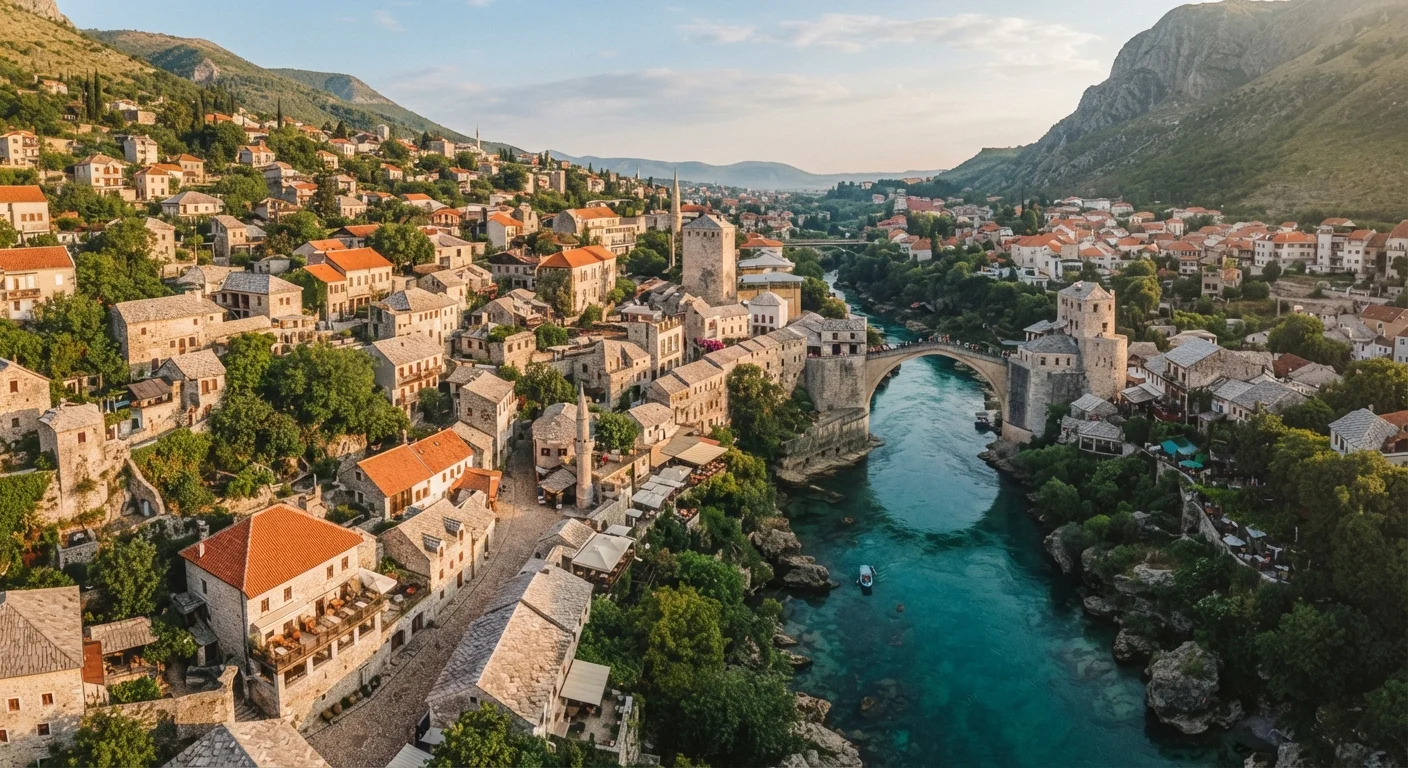
Rather than trying to tick off as many countries as possible, plan your route along natural geographic and transport corridors — for example, the Adriatic coast, or the inland route connecting Belgrade, Sarajevo, and Mostar. This approach reduces backtracking and gives you time to actually absorb each place rather than rushing through it.
Land Border Crossings Can Be Unpredictable
Some land crossings between Balkan countries are smooth; others involve long queues, limited hours, or infrastructure gaps that are not always reflected on maps or booking platforms. Build buffer time into any day that involves crossing a border, particularly if you are travelling by bus or private vehicle.
For context on how this region compares with other destinations that reward patient, curious travellers, our piece on Georgia as a travel destination explores a similarly layered country that often surprises first-time visitors. And if you are making this trip solo, the practical framework in our guide for first-time solo international travellers is worth reading alongside this one.
This article provides general travel information only. Entry requirements, visa rules, safety conditions, and transport schedules change. Always verify current information with official government travel advisories and relevant embassies before making any travel plans or bookings.