
Coastal Portugal vs. the Interior Alentejo: Two Faces of the Same Country

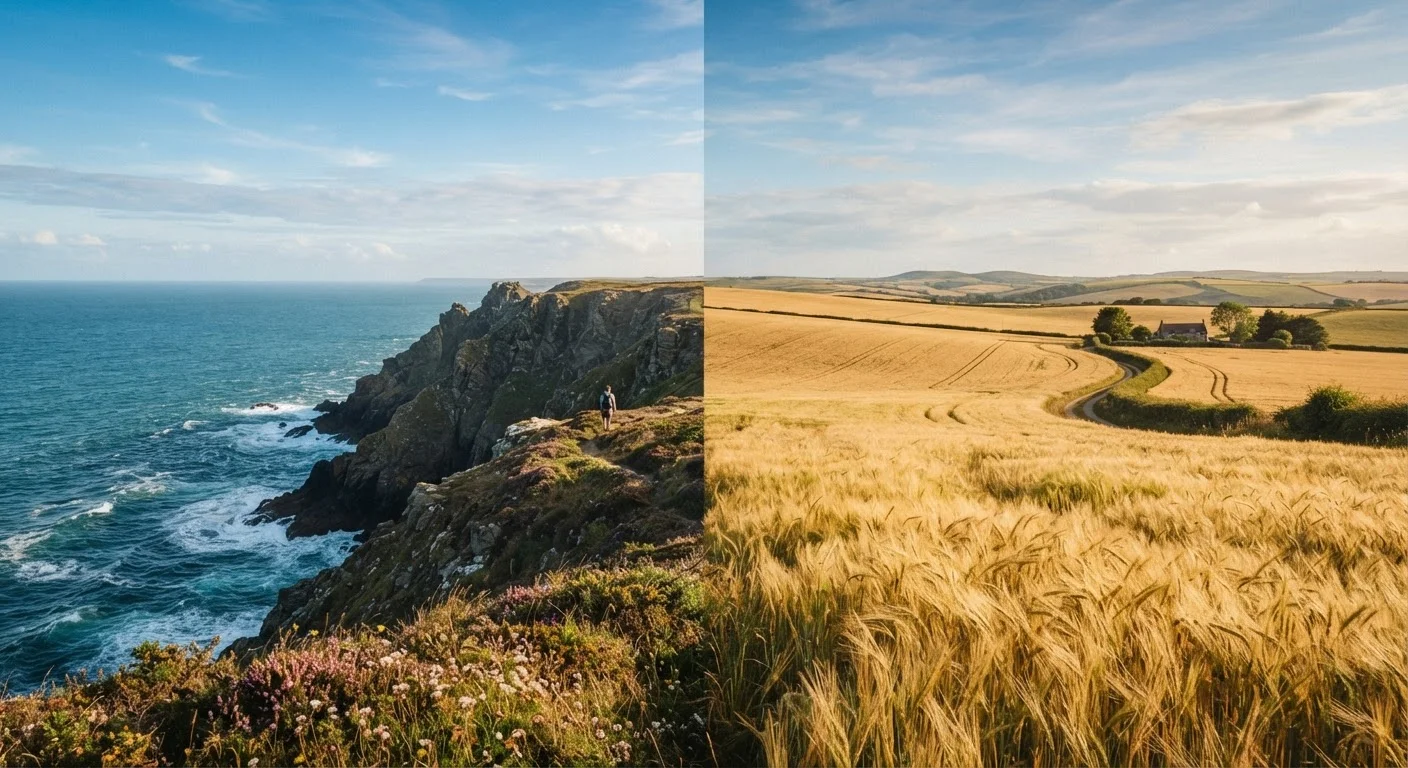
Key Takeaways
- Coastal Portugal and the Alentejo offer genuinely different rhythms — one is energetic and scenic, the other quiet and immersive.
- The coast suits those who want dramatic natural settings alongside well-developed tourism infrastructure.
- The Alentejo rewards patient travellers with cork forests, whitewashed hilltop villages, and some of Portugal's most celebrated wines.
- Summer heat in the Alentejo can be intense; spring and autumn are widely considered the most comfortable seasons to visit.
- Both regions sit within a few hours of Lisbon, making a combined trip entirely practical for most itineraries.
Option A
Coastal Portugal
The windswept, wave-lashed edge of Europe.
Best for: Travellers drawn to dramatic scenery, seafood culture, and the energy of Atlantic-facing towns and fishing villages.
Option B
Interior Alentejo
A slow-paced, sun-drenched heartland of cork and cork oak.
Best for: Travellers seeking unhurried landscapes, local wine and cuisine, and a Portugal largely untouched by mass tourism.
If you want dramatic scenery and easy access to seafood and beach culture
Coastal Portugal
The Atlantic coast delivers iconic landscapes, a well-worn tourist trail, and a concentration of restaurants and accommodation that makes first-time visits straightforward.
If you prefer slow travel away from crowds
Interior Alentejo
The Alentejo's wide plains and quiet hilltop towns reward travellers who prioritise authenticity and tranquility over postcard-perfect beaches.
If wine and food are central to your trip
Interior Alentejo
The Alentejo is one of Portugal's most important wine-producing regions, and its cuisine — black pork, migas, sheep's cheese — is deeply distinctive and locally sourced.
If you're travelling with young children or mixed-interest groups
Coastal Portugal
The coast offers more varied activities, safer swimming options, and denser tourism infrastructure that makes logistics easier for families.
The Shape of Each Experience
Stand at Cabo de São Vicente on a blustery February morning and Portugal feels like the end of the world — which, historically, it was believed to be. The Atlantic crashes against ochre cliffs, gulls tip sideways in the wind, and the horizon is nothing but open ocean all the way to the Americas. Now drive three hours northeast and you're in the Alentejo, where the land opens into rolling plains studded with cork oak, where the light turns thick and golden in late afternoon, and where small towns like Monsaraz sit unchanged on hilltops, overlooking a landscape that moves at its own ancient pace.
These are not two versions of the same holiday. They are two genuinely different relationships with a single country — and understanding that difference is the starting point for choosing between them, or for building an itinerary that takes in both.
| Criterion | Coastal Portugal | Interior Alentejo |
|---|---|---|
| Landscape character | Cliffs, beaches, Atlantic ocean | Plains, cork forests, hilltop villages |
| Tourism density | High in peak areas | Low to moderate year-round |
| Best season to visit | Late spring through early autumn | Spring (Apr–May) or autumn |
| Food identity | Seafood-centred, grilled fish | Pork, game, bread-based dishes |
| Wine culture | Present but not defining | Central; internationally recognised |
| Transport access | Well-connected by bus and rail | Car recommended for rural areas |
| Pace of travel | Active, scenic, varied | Slow, immersive, contemplative |
What the Coast Actually Offers
Portugal's coastline is long and varied. The Algarve in the south draws the most international visitors, with its sea-carved rock formations and extensive beaches. The Silver Coast north of Lisbon is quieter and tends to attract surfers and those seeking a less developed stretch of shoreline. The Minho coast near the Spanish border is green, misty, and often overlooked entirely.
What unites these coastal zones is the Atlantic itself — a powerful, moody presence that shapes the food, the architecture, and the weather. Seafood is not a tourist addition here; it is central to daily life. Grilled fish, barnacles pulled from rocks, caldeirada stew — these are meals eaten by locals on weekday lunchtimes. The coast also has a developed hospitality infrastructure: accommodation ranges widely, public transport connects major towns, and the tourism industry is well established.
The trade-off is that the most famous stretches — particularly the western Algarve — can feel heavily visited during summer months, with prices to match. Travellers willing to move slightly off the main circuit, whether toward the Alentejo coast or the less-publicised western Algarve interior, will find a noticeably different atmosphere. It's also worth noting that Atlantic waters remain cooler than many visitors expect, even in summer — something to factor in if swimming is a priority.
832 km
Length of Portugal's mainland coastline
Portugal's Atlantic-facing coast stretches from the Minho River in the north to the Guadiana in the south, according to geographic surveys of the Iberian Peninsula.
~33%
Share of Portugal's land area covered by Alentejo
Despite its vast size, the Alentejo holds only around 5% of the national population, according to Portuguese census data.
40°C+
Typical summer peak temperatures in the Alentejo
The Alentejo regularly records some of the highest temperatures on the Iberian Peninsula during July and August, according to Portuguese meteorological records.
What the Alentejo Quietly Delivers
The Alentejo occupies roughly a third of Portugal's land mass but holds only about 5% of its population. That ratio tells you almost everything you need to know about what it feels like to travel there. Towns like Évora — a UNESCO World Heritage Site with a Roman temple still standing at its centre — are genuine living communities rather than stage sets for tourism. Villages like Marvão perch on granite outcrops at the edge of the Spanish border, offering views across two countries and a profound sense of remove from anywhere else.
The region's wine has gained serious international recognition over recent decades. Estates across the Alentejo produce bold, full-bodied reds well suited to the climate, and many quintas (wine estates) welcome visitors for tastings and tours. The food culture is equally rooted — dishes here evolved from a tradition of using every part of the pig, every scrap of bread, every wild herb that grew in the scrubland. Carne de porco à Alentejana — pork with clams — is one of the most eloquent examples of a cuisine that exists nowhere else in quite the same form.
Summer heat in the Alentejo is not incidental. Temperatures regularly exceed 40°C (104°F) in July and August, and the lack of coastal breeze means it settles heavily. Spring — particularly April and May, when wildflowers cover the plains — and autumn are generally considered far more comfortable times to visit. For travellers curious about how this inland experience compares to Portugal's island territories, the Azores offer yet another distinct version of the country, shaped entirely by volcanic mid-Atlantic geography.
There Is Also an Alentejo Coast
The Alentejo has its own short stretch of coastline — the Costa Vicentina — which forms part of a protected natural park. It is wilder and less developed than the Algarve, with strong surf and limited infrastructure. Travellers looking for a middle ground between the two regions sometimes find it here, though services are sparse and planning ahead is important.
Planning a Trip That Combines Both
Lisbon sits almost equidistant between the coast and the Alentejo's main towns, making it a logical base for travellers who want to sample both. Évora is roughly 90 minutes by road or rail from the capital. The Algarve coast is about three hours south. A ten-day trip could realistically open in Lisbon, spend three days in the Alentejo, then travel south or west toward the coast for the remaining time — or reverse the order, arriving into a coastal town and moving inland as the trip deepens.
Hiring a car adds significant flexibility, particularly for the Alentejo, where public transport between smaller villages can be limited. The coast is generally better served by buses and regional rail, especially between Lisbon and the Algarve. Accommodation in the Alentejo often takes the form of rural herdades (farmstead estates) or small village guesthouses — a different texture from coastal hotels, and often a quieter, more immersive one.
Neither experience requires a large budget by Western European standards, though prices in popular coastal areas have risen notably in recent years. The Alentejo tends to offer more value, particularly for food and rural accommodation. Verifying current entry requirements, transport schedules, and local conditions through official sources before travelling is always advisable, as these details can shift.