

Key Takeaways
- Research a site's cultural protocols before you arrive — many sacred places have specific visitor rules.
- Always follow posted restrictions, even when other visitors around you do not.
- Spending money with Indigenous-owned guides and businesses is one of the most meaningful ways to show respect.
- Photography restrictions at sacred sites should be treated as firm rules, not suggestions.
- Humility and curiosity together make for a far richer experience than checking a landmark off a list.
Why Intention Matters Before You Even Arrive
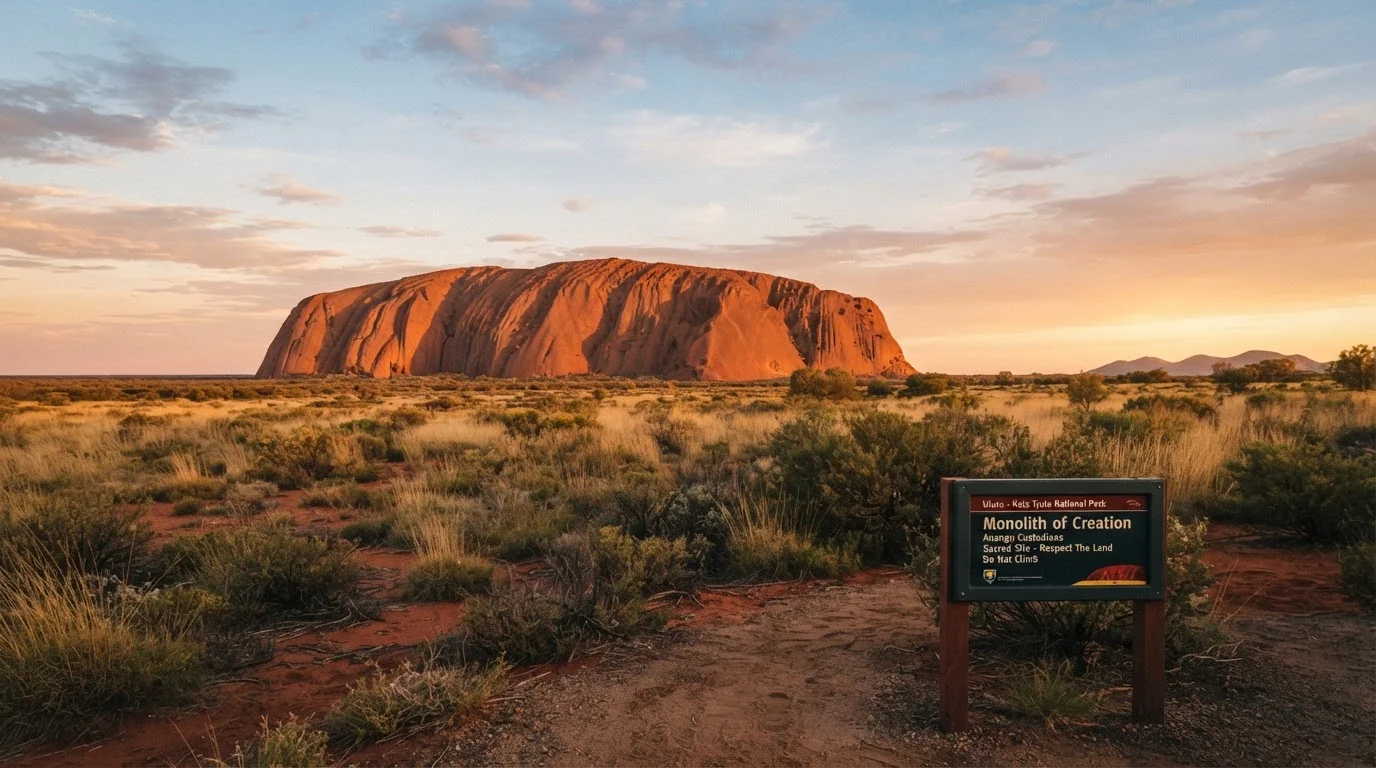
There is a moment many travelers describe at Uluru in Australia's Northern Territory — standing before that great red monolith and feeling, unexpectedly, that you are the one being observed. That sense of weight, of entering something older and larger than yourself, is precisely what makes Indigenous cultural sites unlike any other destination on the traveler's map.
But meaning without preparation can slip easily into intrusion. The Anangu people, traditional custodians of Uluru, requested for decades that visitors not climb the rock — a request that became a permanent closure in 2019. Countless people had done so anyway, treating a sacred site as a fitness challenge. The story is a useful reminder that good intentions alone are not enough.
Whether you are planning your first international journey or you have traveled widely, Indigenous cultural sites deserve a different kind of homework. That homework begins well before you book a flight.
Verify Entry and Access Rules With Official Sources
Some Indigenous cultural sites require permits, advance registration, or are open only to visitors accompanied by a community guide. Rules can change seasonally or for ceremonial reasons. Always verify current access conditions directly with the relevant Indigenous authority or land management body before traveling — do not rely solely on third-party travel sites or older guidebooks.
Core Practices for Respectful Visits
The following approaches apply broadly across Indigenous cultural sites worldwide, from North America's canyon lands to the ceremonial landscapes of New Zealand's Māori communities. Specific rules vary by site and nation — always verify locally — but these principles are widely held.
Research the specific protocols of each site before you visit.
Every Indigenous nation and community has its own rules, and what is appropriate at one site may be disrespectful at another. Generic 'cultural sensitivity' awareness is not a substitute for site-specific knowledge. Arriving informed signals genuine respect rather than performative tourism.
Always follow posted restrictions — do not climb, enter, or photograph where it is prohibited.
Restrictions at sacred sites exist because the community has determined that certain behaviors are harmful to their cultural or spiritual heritage. Treating these as optional undermines the autonomy of the people whose home you are visiting.
Engage with Indigenous-led interpretation programs wherever they are available.
Community-led tours provide context that no guidebook can replicate, and they ensure that the story of a place is told by those who hold it. They also channel economic benefit directly to the community.
Ask before photographing people, ceremonies, or objects — and accept 'no' without negotiation.
Photography can commodify sacred moments and violate the privacy or spiritual rules of a community. Asking first demonstrates that you recognize the people and place as having authority over their own image.
Learn at least a few words or greetings in the local language if it is still spoken.
Language is among the most profound expressions of cultural identity, and many Indigenous languages have faced severe suppression. A genuine effort — even imperfect — communicates that you see the community as more than a backdrop.
Leave no trace — and take nothing, including rocks, plants, or fragments.
Removing natural or cultural materials from a site is often illegal, always disrespectful, and can cause real harm to places that hold deep significance. The impulse to take a piece of somewhere is understandable; the act is not acceptable.
Getting It Right on the Ground
Even well-prepared visitors encounter situations that feel ambiguous in the moment. When in doubt, observe what local community members are doing rather than following fellow tourists. If a community member offers guidance or correction, receive it graciously — they are doing you a favor.
It also helps to think about your visit economically. Choosing Indigenous-owned tour operators, cultural centers, and accommodation — where they exist — directs revenue back to the communities whose heritage you are there to learn from. Many nations and groups have created dedicated visitor programs precisely to share their culture on their own terms. These are among the most authentic experiences available anywhere.
For travelers incorporating a cultural site into a longer overland journey, the same mindset of deliberate preparation applies. The planning considerations that make road trips smoother — researching access roads, understanding seasonal closures, allowing flexibility — translate directly to visiting remote Indigenous sites, many of which sit far from urban infrastructure.
476
UNESCO World Heritage Sites with Indigenous cultural significance
UNESCO's World Heritage List includes hundreds of sites nominated in part for their association with living Indigenous traditions, underlining how globally widespread such places are.
370M+
Indigenous people across approximately 90 countries
According to the United Nations, more than 370 million Indigenous people belong to some 5,000 distinct groups, each with unique cultural practices and territorial relationships.
Carrying the Experience Responsibly
Respectful visits do not end at the trailhead. How you share the experience afterward — in conversation, on social media, in photographs — is its own form of cultural engagement. Before posting images, ask yourself whether the community has indicated that certain images, ceremonies, or locations should remain private. Many have. Sharing a restricted image widely is a harm that outlasts the visit itself.
The richest travel experiences tend to be those that change the traveler. Leaving an Indigenous cultural site with a deeper understanding of its living significance — not just its visual drama — is a far more meaningful souvenir than any photograph. For those drawn to landscapes shaped by deep human history, destinations like Patagonia's vast and storied terrain offer similar invitations to humility and careful preparation.
The world's Indigenous cultural sites are not museum exhibits. They are living places, connected to living peoples and ongoing traditions. Visiting them thoughtfully is both an act of respect and a genuine privilege.