

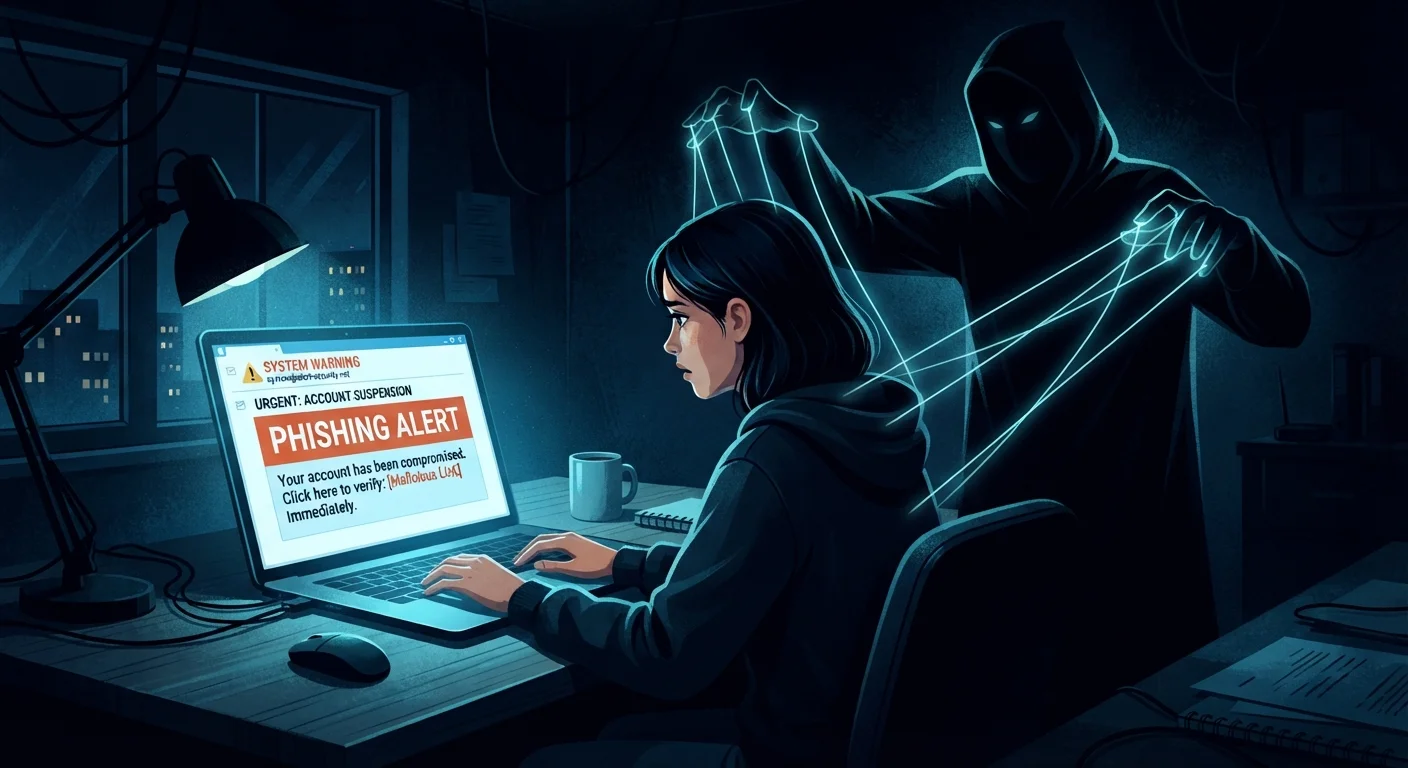
Key Takeaways
- Social engineering targets human psychology, not technical vulnerabilities, making everyone a potential target.
- Phishing emails, vishing phone calls, and pretexting are the most common attack forms.
- Urgency and fear are the primary emotional levers attackers use to bypass careful thinking.
- Verifying the identity of anyone requesting sensitive information is the single most effective defense.
- Social engineering attacks can lead directly to data breaches, financial loss, and account takeovers.
Social Engineering
Social engineering is a type of cyberattack that manipulates people — rather than exploiting software or hardware — into revealing sensitive information or taking actions that compromise security. Instead of cracking a password, an attacker might simply ask for it while pretending to be someone trustworthy. These attacks work by exploiting natural human tendencies like helpfulness, urgency, and fear.
In cybersecurity, social engineering is often classified as an 'attack vector' — a pathway into a system. It frequently serves as the entry point for more complex attacks, including phishing campaigns, business email compromise (BEC), and ransomware delivery.
The Human Vulnerability No Patch Can Fix
Cybersecurity tools — antivirus software, firewalls, encrypted connections — are remarkably effective at blocking automated attacks. But there is one vulnerability no software update can fully address: human judgment under pressure.
Social engineering exploits the gap between what people think is happening and what is actually happening. An attacker does not need to defeat your computer's defenses if they can convince you to open the door. This is why security researchers consistently rank social engineering among the most effective attack methods in use today.
Understanding how these attacks are structured is the first step toward recognizing them in the wild. See our practical guide to long-term online safety habits for broader defensive strategies that complement this awareness.
Smart Home Devices Are Also at Risk
Social engineering isn't limited to email and phone attacks. Attackers sometimes use information about your connected devices to craft more convincing pretexts — for example, impersonating tech support for a router brand you own. Our article on keeping smart home devices secure over time covers how to reduce that exposure.
Common Social Engineering Tactics Explained
Attackers have developed a range of techniques, each targeting a slightly different aspect of human behavior:
- Phishing: Fraudulent emails that mimic trusted senders — your bank, a delivery service, or a company's IT department — directing you to fake websites or prompting you to reveal login credentials.
- Vishing (voice phishing): Phone calls from someone impersonating a support agent, government official, or fraud investigator, creating urgency to hand over account details or one-time passcodes.
- Pretexting: Building a fabricated scenario — a pretext — to establish trust before making a request. For example, posing as a new employee needing help accessing a shared file.
- Baiting: Leaving a USB drive in a parking lot labeled "Payroll Q3" — curiosity does the rest when someone plugs it into a work computer.
- Tailgating: Physically following an authorized person into a secure area by acting like you belong there.
What ties these methods together is psychological manipulation. Attackers exploit urgency, authority, reciprocity, and fear — cognitive shortcuts the human brain uses every day. When someone who seems to be your CEO emails asking for an urgent wire transfer, the instinct to comply can override skepticism.
~85%
Of data breaches involve a human element
According to Verizon's annual Data Breach Investigations Report, the vast majority of breaches involve social engineering, human error, or credential misuse rather than purely technical exploits.
3.4 billion
Phishing emails sent daily worldwide
Estimates from cybersecurity researchers suggest phishing remains the highest-volume form of cybercrime delivery, with billions of fraudulent messages sent every day.
60 seconds
Median time to click a phishing link
Research published in cybersecurity studies has found that recipients often click malicious links within the first minute of receiving a phishing email, before careful reflection kicks in.
Real-World Consequences: Where Social Engineering Leads
Social engineering is rarely the final step — it's the entry point. Once an attacker has credentials, access, or trust, the damage can escalate quickly.
A single phishing click can expose an entire organization's network to ransomware. A vishing call that extracts a one-time passcode can drain a bank account in minutes. And the personal data harvested through these attacks frequently ends up traded or sold, compounding harm over time. To understand what comes next, our article on what happens after your data is exposed in a breach walks through the downstream impact in detail.
“The weakest link in the security chain is the human element. Social engineering bypasses all technologies, including firewalls, because it targets the fundamental human desire to be helpful.”
— Kevin Mitnick, Security consultant and author, widely cited in cybersecurity education
How to Recognize and Resist Social Engineering
Defending against social engineering is less about technical tools and more about building habits of healthy skepticism:
- Slow down before acting. Urgency is a manipulation tactic. A real emergency from your bank or employer can withstand a two-minute verification pause.
- Verify through a separate channel. If an email asks you to confirm account details, close it and call the organization using a phone number from their official website — not one provided in the message.
- Question unexpected requests. Legitimate IT teams, government agencies, and banks do not ask for passwords, PINs, or one-time codes over email or phone.
- Use multi-factor authentication (MFA). Even if a password is compromised through social engineering, MFA creates an additional barrier. Pair this with strong, unique passwords — our explainer on how password managers work is a useful starting point.
- Audit your digital footprint. Attackers use publicly available personal information to craft convincing pretexts. Reviewing your privacy settings regularly reduces what they have to work with. Our online security audit checklist can guide you through this process.
When in Doubt, Hang Up and Call Back
If you receive an unexpected call requesting sensitive information — even from someone who sounds authoritative — end the call politely. Look up the organization's official phone number independently and call them directly. This one habit defeats a significant portion of vishing attacks.