

Key Takeaways
- Annual vet exams are preventive, not just for sick pets — they catch problems early.
- A typical wellness visit covers a physical exam, weight check, vaccinations, and parasite screening.
- Vets use baseline data gathered year-over-year to spot gradual health changes.
- Senior pets and young animals often benefit from more frequent visits than once a year.
- Owners play a key role by sharing behavioral observations the vet can't see in clinic.
Annual Wellness Exam
An annual wellness exam is a routine, scheduled veterinary visit designed to assess your pet's overall health when they appear to be feeling fine. Unlike sick visits, wellness exams are preventive — they're meant to catch developing problems before symptoms appear and keep vaccinations and parasite prevention current. Most vets recommend at least one exam per year for adult pets, and more frequently for puppies, kittens, and seniors.
Because pets age faster than humans and often mask signs of illness, annual exams allow vets to track physical changes across baseline measurements taken year over year.
What Actually Happens During an Annual Visit
Many pet owners picture a quick once-over, but a well-structured wellness exam is considerably more systematic. The vet starts with your pet's weight and body condition score — a standardized measure of whether your pet is lean, ideal, or overweight. Even a few pounds of difference from the previous year can prompt important questions.
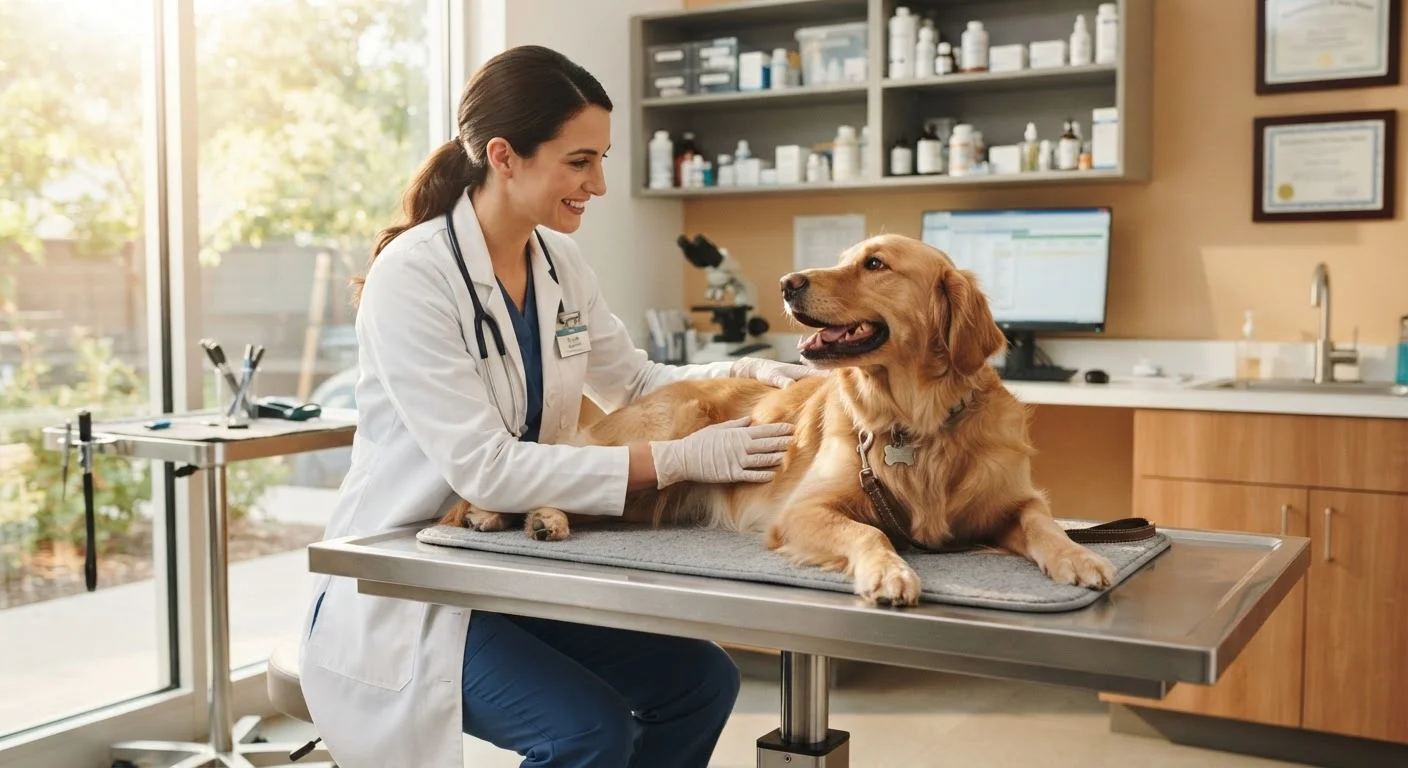
From there, the physical exam moves head to tail. The vet listens to your pet's heart and lungs with a stethoscope, palpates (gently presses) the abdomen to feel the liver, spleen, and bladder, and checks lymph nodes for swelling. Eyes are examined for cloudiness or discharge; ears are checked for infection or mite activity; the mouth gets a dental assessment for tartar buildup, gum inflammation, and broken teeth.
After the physical, the vet reviews your pet's vaccination history and administers any boosters that are due. Parasite prevention is also discussed — heartworm testing, flea and tick control, and intestinal parasite screening are commonly addressed at this point. For a clear overview of how parasites are managed, see our guide on pet parasite prevention.
1 in 3
Pets develop serious illness annually
According to the American Veterinary Medical Association, approximately one in three pets will experience a significant health event each year, underscoring the value of routine monitoring.
70%
Pets show dental disease by age 3
The AVMA estimates that by age three, most dogs and cats have some form of periodontal disease — a condition commonly identified first during routine wellness exams.
2x/year
Recommended exam frequency for senior pets
Many veterinary guidelines recommend semi-annual exams for dogs and cats over age seven, reflecting how quickly health status can shift as pets age.
Why "Healthy-Looking" Doesn't Mean All Clear
Pets are instinctively good at hiding discomfort — a survival trait inherited from wild ancestors. By the time a dog or cat shows obvious signs of illness, a condition may already be well advanced. This is exactly why the annual exam matters even when your pet seems fine.
Conditions like early kidney disease, dental infections, and heart murmurs often have no outward signs in early stages. A vet listening with a stethoscope can detect a soft heart murmur before it causes any symptoms. Blood panels ordered at wellness visits can reveal kidney or liver changes while there's still significant opportunity to slow progression through diet or medication adjustments.
“The annual physical examination is one of the most powerful tools we have in veterinary medicine. A pet can look and act perfectly normal to an owner and still have a significant health issue that we can detect on exam or through diagnostics.”
— Dr. Marty Becker, Veterinarian and founder of Fear Free Pets
Understanding how this proactive approach differs from treating problems after they arise is covered in more depth in our article on preventive care vs. reactive care.
Your Role as the Owner During the Exam
The physical exam is the vet's part of the visit, but owners contribute information that no instrument can measure. Come prepared to share observations: Has your pet been drinking more water than usual? Changed sleep habits? Shown any limping, coughing, or changes in appetite? These details guide the vet toward what to look for more closely.
Keep a Pet Health Journal Before the Visit
In the week before your appointment, jot down anything you've noticed: appetite shifts, changes in thirst, stool consistency, energy levels, or unusual behaviors. Even observations that seem minor can help your vet make connections during the exam. A short written list also prevents you from forgetting in the moment.
It's also a good moment to ask about your pet's nutrition, weight management, dental home care, and any age-appropriate behavioral changes. Senior pets, in particular, benefit when owners flag subtle shifts like increased sleeping, reluctance to jump, or changes in litter box habits — all of which can be early indicators of arthritis or cognitive changes.
If your pet is anxious at the clinic, preparation before you leave home makes a meaningful difference. Our article on preparing your pet for a vet visit offers practical steps to reduce stress on exam day.
Knowing when a problem can't wait for the annual schedule is equally important. If you ever notice sudden behavioral changes, difficulty breathing, unexplained vomiting, or other urgent signs, consult our guide on signs that a vet visit shouldn't wait.
This article is for general informational purposes only and does not constitute veterinary medical advice. Always consult a licensed veterinarian for guidance specific to your pet's health needs.