

Key Takeaways
- Annual wellness exams cover far more than just vaccinations — they assess your pet's entire body system by system.
- Bringing records, noting behavioral changes, and preparing questions makes the visit significantly more productive.
- Vets typically evaluate weight, teeth, ears, eyes, skin, coat, heart, lungs, and abdominal organs at every routine exam.
- Parasite prevention and bloodwork discussions are standard parts of most yearly checkups.
- Senior pets often benefit from more frequent exams — ask your vet what schedule suits your animal's age.
Summary
22 items · 30–60 minutes at the clinic, plus 15 minutes of prep at home
Why This Checklist Matters
A routine annual wellness exam is one of the most effective preventive health tools available to pet owners. Because dogs and cats age faster than humans and cannot describe how they feel, a yearly physical gives your veterinarian a structured opportunity to spot subtle changes — a slight heart murmur, early dental disease, mild weight gain — before they escalate into serious conditions.
This checklist is designed to help you prepare thoroughly before your appointment, understand what the vet is looking for during the exam, and know which questions are worth asking. For a broader look at why these visits are so important, see our walkthrough of the annual wellness exam. If your pet is showing worrying symptoms right now, our guide on signs that a vet visit shouldn't wait can help you decide whether to call today.
Before You Leave Home
Physical Exam — What the Vet Assesses
Preventive Care Review
Tools and Records to Have Ready
Arriving prepared saves time and helps your vet make better-informed decisions. Gather these items before your appointment.
Vaccination and Medical Records
Allows the vet to review immunization history and avoid duplicating tests or vaccines already completed.
Fresh Stool Sample
Used for fecal parasite testing to detect intestinal worms and other parasites not visible to the naked eye.
Written List of Questions
Keeps the appointment focused and ensures you don't forget important topics under the pressure of the visit.
Current Diet and Supplement Details
Helps the vet assess nutritional adequacy, potential supplement interactions, and weight management strategies.
Pet Carrier or Secure Leash
Keeps your pet contained and safe during transport and in the waiting room.
Behavioral Change Log
A written or phone note of changes in appetite, energy, elimination, or behavior gives the vet context that a quick exam cannot reveal.
Don't Rely Solely on Memory
It's easy to forget subtle changes you noticed weeks ago once you're in the exam room. Write down behavioral shifts, changes in water intake, unusual lumps you've felt, or any digestive irregularities as they happen. Even small details can meaningfully guide a veterinarian's assessment. If you've noticed something concerning but aren't sure it warrants a visit, review signs that a vet visit shouldn't wait before your appointment.
What the Vet Examines and Why
During the physical exam, your veterinarian works through a systematic head-to-tail assessment. Understanding each component helps you follow along, ask informed questions, and notice anything that needs clarification.
Weight and body condition: Vets use a standardized body condition score (BCS) — a 1–9 scale that assesses whether your pet is underweight, ideal, or overweight. Even a pound or two of excess weight on a small dog or cat can strain joints and organs over time.
Teeth and gums: Dental disease is among the most commonly diagnosed conditions in adult pets, yet it's often overlooked at home. The vet checks for tartar buildup, gum inflammation (gingivitis), loose teeth, and oral masses. Early intervention can prevent tooth loss and reduce the systemic risks associated with chronic oral bacteria.
Ears, eyes, and nose: The vet inspects ear canals for wax accumulation, odor, redness, or signs of infection or mites. Eyes are checked for cloudiness, discharge, or signs of pressure. Nasal passages are assessed for unusual discharge.
Skin and coat: A dull or patchy coat, flaking, redness, or lumps under the skin can all indicate underlying conditions — from allergies to hormonal imbalances to early tumors. This is also when the vet checks for external parasites such as fleas and ticks. Understanding how flea and tick prevention works year-round supports what the vet finds in this exam.
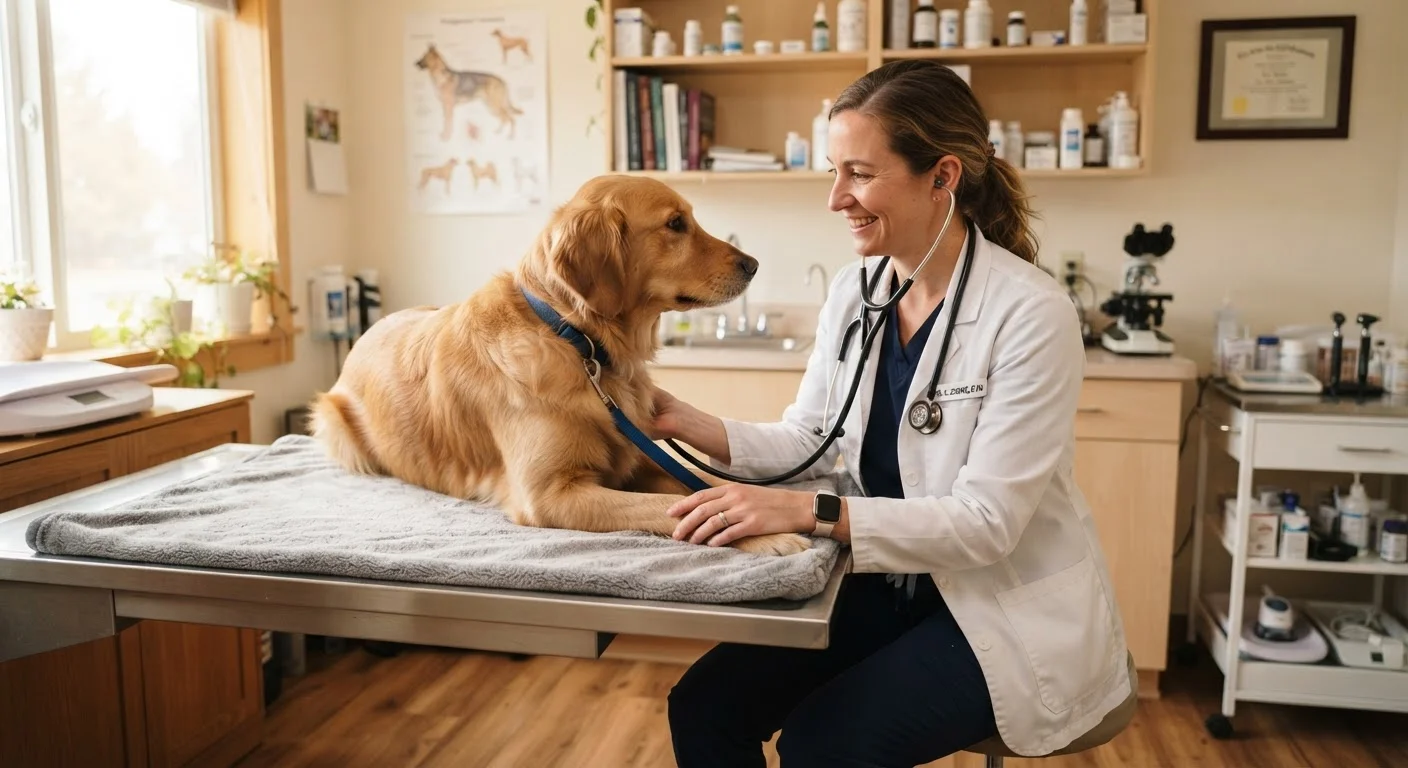
Heart and lungs: Using a stethoscope, the vet listens for irregular rhythms, murmurs, or abnormal breath sounds that may indicate cardiac or respiratory issues.
Abdomen: Gentle palpation of the belly helps the vet assess organ size and detect pain, unusual masses, or bloating.
Musculoskeletal check: Limbs, joints, and spine are assessed for symmetry, pain response, swelling, and range of motion — especially important in older animals. For pets entering their senior years, our overview of keeping an ageing pet comfortable covers what additional monitoring may be recommended.
Annual Exams Are Not the Same for Every Pet
Senior pets — generally those over seven years old, though this varies by species and breed — often need exams every six months rather than once a year, along with more frequent bloodwork. Pets with known chronic conditions such as diabetes, kidney disease, or arthritis may also require more frequent monitoring. Ask your veterinarian directly what schedule is appropriate for your specific animal. Understanding the difference between preventive and reactive care can help frame why this frequency matters.
This article provides general educational information about routine veterinary wellness exams. It is not a substitute for personalized veterinary advice. Always consult a licensed veterinarian for guidance specific to your pet's health needs.