

Key Takeaways
- Secured debt is backed by collateral; unsecured debt relies on your credit profile and income.
- Lenders can repossess or foreclose on collateral if you default on a secured loan.
- Unsecured debt typically carries higher interest rates because lenders have no asset to claim.
- Both debt types affect your credit score, but default consequences differ significantly.
- Knowing which type you hold helps you prioritise repayments and avoid the steepest consequences.
Option A
Secured Debt
Debt backed by a specific asset the lender can claim.
Best for: Borrowers who can offer collateral and want access to larger loan amounts or lower interest rates.
Option B
Unsecured Debt
Debt issued on the strength of your creditworthiness alone.
Best for: Borrowers who need flexible credit without pledging a specific asset as collateral.
If you want lower interest rates and can pledge an asset
Secured Debt
Collateral reduces lender risk, which generally translates to more favourable interest rates and higher borrowing limits.
If you need credit without risking a specific asset
Unsecured Debt
No collateral is required, so a default hurts your credit but does not directly threaten your home or vehicle.
If you are mapping out a debt repayment strategy
Secured Debt
Secured debts often carry the most severe default consequences, making them a natural priority in any structured payoff plan.
What Makes a Debt Secured?
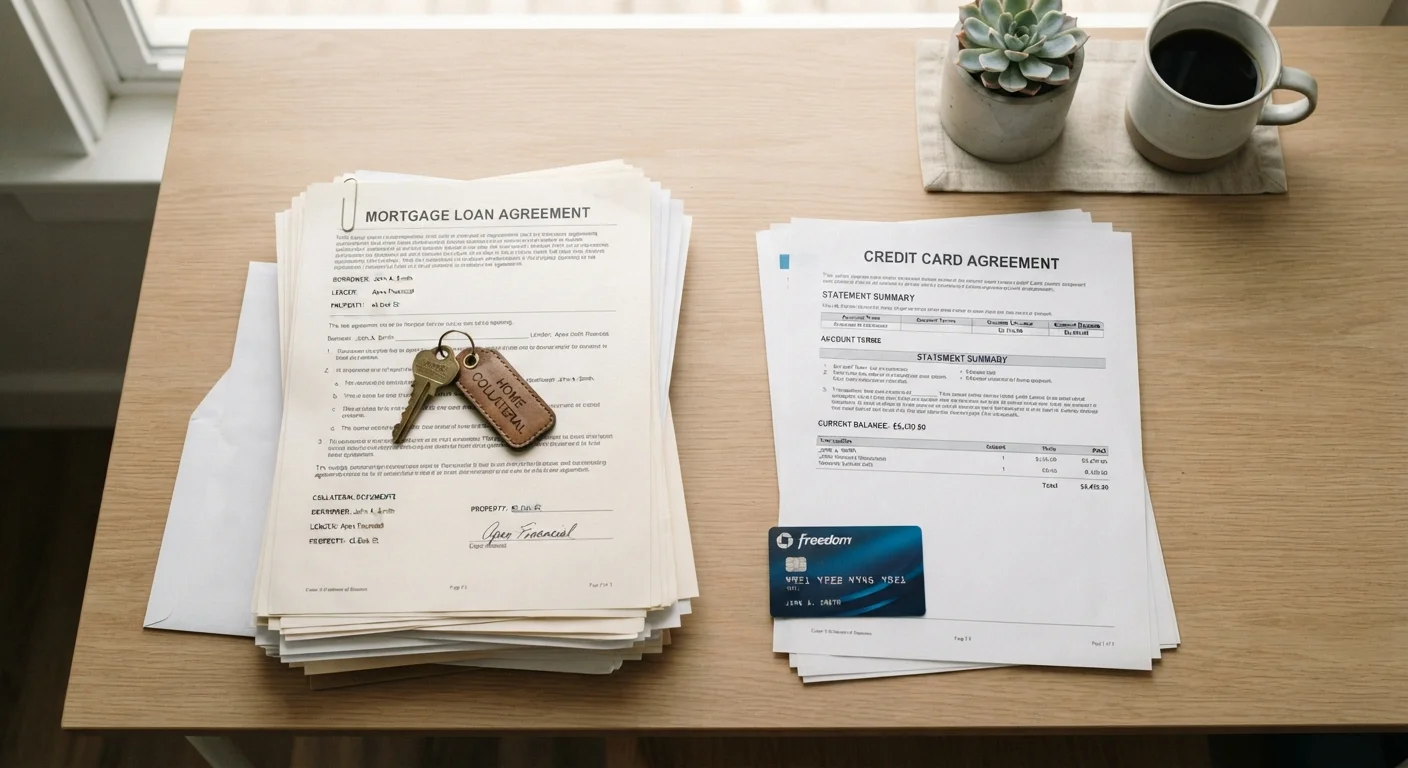
A secured debt is any loan tied to a specific piece of property — called collateral — that the lender has the legal right to seize if you stop making payments. The most familiar examples are mortgages (where your home is the collateral) and auto loans (where the vehicle itself backs the debt). Because the lender holds a legal claim against a real asset, they face less financial risk if you default.
That reduced lender risk has a direct benefit for borrowers: secured loans typically come with lower interest rates and higher borrowing limits than comparable unsecured products. However, the trade-off is significant. Missing payments can trigger repossession of your vehicle or foreclosure on your home — outcomes with long-lasting financial and personal consequences. Before signing any secured agreement, it is worth reading key debt and credit terms such as lien, default, and foreclosure carefully.
What Makes a Debt Unsecured?
Unsecured debt is extended based entirely on your creditworthiness — your credit history, income, and overall financial profile — without any specific asset pledged as security. Credit cards, personal loans, medical bills, and most student loans are common examples. If you default, the lender cannot automatically take a specific possession; instead, they may pursue collection efforts, report the default to credit bureaus, or sue for a court judgment.
Because lenders carry more risk with unsecured debt, they typically charge higher interest rates to compensate. This is a key reason why credit card balances, if carried month to month, can grow surprisingly fast. Understanding how unsecured debt fits into your overall borrowing picture is an important step toward managing it well — a topic covered in depth in this introduction to debt and credit.
Student Loans: A Special Case
Federal student loans are technically unsecured, but they come with unique rules that differ from most unsecured debt — including income-driven repayment options and specific default consequences. Private student loans also vary significantly in their terms. If student loans are part of your picture, review their specific agreements rather than assuming standard unsecured debt rules apply.
Comparing the Two: A Side-by-Side View
The table below highlights the practical differences borrowers encounter most often. Keep in mind that the details of any specific loan depend on the lender, your credit profile, and applicable state or federal law.
| Criterion | Secured Debt | Unsecured Debt |
|---|---|---|
| Collateral required | Yes — specific asset pledged | No asset required |
| Typical interest rate | Generally lower | Generally higher |
| Common examples | Mortgage, auto loan | Credit card, personal loan |
| Lender recourse on default | Repossession or foreclosure | Collections, lawsuit, wage garnishment |
| Typical borrowing limits | Higher (asset-dependent) | Lower (credit-dependent) |
| Impact on credit score | Significant if defaulted | Significant if defaulted |
~$11.5T
U.S. mortgage debt outstanding
According to Federal Reserve data, mortgage debt — the largest category of secured consumer debt — exceeded $11 trillion in recent years, underscoring how widely Americans use collateral-backed borrowing.
~$1.1T
U.S. revolving (credit card) debt
Federal Reserve consumer credit data shows revolving credit — predominantly unsecured credit card balances — regularly surpassing $1 trillion, highlighting how common unsecured borrowing is in everyday finances.
2–10%+
Typical rate gap: secured vs. unsecured
Interest rate differentials between secured and unsecured loans vary widely by product and borrower profile, but unsecured credit commonly carries rates several percentage points higher than equivalent secured alternatives.
What Happens When Things Go Wrong
The distinction between secured and unsecured debt becomes most consequential at the point of default. With a secured loan, the lender's path to recovering money is more direct: they can repossess a vehicle or begin foreclosure proceedings on a home, often on a defined legal timeline. This does not mean consequences arrive immediately — most lenders pursue contact and workout options before initiating these processes — but the legal machinery exists and can move relatively quickly.
With unsecured debt, lenders lack that direct route to a specific asset. A charge-off on a credit card damages your credit score and can lead to a collections account or a civil lawsuit, but your home is not automatically at risk. That said, a court judgment against you can sometimes lead to wage garnishment, depending on your state's laws — so unsecured does not mean consequence-free.
If you are managing multiple debts of both types, a structured repayment approach helps. The debt snowball and avalanche methods are two widely discussed frameworks for deciding which balances to address first. Many financial educators suggest prioritising secured debts to protect core assets, then tackling high-interest unsecured balances.
For a broader perspective on how these choices ripple forward, see The Long View on Debt.
This article is for general informational and educational purposes only and does not constitute personalised financial, legal, or tax advice. Consult a qualified financial professional for guidance specific to your circumstances.