

Key Takeaways
- The snowball method targets the smallest debt balance first, regardless of interest rate.
- The avalanche method targets the highest interest rate first, minimizing total interest paid.
- The avalanche typically costs less overall; the snowball tends to deliver faster early wins.
- Consistency matters more than which method you choose — both beat making minimum payments.
- Your personality and financial situation should guide which strategy you adopt.
- Neither method is a substitute for a sustainable budget that keeps new debt from accumulating.
Option A
Debt Snowball
The motivation-first approach to debt payoff.
Best for: People who need early wins to stay motivated and build momentum across multiple debts.
Option B
Debt Avalanche
The mathematically efficient approach to debt payoff.
Best for: People who can stay disciplined over time and want to minimize total interest paid.
If you've struggled to stick with debt payoff plans in the past
Debt Snowball
Clearing a small balance quickly delivers a tangible win that reinforces the habit of paying extra. The psychological boost can be the difference between staying on track and giving up.
If you carry high-interest debt such as credit cards alongside lower-rate loans
Debt Avalanche
High interest rates compound rapidly, so attacking them first limits the total amount you'll repay. Over time, this can save a meaningful amount compared to the snowball approach.
If your debts are similar in balance and interest rate
Debt Snowball
When the mathematical difference between strategies is small, the motivational edge of the snowball makes it the more practical starting point.
If you are detail-oriented and comfortable tracking long-term progress without quick wins
Debt Avalanche
The avalanche rewards patience. If you can stay motivated by watching your interest costs fall on paper, you'll come out ahead financially over the life of your debts.
If you want to simplify repayment rather than accelerate it
Debt Snowball
Eliminating accounts one by one reduces the number of monthly payments you manage, which many people find makes budgeting simpler as they progress.
How Each Strategy Works
Both strategies share the same core mechanic: you make minimum payments on all debts every month, then direct any extra money toward one specific debt. What differs is which debt receives that focused attention.
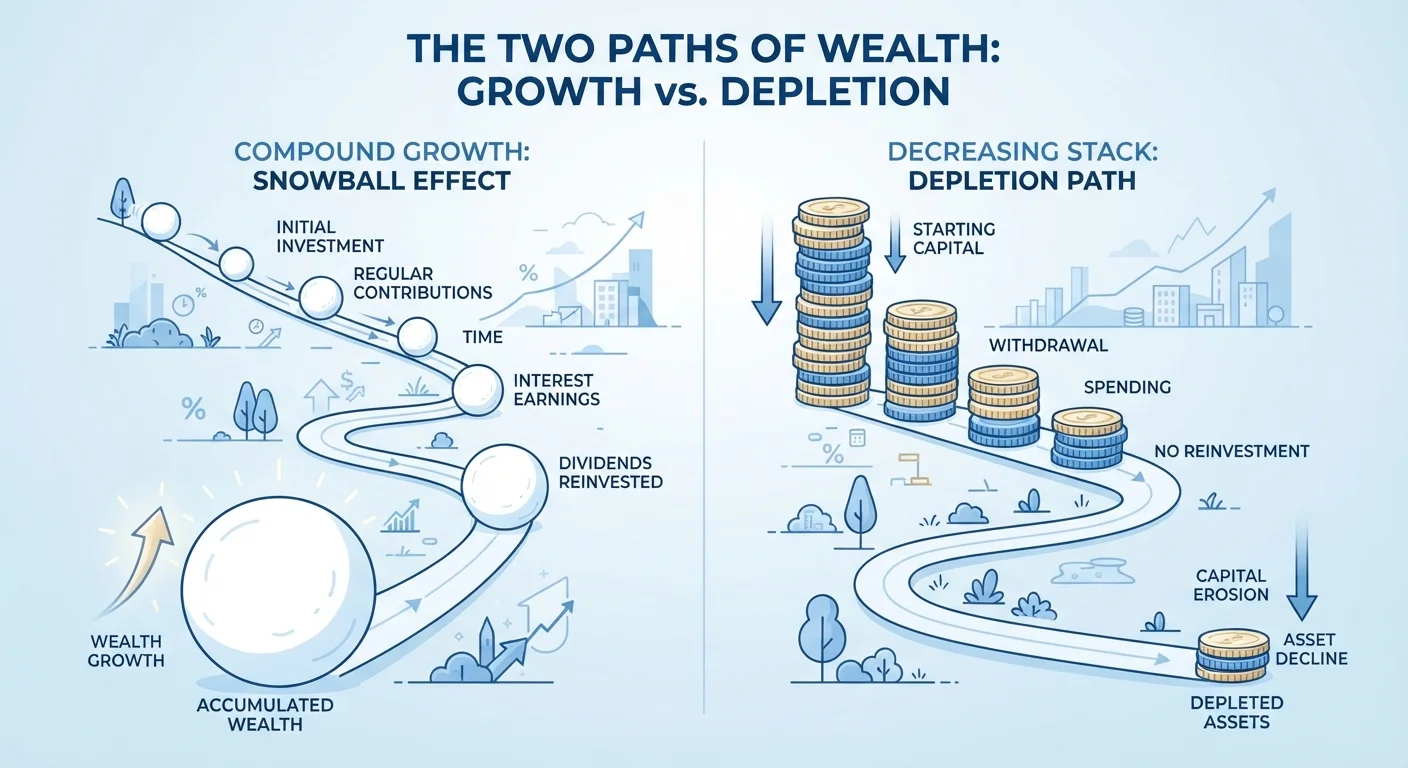
Debt Snowball: You rank your debts from smallest balance to largest. Every extra dollar goes to the smallest balance first. Once it's eliminated, you roll its monthly payment into the next-smallest debt — hence the snowball image. The balances you owe and the number of open accounts shrink steadily.
Debt Avalanche: You rank your debts from highest annual percentage rate (APR) to lowest. Every extra dollar goes to the highest-rate debt first. Once it's paid off, you redirect that payment toward the next-highest-rate debt. Because you're targeting the debts that grow the fastest, you reduce what you owe to interest over time. To understand why high interest rates are so damaging in the first place, see our explainer on how compound interest accumulates on debt.
| Criterion | Debt Snowball | Debt Avalanche |
|---|---|---|
| Payoff order | Smallest balance first | Highest interest rate first |
| Total interest paid | Typically more | Typically less |
| Time to first debt eliminated | Usually faster | Varies; can be longer |
| Motivational structure | Quick early wins | Long-term cost savings |
| Complexity | Simple to track | Requires rate awareness |
| Best when | Motivation is a barrier | Rates vary significantly |
| Accounts closed over time | Quickly reduces account count | May keep more accounts open longer |
The Real Cost Difference
The avalanche's mathematical advantage is real, but its size depends on your specific mix of balances and rates. In scenarios where high-rate debts carry large balances, the savings can be substantial — potentially hundreds or even thousands of dollars in avoided interest charges. In scenarios where all your debts carry similar rates, the difference between strategies narrows considerably.
The snowball's cost is the extra interest you pay by leaving a high-rate debt untouched longer. That trade-off is worth it for many people: behavioral finance research consistently finds that motivation and perceived progress are among the strongest predictors of whether someone completes a debt payoff plan at all. A strategy you abandon costs more than one you finish, regardless of which method it is.
~$1,000+
Potential interest savings with avalanche on high-rate debt
Illustrative estimates from personal finance modeling tools suggest the avalanche can save over $1,000 versus the snowball when high-APR balances are large — actual savings vary by balance and rate mix.
23%+
Average credit card APR in the U.S.
Federal Reserve data has shown average credit card interest rates exceeding 20% in recent years, underscoring why rate-ordered payoff can reduce total costs significantly.
3 in 10
U.S. adults carrying credit card debt month to month
Survey data from sources such as the Federal Reserve's Report on the Economic Well-Being of U.S. Households consistently finds a large share of Americans carrying revolving balances.
If you're weighing an entirely different approach — rolling multiple debts into one — our article on what debt consolidation actually achieves offers a balanced look at that alternative.
Putting Either Strategy Into Practice
Before choosing a method, list every debt you carry: the creditor, the current balance, the interest rate, and the minimum monthly payment. This inventory is the foundation for either strategy.
Next, identify how much extra money you can consistently direct toward debt each month. Even modest extra payments — applied reliably — compound in your favor. If your budget is tight, revisiting your spending categories through a framework like the ones covered in Budgeting Basics may help you find room.
A few practical notes that apply to both methods:
- Keep minimum payments current on all debts. Missing payments on accounts you're not focusing on will generate fees and credit damage that undercut your progress.
- Treat windfalls consistently. Tax refunds, bonuses, or unexpected income accelerate either strategy dramatically when directed at your target debt.
- Stop adding new debt. Payoff plans stall when new balances appear. Pairing your strategy with responsible borrowing habits protects your progress.
- Reassess periodically. Life circumstances change. Switching from snowball to avalanche — or vice versa — mid-plan is entirely valid if your situation or motivation shifts.
Once your debts are cleared, the monthly payments you were making toward debt can be redirected toward savings and investment. For a starting point on that next phase, Saving & Investing covers the foundational concepts worth understanding early.
Neither Method Works Without a Budget
Both strategies depend on having consistent extra money to apply each month. If your income barely covers your minimums, a payoff method alone won't solve the problem. Reviewing your full spending picture first — and addressing any gaps between income and expenses — is the prerequisite step. A payoff strategy is a plan for the surplus; a budget is how you create that surplus.
This article is for general informational and educational purposes only and does not constitute personalized financial advice. Consult a qualified financial professional for guidance specific to your situation.