

| Number of standard finish levels | 5 (Matte, Eggshell, Satin, Semi-Gloss, Gloss) |
| Best finish for hiding imperfections | Matte / Flat |
| Most durable finish for high-traffic areas | Semi-Gloss or Gloss |
| Most popular all-purpose interior finish | Eggshell or Satin (Commonly cited by interior painting professionals) |
| Finish recommended for trim and woodwork | Semi-Gloss |
| Finish least suitable for kitchens and baths | Matte / Flat |
What Paint Finish Actually Means
When you choose a paint color, you're only making half the decision. The finish — also called sheen — determines how light interacts with your painted surface once it dries. It affects how imperfections read on the wall, how easy the surface is to clean, and how the color itself appears in different lighting conditions.
Every standard interior paint finish sits on a spectrum from flat to high gloss. Understanding where each finish falls on that spectrum — and why it matters — lets you match the right product to each room and surface with confidence.
| Number of standard finish levels | 5 (Matte, Eggshell, Satin, Semi-Gloss, Gloss) |
| Best finish for hiding imperfections | Matte / Flat |
| Most durable finish for high-traffic areas | Semi-Gloss or Gloss |
| Most popular all-purpose interior finish | Eggshell or Satin (Commonly cited by interior painting professionals) |
| Finish recommended for trim and woodwork | Semi-Gloss |
| Finish least suitable for kitchens and baths | Matte / Flat |
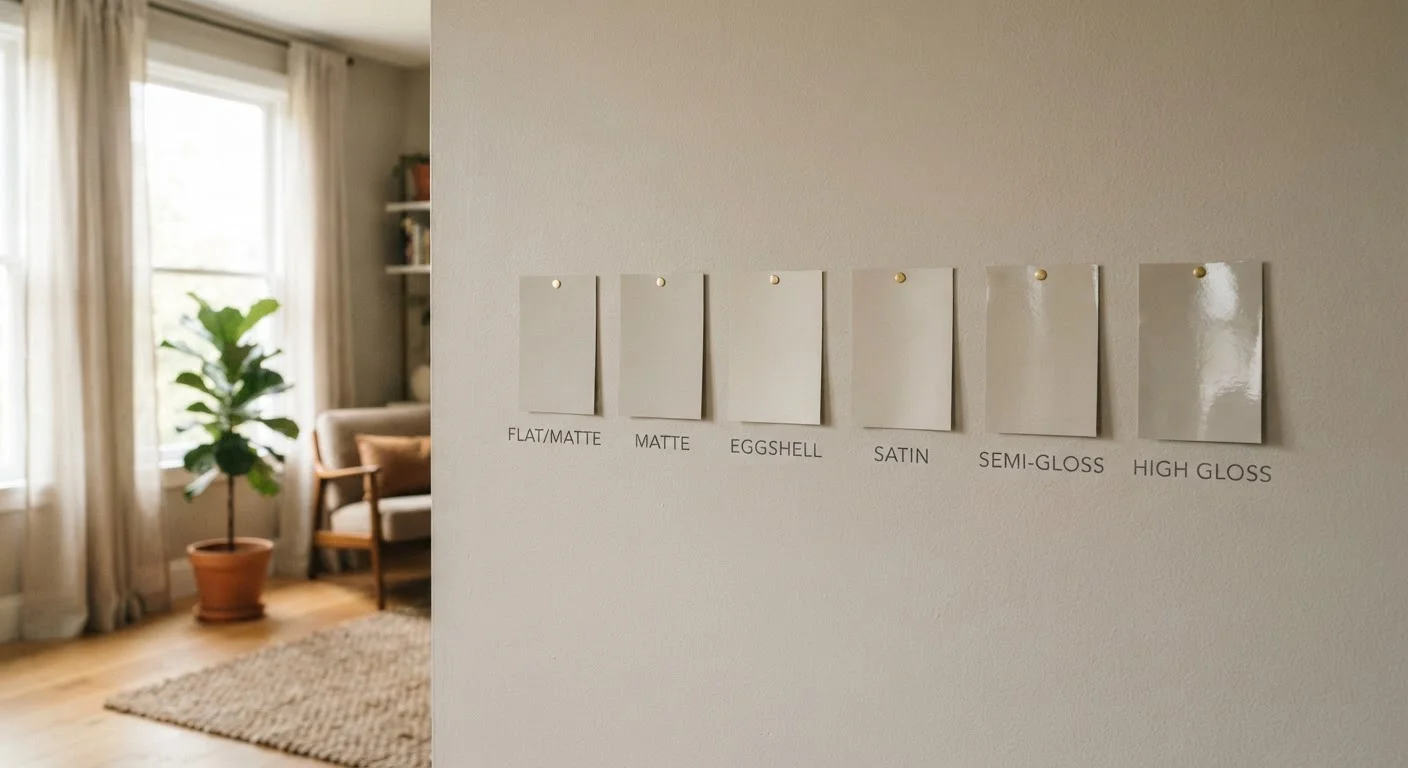
The Five Finishes, Explained
Matte (Flat)
Sheen level: None to very low. Light is absorbed rather than reflected, producing a chalky, velvety surface with strong hiding power. Matte is ideal for ceilings and low-traffic adult bedrooms where walls rarely need scrubbing. Avoid it in kitchens, bathrooms, hallways, and children's rooms — cleaning can scuff or lift the finish.
Eggshell
Sheen level: Very low — similar to the soft sheen of an actual eggshell. This finish strikes a practical balance: it hides minor surface flaws better than satin while still tolerating occasional wiping. It works well for living rooms, dining rooms, and adult bedrooms that see moderate use.
Satin
Sheen level: Low-to-medium. Satin has a smooth, pearl-like appearance and is one of the most versatile interior finishes. It holds up to regular cleaning, resists humidity better than eggshell, and suits hallways, family rooms, and children's rooms. The trade-off: brush strokes and roller marks are more visible during application, so technique matters more.
Semi-Gloss
Sheen level: Medium-high. Semi-gloss is the standard choice for trim, doors, window frames, and cabinetry because it's hard-wearing and easy to wipe down. It also performs well in kitchens and bathrooms where moisture and grease are factors. Because it reflects significant light, it amplifies surface imperfections — good prep work is non-negotiable. If your walls show uneven absorption after patching, see why patchy walls happen and how to fix them before applying semi-gloss.
Gloss (High-Gloss)
Sheen level: High. Gloss produces a hard, mirror-like surface used mainly on furniture, cabinetry, and architectural details such as crown molding. It is the most durable and cleanable finish, but it shows every imperfection with unforgiving clarity. It is rarely applied to large wall areas in typical residential settings.
Sheen
The degree of light reflectivity in a dried paint film. Higher sheen means more light bounces off the surface, making it appear shinier and more durable.
LRV (Light Reflectance Value)
A measurement of how much light a color reflects. While often associated with paint color, sheen level also affects the perceived LRV of a finished wall.
Washability
How well a painted surface resists scrubbing and cleaning without losing color or sheen. Higher-gloss finishes typically offer better washability.
Hiding Power
A paint's ability to conceal surface imperfections, old colors, or substrate variations. Flat and matte finishes tend to offer stronger hiding power.
Matching Finish to Room and Surface
A simple room-by-room approach removes most of the guesswork:
- Ceilings: Flat or matte — no sheen to catch raking light and reveal texture.
- Living and dining rooms: Eggshell for a refined look; satin if the space gets heavy use.
- Bedrooms: Eggshell or matte, depending on how much cleaning you anticipate.
- Kitchens and bathrooms: Satin at minimum; semi-gloss preferred for humidity resistance and cleanability.
- Trim, doors, and baseboards: Semi-gloss as a standard; high-gloss for a more dramatic, formal look.
- Hallways and stairwells: Satin — it withstands the inevitable scuffs and shoulder brushes.
Finish Names Vary by Manufacturer
Terms like 'satin' and 'eggshell' are not standardized across the paint industry. One brand's satin may have a sheen level closer to another brand's eggshell. Always check the gloss reading on the product label — typically expressed as a percentage at a 60-degree angle — rather than relying on the name alone when matching finishes between brands.
One more consideration: sheen level interacts with your paint color. Darker colors in a high-gloss finish become very reflective and can feel overwhelming in smaller rooms. Lighter colors in matte can look flat and lifeless in dim spaces. Testing a sample area in your actual lighting conditions before committing to a full room is always worthwhile. For tips on why finish inconsistencies appear after application, explore the common causes of patchy paint and how preparation prevents them.