

Key Takeaways
- The NOVA classification ranks foods by degree of industrial processing, not just nutrient content.
- Ultra-processed foods are defined by their use of additives and industrial ingredients absent from home cooking.
- Research has associated high ultra-processed food consumption with several health risks, but causality is still debated.
- The NOVA system has critics who argue its categories can be too broad or inconsistently applied.
- Understanding the framework helps readers evaluate nutrition headlines more critically.
- Consulting a registered dietitian is the most reliable way to apply this information to your own diet.
Ultra-Processed Food
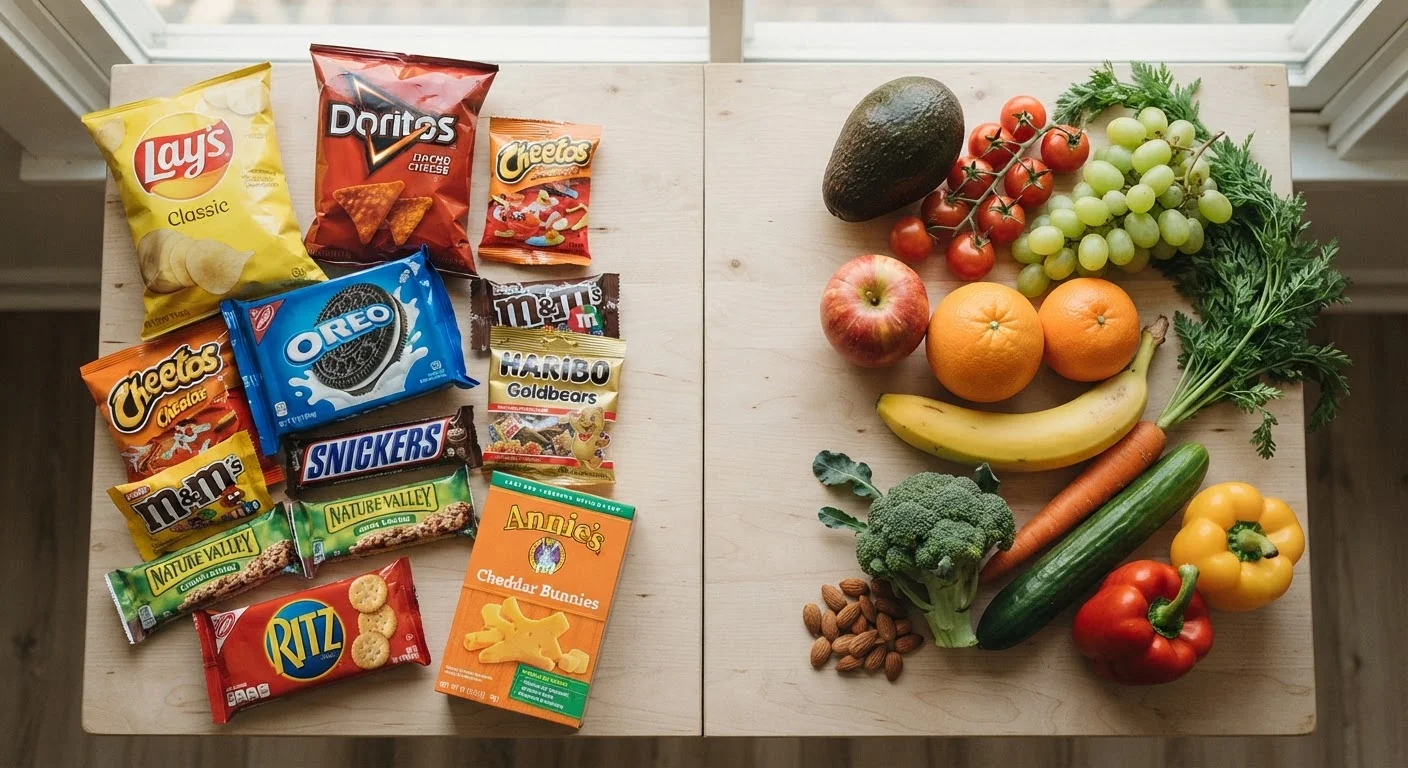
An ultra-processed food is one that has been manufactured using industrial techniques and contains ingredients — such as additives, artificial flavors, emulsifiers, or colorings — that you would not typically find in a home kitchen. The term comes from a classification system called NOVA, developed by Brazilian nutrition researchers, which groups foods by the degree and purpose of their processing rather than by their nutrient content alone. The category includes many packaged snacks, soft drinks, reconstituted meat products, flavored yogurts, and ready-to-eat meals.
NOVA divides foods into four groups: unprocessed or minimally processed foods, processed culinary ingredients, processed foods, and ultra-processed foods (Group 4). The defining feature of Group 4 is the use of industrial formulations and substances not used in ordinary cooking.
Where the Term Comes From
The phrase "ultra-processed" did not originate in a government dietary guideline or a food company's marketing materials. It emerged from academic nutrition research in Brazil around 2010, developed by epidemiologist Carlos Monteiro and colleagues at the University of São Paulo. Their NOVA framework was a deliberate attempt to move food classification beyond macronutrients and calories, arguing that how a food is made matters as much as what it contains.
NOVA groups all foods and beverages into four categories. Group 1 covers minimally processed foods — things like plain frozen vegetables, dried legumes, or fresh meat. Group 2 includes processed culinary ingredients such as flour, butter, and salt. Group 3 covers traditionally processed foods like cheeses, cured meats, or canned fish. Group 4 — the ultra-processed category — is defined by industrial manufacturing using ingredients and techniques not typical of home cooking.
NOVA Is a Research Tool, Not a Label
The NOVA classification was designed as a research and public health tool, not a consumer product label. It is applied by researchers coding foods in dietary surveys, which is why you will not see a "NOVA Group 4" stamp on a package at the grocery store. Its usefulness is primarily in population-level nutritional epidemiology.
The NOVA classification was designed as a research and public health tool, not a consumer product label. It is applied by researchers coding foods in dietary surveys, which is why you will not see a "NOVA Group 4" stamp on a package at the grocery store.
What Actually Makes a Food 'Ultra-Processed'
The key criterion is not a single problematic ingredient but the combination of industrial formulation and the presence of additives whose primary purpose is to make the product more palatable, durable, or visually appealing. These include emulsifiers, stabilizers, artificial or "natural" flavor compounds, colorings, non-sugar sweeteners, and preservatives that go well beyond what you would add while cooking at home.
Common examples that researchers typically classify in Group 4 include: carbonated soft drinks, packaged snack chips, reconstituted chicken nuggets, flavored instant noodles, mass-produced packaged breads with extended shelf lives, sweetened breakfast cereals, and many protein bars. The category is intentionally broad — which, as discussed below, is also a source of ongoing debate.
57%
Share of US calories from ultra-processed foods
A nationally representative dietary analysis published in BMJ Open estimated that ultra-processed foods accounted for approximately 57% of energy intake in the US diet.
12%
Associated cancer risk increase per 10-point UPF intake rise
A large prospective cohort study published in The BMJ in 2018 found this association, though researchers noted the observational design limits causal conclusions.
~500 cal/day
Extra calories consumed on ultra-processed diet
In a controlled NIH trial published in Cell Metabolism (2019), participants on an ultra-processed diet consumed roughly 500 more calories per day than those on an unprocessed diet.
For context on processing and nutrition more broadly, see our explainer on what happens nutritionally when grains are refined, which illustrates how physical and chemical transformation during processing can alter a food's nutritional profile.
What the Research Shows — and Where It Gets Complicated
A substantial body of observational research has linked diets high in ultra-processed foods with elevated risks for obesity, type 2 diabetes, cardiovascular disease, depression, and even certain cancers. A widely cited 2019 study published in The BMJ found that each 10-percentage-point increase in ultra-processed food consumption was associated with a 12% higher risk of cancer overall. Similar associations have appeared across large cohort studies in Europe, the United States, and Latin America.
“The NOVA classification is not meant to suggest that all processing is harmful. The critical issue is the type of processing and the purposes it serves — whether it is enhancing a food's nutritional value or engineering it primarily for overconsumption.”
— Carlos Monteiro, Professor of Nutrition and Public Health, University of São Paulo, and lead developer of the NOVA classification system
However, most of this evidence comes from observational studies — researchers observe what people eat and what health outcomes occur, but cannot control all the variables involved. People who eat more ultra-processed foods also tend to have lower incomes, less food security, higher overall calorie intakes, and different lifestyle patterns. Teasing apart the independent effect of ultra-processing itself from these confounding factors remains a core methodological challenge.
A small number of controlled experimental studies have begun to appear. One randomized trial published in Cell Metabolism in 2019, conducted by Kevin Hall and colleagues at the National Institutes of Health, found that participants assigned to an ultra-processed diet consumed significantly more calories and gained more weight over two weeks compared to those on an unprocessed diet, even when both diets were matched for offered calories, sugar, fat, and fiber. This type of controlled evidence is still limited but is seen as an important step in the research.
The Genuine Criticisms of the NOVA Framework
Not all nutrition scientists are persuaded that NOVA is the most useful lens for evaluating food quality. Several legitimate criticisms have been raised in peer-reviewed literature.
- Breadth of the category: NOVA's Group 4 includes both nutrient-poor candy and fortified plant-based beverages, whole-grain crackers with added vitamins, and fermented kefir products with long ingredient lists. Critics argue this lumps nutritionally disparate foods together in a way that can mislead consumers and policymakers.
- Process vs. outcome: Some researchers argue that specific harmful ingredients — excess sodium, added sugars, refined starches — may explain the health associations better than the concept of "ultra-processing" as a category. If that is true, existing nutrient-based dietary frameworks may already capture the relevant risk.
- Reliability of classification: Studies have shown that different researchers applying NOVA to the same food databases sometimes arrive at different classifications, raising questions about reproducibility.
A Practical Ingredient List Check
When reviewing a packaged food, look for substances you would not keep in a home kitchen — such as carrageenan, artificial sweeteners, high-fructose corn syrup, or dozens of synthetic additives. A short ingredient list of recognizable items is generally a sign of less industrial processing. This is a heuristic, not a guarantee of nutritional quality, but it can help you apply the NOVA concept in a practical shopping context.
Understanding these limitations does not mean the concept is without value — it means that NOVA is best understood as a useful research heuristic, not an absolute rule about what is safe or unsafe to eat.
What This Means for Everyday Eating
For general readers, the most practical takeaway from the NOVA debate is this: ingredient lists and processing methods are worth paying attention to, but context matters. A diet built primarily around minimally processed whole foods — vegetables, legumes, whole grains, plain dairy, eggs, fish, and meats — is well-supported by decades of nutrition research, regardless of which classification framework you apply.
At the same time, the presence of one ultra-processed product in an otherwise varied, nutrient-rich diet is unlikely to determine health outcomes. Nutrition science consistently shows that overall dietary patterns matter more than individual foods consumed in isolation.
If you want to understand more about how processing changes the nutritional character of specific staple foods, our article on whole grains versus refined grains offers a concrete, ingredient-level example of what industrial processing can remove and why it matters.
This article is for general informational and educational purposes only and is not a substitute for professional medical or dietary advice. If you have questions about your specific dietary needs or health conditions, please consult a registered dietitian or qualified healthcare provider.