

Key Takeaways
- The title must be transferred into your name promptly after purchase — requirements vary by state.
- Vehicle registration and license plates are separate from the title and must be renewed periodically.
- Auto insurance is legally required in nearly every state before you drive the car.
- Deadlines for title transfer and registration are strict; missing them can result in fees or penalties.
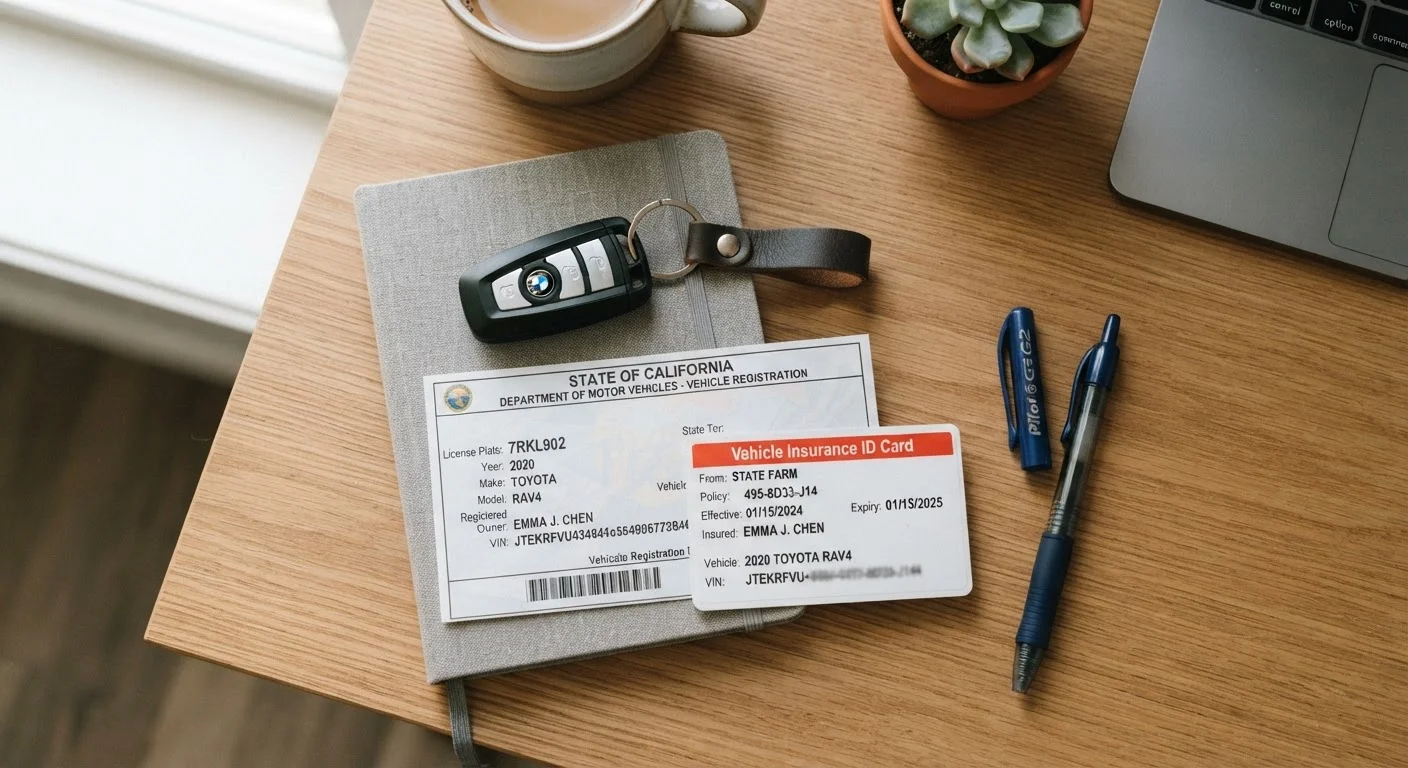
- Keeping physical and digital copies of key documents reduces stress during traffic stops or emergencies.
Start here
Transferring the Title Into Your Name
Next
Registering Your Vehicle
Then
Setting Up Auto Insurance
Keep going
Ongoing Administrative Responsibilities
Wrap up
Keeping Your Documents Organized
Transferring the Title Into Your Name
The vehicle title is the legal document that establishes who owns a car. When you buy a vehicle — from a dealership or a private seller — the title must be formally transferred into your name. Until that happens, you are not the legal owner on record.
Vehicle title
The official legal document that identifies who owns a vehicle. It must be transferred whenever a car changes hands.
Vehicle registration
A state-issued permit that allows you to operate your car on public roads. It must be renewed periodically and is separate from the title.
Liability insurance
A type of auto insurance that covers costs for injuries or property damage you cause to other people in an accident. Required by law in most U.S. states.
Lien
A legal claim a lender holds on a vehicle when the owner has borrowed money to purchase it. The lien must be released before the title can be cleanly transferred.
DMV
The Department of Motor Vehicles (or equivalent state agency). It handles vehicle titling, registration, and driver licensing in most U.S. states.
Deductible
The amount you pay out of pocket before your insurance policy covers the rest of a claim. A higher deductible usually means a lower monthly premium.
For dealership purchases, the dealer typically handles the title paperwork on your behalf and submits it to the state DMV. For private-party sales, both buyer and seller must sign the existing title. You then bring that signed title, a completed transfer application, proof of insurance, and the applicable fee to your local DMV or equivalent state agency.
Most states require title transfer within 10 to 30 days of purchase. Missing that window usually triggers a late penalty. If you're buying a car that still has a lien (meaning the seller financed it and hasn't fully paid it off), the lender must release the lien before the title can transfer cleanly — confirm this before completing the sale.
Registering Your Vehicle
Vehicle registration is a separate process from the title transfer. Registration is the state's permission for you to operate the car on public roads, and it typically comes with license plates and a registration sticker or certificate.
To register your car, you'll generally need proof of ownership (your title), proof of insurance, a completed registration application, and payment for registration fees. Some states also require a vehicle inspection or emissions test before they'll issue registration.
Registration must be renewed periodically — usually every one or two years depending on your state. Renewal notices are mailed to the address on file, which is why it's important to keep your DMV records current whenever you move. Driving on expired registration is a citable offense in every state.
Set a Registration Renewal Reminder
Don't rely solely on mailed renewal notices — they can arrive late or go to an outdated address. Set a calendar reminder 30 days before your registration expiration date each year. Many state DMVs also offer email or text reminders if you create an online account.
Setting Up Auto Insurance
Auto insurance is not optional in nearly every U.S. state — you must have coverage in place before legally driving your car. At minimum, most states require liability insurance, which pays for injuries or property damage you cause to others in an at-fault accident.
Beyond the legal minimum, you may want to consider additional coverage types:
- Collision coverage — pays to repair or replace your car after an accident, regardless of fault.
- Comprehensive coverage — covers non-collision damage such as theft, weather, or falling objects.
- Uninsured/underinsured motorist coverage — protects you if the other driver has no insurance or insufficient coverage.
If your car is financed through a loan, your lender will almost certainly require both collision and comprehensive coverage as a condition of the loan. When comparing policies, focus on coverage limits and deductibles alongside premium costs — the cheapest policy is not always the most protective. For help factoring insurance into your overall budget, see this plain-language budgeting guide.
Don't Drive Without Insurance
Driving uninsured — even briefly between policies — can result in license suspension, fines, and serious financial liability if you're involved in an accident. Before you drive a newly purchased vehicle off a private seller's property, confirm your insurance is active on that car. Many insurers will add a new vehicle to an existing policy with a quick phone call or app update.
Ongoing Administrative Responsibilities
Car ownership involves recurring administrative tasks beyond the initial setup. Staying on top of these prevents fines, gaps in coverage, and legal complications.
- Annual or biennial registration renewal — deadlines are printed on your registration card and often on the sticker on your license plate.
- Insurance renewal — review your policy at each renewal period, not just auto-pay it. Coverage needs can change, and your driving record affects your rates.
- Address updates — notify the DMV and your insurer whenever you move. Many states have a mandatory update window.
- Emissions and safety inspections — required in many states on a set schedule. Failure to comply can result in registration denial.
To stay ahead of common first-year mistakes — including paperwork oversights — this guide on what new owners often get wrong covers the most costly missteps in detail.
Keeping Your Documents Organized
Once your administrative setup is complete, organization becomes your ongoing responsibility. Certain documents belong in your car at all times; others should be stored safely at home.
Keep in your car:
- Current insurance card (physical copy, even if you also have a digital version)
- Vehicle registration certificate
- Any roadside assistance or breakdown coverage card
Store securely at home:
- Vehicle title (do not keep this in the car — it is a theft risk)
- Loan or financing documents, if applicable
- Prior service and maintenance records
For a detailed checklist of what to carry and why each item matters legally, see The Documents You Should Always Keep in Your Car. Building these habits early makes traffic stops, emergencies, and future resale significantly smoother. And when you're ready to think beyond paperwork, routine car maintenance is the natural next step toward confident ownership.