

Key Takeaways
- Synthetic oil flows better in cold weather and holds up longer under high engine heat.
- Conventional oil costs less per quart but typically requires more frequent changes.
- Most modern vehicles are factory-filled with synthetic or synthetic-blend oil.
- Always follow your vehicle manufacturer's oil specification — not just general advice.
- Switching from conventional to synthetic is generally safe, but consult your owner's manual first.
Option A
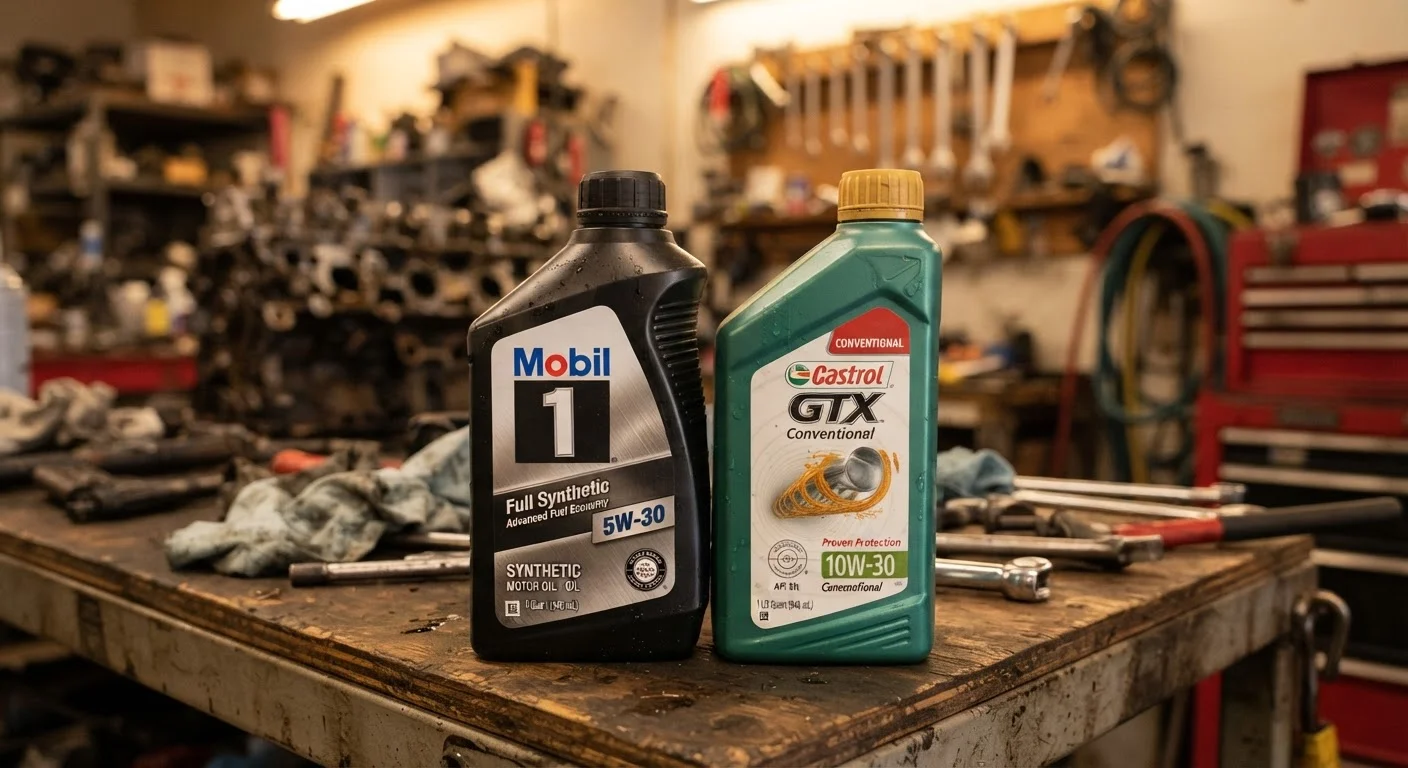
Synthetic Motor Oil
The engineered, high-performance option.
Best for: Drivers with newer vehicles, turbocharged engines, extreme climates, or extended oil-change intervals.
Option B
Conventional Motor Oil
The time-tested, widely available standard.
Best for: Drivers with older vehicles, simpler engines, and moderate driving conditions who change oil on a regular schedule.
If you drive a newer vehicle or a turbocharged engine
Synthetic Motor Oil
Turbocharged and modern engines run hotter and tighter tolerances demand better thermal stability and lubrication that synthetics reliably provide.
If you own an older, high-mileage vehicle on a tight maintenance budget
Conventional Motor Oil
Conventional oil is widely available and affordable, and many older engines were designed around its properties — provided you change it on schedule.
If you live in a region with extreme cold winters or scorching summers
Synthetic Motor Oil
Synthetics retain their viscosity across a wider temperature range, reducing engine wear during cold starts and hot operating conditions.
If you drive infrequently and want to reduce maintenance visits
Synthetic Motor Oil
Synthetics are generally rated for longer service intervals — commonly 7,500 to 10,000 miles or more — reducing how often you need to change your oil.
What Makes These Two Oils Fundamentally Different
Both synthetic and conventional motor oils do the same core job: lubricate moving metal parts inside your engine, reduce friction, and carry heat away. The difference is in where they come from and how they behave under stress.
Conventional motor oil is refined directly from crude petroleum. The refining process removes many impurities, but some inconsistencies in molecular structure remain. Those inconsistencies affect how the oil performs when pushed to extremes.
Synthetic motor oil is chemically engineered — either built from scratch using chemical compounds or more thoroughly refined from petroleum base stocks. The result is a more uniform molecular structure that resists breaking down under high heat, flows more reliably in extreme cold, and lasts longer before degrading.
For a deeper look at viscosity grades, additive packages, and what those letter-number codes on the label actually mean, see our Engine Oil Basics guide.
| Criterion | Synthetic Motor Oil | Conventional Motor Oil |
|---|---|---|
| Base source | Chemically engineered or highly refined | Refined from crude petroleum |
| Cold-weather flow | Excellent — circulates faster at startup | Slower to flow in extreme cold |
| Heat resistance | High — resists oxidation and sludge | Degrades faster under sustained heat |
| Typical change interval | 7,500–10,000+ miles (varies by vehicle) | 3,000–5,000 miles (varies by vehicle) |
| Cost per quart | Higher | Lower |
| Suitability for turbocharged engines | Generally recommended | Often insufficient for high heat loads |
| Availability | Widely available | Widely available |
Performance, Longevity, and Cost: The Real Trade-Offs
The case for synthetic oil is clearest in two scenarios: extreme temperatures and high-performance engines. In cold weather, synthetic oil flows faster on startup — the period when engine wear is highest because oil hasn't yet fully circulated. In high heat (including turbocharger housings that can exceed 400°F), synthetic oil resists oxidation and sludge formation far better than conventional oil.
The case for conventional oil comes down to cost and compatibility. It costs meaningfully less per quart, and for older vehicles designed around conventional oil's properties, it remains a serviceable choice — as long as the oil is changed on the manufacturer's recommended schedule.
~2x
Longer average service interval for synthetic vs. conventional
Many automakers specify full-synthetic oil change intervals of 7,500 to 10,000 miles or more, compared to 3,000–5,000 miles commonly cited for conventional oil.
~70%
Of engine wear occurs during cold starts
Industry engineers widely cite cold-start conditions as the period of highest wear, when oil has not yet fully circulated — an area where synthetic oil's faster flow offers a clear advantage.
One common misconception is that you must commit to one type forever. In most cases, switching from conventional to synthetic is safe for your engine. However, if your vehicle has very high mileage and existing seal wear, a high-mileage or synthetic-blend formulation may be worth discussing with a qualified mechanic.
It's also worth questioning outdated rules of thumb — like the blanket 3,000-mile oil change interval. Our Car Maintenance Myths article examines why that and other widely repeated guidelines may not apply to your vehicle.
How to Choose the Right Oil for Your Vehicle
The single most reliable guide is your owner's manual. It specifies the viscosity grade (such as 5W-30 or 0W-20) and often whether synthetic or conventional oil is required or recommended. Many manufacturers now factory-fill vehicles with full synthetic or synthetic-blend oil and specify it for continued use — especially in vehicles with variable valve timing, direct injection, or turbocharged engines.
When Your Manual Specifies Synthetic — Use It
Some modern engines, particularly those with tight tolerances or advanced fuel systems, are engineered to run on full synthetic oil. Using conventional oil in these engines can lead to accelerated wear or sludge buildup over time. If your owner's manual calls for synthetic, that specification is not optional — it's an engineering requirement. When in doubt, a qualified mechanic can clarify what your specific engine needs.
If your manual is lost, most automakers publish specifications on their websites, or your dealership's service department can confirm the correct spec. Don't rely solely on what's stocked at the oil-change counter.
Synthetic-blend oils — a mix of synthetic and conventional base stocks — occupy a middle ground. They offer better performance than straight conventional oil at a lower price point than full synthetic, and they suit many everyday drivers who want a step up without a significant cost increase.
Ultimately, the right oil is the one that meets your vehicle's specification and gets changed at the appropriate interval. No oil — however well engineered — can do its job once it's worn out and overdue for a change.