

Key Takeaways
- Tires, fluids, and lights are the three most common sources of preventable long-drive breakdowns.
- Most pre-drive checks take under 30 seconds each but are easy to skip when you're eager to leave.
- Carrying a small emergency kit costs little and can turn a roadside crisis into a minor inconvenience.
- Driver fatigue is as much a preparation issue as a mechanical one — plan rest stops before you go.
- Having your key documents in the car before you leave removes one source of stress on the road.
Summary
22 items · 20–45 minutes
Why This Checklist Exists
Most breakdowns on long drives are not random bad luck — they are the product of something that could have been caught at home with a five-second look. Tires run low over weeks without anyone noticing. Coolant quietly drops below the minimum line. A tail light burns out and nobody mentions it. These things rarely cause problems on a ten-minute commute, but over several hours on a motorway or highway they can become expensive, dangerous, or both.
This checklist is designed for everyday drivers who are not mechanics. You do not need specialist tools or technical knowledge to complete most of these items — just a few minutes of focused attention before you set off. For a deeper explanation of what you're looking for and why each check matters, see what to check before a long journey.
Work through it the evening before departure if possible. That way any issue you find — a low tire, a missing insurance card, a cracked wiper blade — can be sorted in daylight without delaying your start.
Don't Wait Until the Morning of Departure
Completing this checklist the night before gives you time to address any problems you find — a low tire, a dead wiper blade, or a missing document. Running through it five minutes before you want to leave almost guarantees you will skip items or drive with something unresolved. Build in at least one evening of buffer time.
What You'll Need
Gather these before you start working through the checklist. Most are either already in your car or cost very little to add.
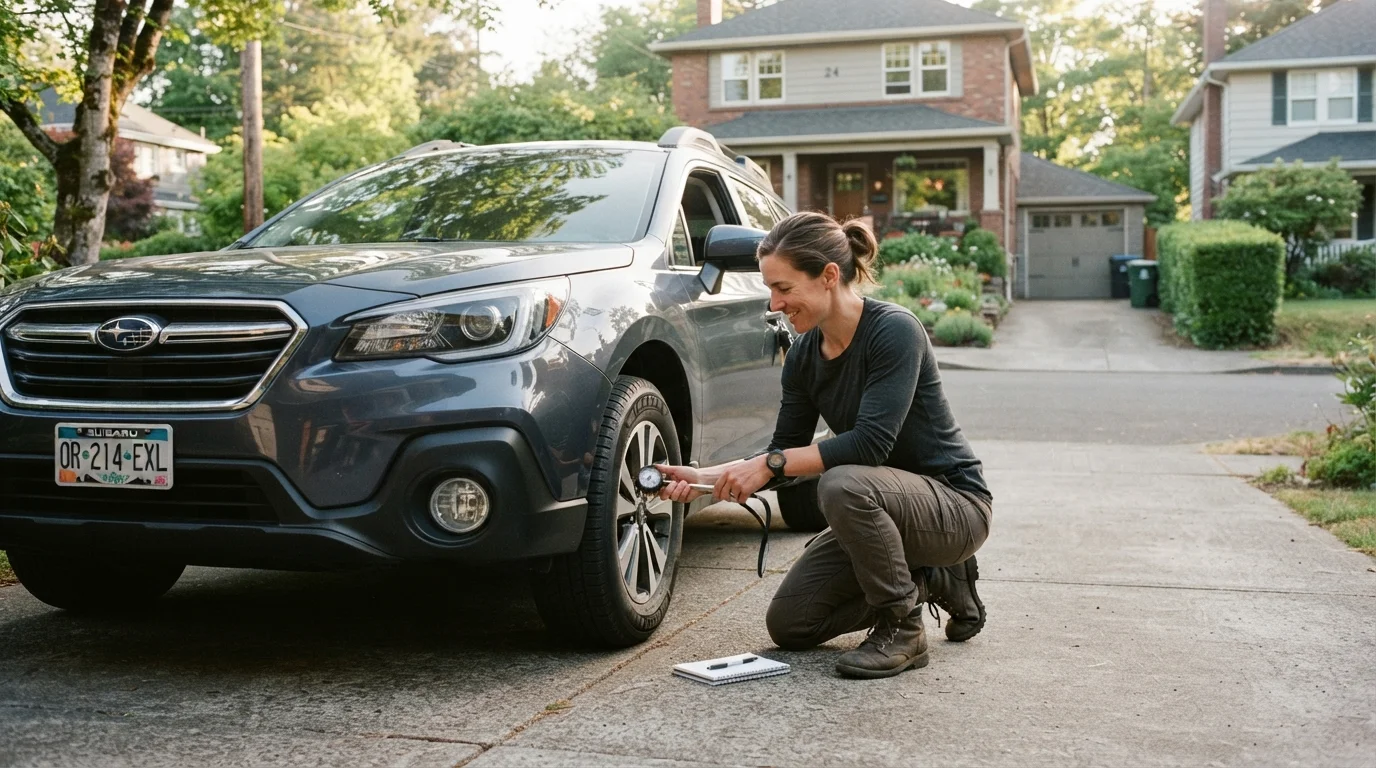
Tire pressure gauge
Accurately check all four tire pressures against the manufacturer's specification.
Clean rag or paper towels
Wipe the oil dipstick clean between checks and clean light lenses or glass surfaces.
Flashlight or phone torch
Inspect tires, under the hood, and check brake and tail lights if working alone.
Owner's manual
Confirm the correct tire pressure, fluid specifications, and look up any warning lights.
Jumper cables or portable jump starter
Restart a flat battery roadside without waiting for breakdown assistance.
Basic first-aid kit
Handle minor injuries in the event of a roadside incident before help arrives.
The Full Pre-Long Drive Checklist
Work through each group in order. Items marked must are non-negotiable before any extended drive. Should items are strongly recommended. Nice to have items add an extra layer of preparedness that experienced road-trippers tend to appreciate.
Tires
Fluids
Lights and Visibility
Under the Hood
Documents and Emergency Kit
Route and Fuel
If you want to align your vehicle checks with broader trip preparation — covering documents, bookings, and logistics — the pre-departure planning checklist covers the non-automotive side of getting ready.
Driver Readiness: The Check Most People Skip
A roadworthy car driven by a fatigued driver is still a serious hazard. Before any long drive, assess honestly whether you are in a fit state to drive — not just legally, but physically. Are you well rested? Have you eaten and had water? Do you have a plan for rest stops?
A practical rule used by many safety organizations: stop every two hours or 100 miles, whichever comes first, regardless of how alert you feel. Fatigue builds gradually and impairs judgment before it feels obvious. Driver fatigue is one of the most underestimated risks on long journeys.
If conditions are likely to be difficult en route — rain, fog, or ice — review how to adapt your driving before you leave rather than improvising on the road. Adjusting for adverse conditions is worth a read the night before any winter or wet-weather drive.
Any Dashboard Warning Light Requires Action
A warning light that was already on before your trip does not become less serious because you have a schedule to keep. Some lights — particularly the oil pressure, temperature, or brake system warnings — can indicate conditions that will cause serious mechanical damage or a safety failure within miles. Look up any active warning light in your owner's manual before you commit to a long drive. If the meaning is unclear or the light is serious, have the vehicle inspected by a qualified mechanic first.