

| Who Issues Visas | The destination country's government (via embassies or consulates) |
| Key Eligibility Factors | Your nationality, travel purpose, destination, and planned route |
| Typical Tourist Visa Processing Time | A few days to several weeks, depending on country and category |
| Where to Verify Requirements | Official embassy, consulate, or your government's travel advisory portal |
| Visa vs. Entry Guarantee | A visa is a prerequisite, not a guarantee — border officers make the final call |
What a Travel Visa Actually Is
Picture this: you've booked flights, mapped out your itinerary, and started packing — only to discover at the airport that you needed government permission to enter your destination weeks ago. This scenario plays out more often than travelers expect, and it almost always comes down to one misunderstood document: the visa.
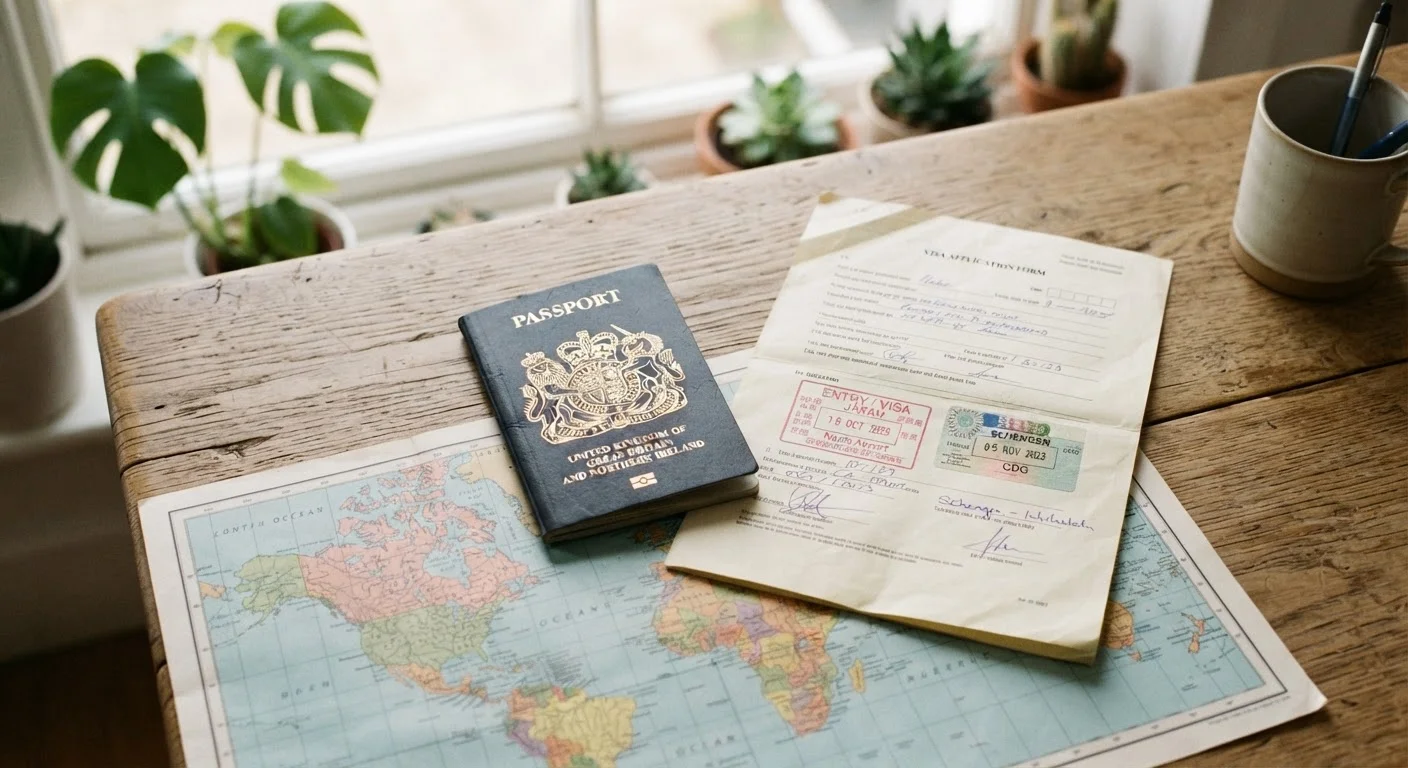
A travel visa is an official authorization, issued by a foreign government, that permits a non-citizen to enter, pass through, or remain in a country for a defined purpose and time period. It is not a guarantee of entry — border officers at the port of arrival retain the authority to admit or deny any traveler — but it is typically a legal prerequisite for the journey. For a deeper look at how visas fit alongside passports and entry stamps, see our overview of passport, visa, and entry terms.
| Who Issues Visas | The destination country's government (via embassies or consulates) |
| Key Eligibility Factors | Your nationality, travel purpose, destination, and planned route |
| Typical Tourist Visa Processing Time | A few days to several weeks, depending on country and category |
| Where to Verify Requirements | Official embassy, consulate, or your government's travel advisory portal |
| Visa vs. Entry Guarantee | A visa is a prerequisite, not a guarantee — border officers make the final call |
Visa requirements depend on your nationality, the destination country, your purpose of travel, and sometimes even your planned route. Two travelers on the same flight can face entirely different requirements based solely on the passports they carry.
Common Visa Types and What They Cover
Governments issue different visa categories to match different travel purposes. Attempting to enter on the wrong visa type — using a tourist visa to conduct paid work, for instance — is a serious violation that can result in denial of entry, deportation, or future bans.
Visa
An official authorization from a foreign government allowing a non-citizen to enter, transit, or remain in a country for a specific purpose and period. It does not guarantee entry at the border.
eTA (Electronic Travel Authorization)
A digital pre-travel permission system used by some countries as an alternative to a traditional stamped visa. It is typically applied for online and linked electronically to your passport.
Transit Visa
A visa required by some countries for travelers who are simply passing through their territory — even during a layover — without intending to enter as tourists or residents.
Port of Entry
The official checkpoint — typically an airport, land crossing, or seaport — where a traveler formally enters a foreign country and presents travel documents to border authorities.
Visa on Arrival
A visa issued to eligible travelers upon arrival at the destination's port of entry, rather than requiring advance application through a consulate. Eligibility is based on nationality and purpose of visit.
Consulate
A government office of a foreign country, located in your home country, that processes visa applications, authenticates documents, and provides other official services to travelers.
- Tourist / visitor visas authorize leisure travel, sightseeing, and visiting family. They typically prohibit paid employment and limit stays to a set number of days.
- Business visas allow attendance at meetings, conferences, or negotiations, but generally not local employment or income-generating activity.
- Student visas are tied to enrollment at an approved institution and usually require proof of acceptance before the application can proceed.
- Transit visas are required by some countries simply to pass through their airports during a layover — even if you never leave the terminal. This catches many travelers off guard; our piece on layover realities travelers miss covers this in detail.
- Work and long-stay visas involve more documentation and are typically processed through employers or sponsoring organizations in the destination country.
Many countries also offer visa-on-arrival or electronic travel authorizations (eTAs) — streamlined systems that serve a visa-like function but are applied for digitally rather than through a consulate.
100+
Countries requiring advance visas for some nationalities
The number of countries requiring prior visa authorization varies significantly depending on the traveler's passport; the Henley Passport Index tracks this annually.
6–8 weeks
Recommended minimum application lead time
Most consular guidance suggests applying at least six to eight weeks before travel for standard visa categories, with longer windows for work or study visas.
How the Application Process Generally Works
No two countries run identical processes, but most visa applications share a recognizable structure. Understanding the general steps helps you plan your timeline and avoid avoidable delays.
- Determine what you need. Start with your destination country's official embassy or consulate website, or your own government's travel advisory portal. Requirements change, so check official sources close to your travel date — not travel blogs or third-party aggregators that may be outdated.
- Gather documents. Standard requirements often include a valid passport (with enough blank pages and validity beyond your intended stay), a completed application form, a recent passport-style photo, proof of onward travel, and evidence of sufficient funds. Some visas also require invitation letters, hotel bookings, or travel insurance documentation. See our guide on what travel insurance typically covers if you need a policy for your application.
- Submit the application. Depending on the country, this may mean applying online, mailing your physical passport to a consulate, or visiting a visa application center in person.
- Pay the fee and wait. Processing times range from a few hours for some eTAs to several weeks or months for complex visa categories. Apply well in advance — most guidance suggests a minimum of six to eight weeks for standard visas, longer for work or study permits.
- Receive a decision. Approvals are typically stamped into your passport or issued as a digital document. Review every detail — entry dates, permitted stays, and any conditions — carefully before travel.
Before your departure, use a structured pre-departure check to make sure your visa is still valid and all other documentation is in order. Our pre-trip verification checklist walks through exactly that.
This article provides general educational information about travel visas. Requirements, fees, and processing times change frequently and vary by nationality and destination. Always verify current requirements through official government and embassy sources before making any travel or booking decisions.