

Key Takeaways
- Marrakech is more internationally connected and tourist-oriented; Fes feels more authentically lived-in and local.
- Fes el-Bali is the world's largest car-free urban area, making navigation on foot both rewarding and disorienting.
- Marrakech's Djemaa el-Fna square offers nightly street theater; Fes centers its life around mosques, madrasas, and souks.
- Both cities have a UNESCO World Heritage-listed medina, but their architectural styles and atmospheres differ noticeably.
- Fes is generally considered more affordable for accommodation and food than Marrakech.
- Neither medina is easy to navigate alone on a first visit — getting lost is part of the experience.
Option A
Marrakech
The vibrant, visitor-friendly gateway to Morocco.
Best for: Travelers seeking sensory intensity, polished riads, and easy access to the Atlas Mountains and desert tours.
Option B
Fes
The ancient, labyrinthine heart of Moroccan culture and learning.
Best for: Travelers craving deep cultural immersion, medieval Islamic architecture, and a less tourist-saturated medina experience.
If you want a well-rounded first trip to Morocco
Marrakech
Its infrastructure for international visitors is more developed, with abundant English-language support, organized day-trip networks, and a wide range of accommodation types.
If you prioritize authentic cultural depth over comfort
Fes
Fes el-Bali remains a functioning medieval city — its tanneries, Quranic schools, and artisan workshops operate much as they have for centuries, largely undisturbed by mass tourism.
If you want access to dramatic landscapes
Marrakech
Marrakech sits at the foot of the High Atlas Mountains and serves as the most common launching point for Sahara Desert excursions and mountain trekking.
If you're a slow traveler or architecture enthusiast
Fes
The density of medieval Islamic architecture in Fes — from the Bou Inania Madrasa to the Andalusian Mosque — rewards unhurried, curious exploration over several days.
If you want to do both
Marrakech
Fly into Marrakech for ease of arrival, then travel overland to Fes via Meknes or the Middle Atlas — a route that reveals Morocco's regional diversity at its best.
Two Cities, One Kingdom — and a World of Difference
Step into Marrakech's Djemaa el-Fna at dusk and the square erupts around you: snake charmers, smoke from a hundred food stalls, the rhythmic percussion of Gnawa musicians, and the murmur of a dozen languages. Now imagine entering Fes el-Bali through the Bab Bou Jeloud gate — the Blue Gate — and finding yourself in an alley barely wide enough for two people, a donkey loaded with leather threading past, the call to prayer echoing off 11th-century walls. Both are Morocco. Both are UNESCO World Heritage Sites. And yet they feel like cities separated not just by three hours on a train, but by centuries of intention.
Morocco's two most celebrated imperial cities draw millions of visitors between them, but the experiences they offer diverge in ways that genuinely matter when planning a trip. Understanding those differences can help you decide which city deserves more of your time — or how to sequence them for maximum effect.
Atmosphere and Street Life
Marrakech is unapologetically theatrical. The city has spent decades refining its appeal for international travelers, and that effort shows in the polish of its tourist infrastructure. The medina's central square, Djemaa el-Fna, is essentially a rotating performance — it transforms from a morning orange-juice market into a full-scale carnival by evening. The surrounding souks are lively and color-drenched, though vendors here are accustomed to negotiation and persistent pitching.
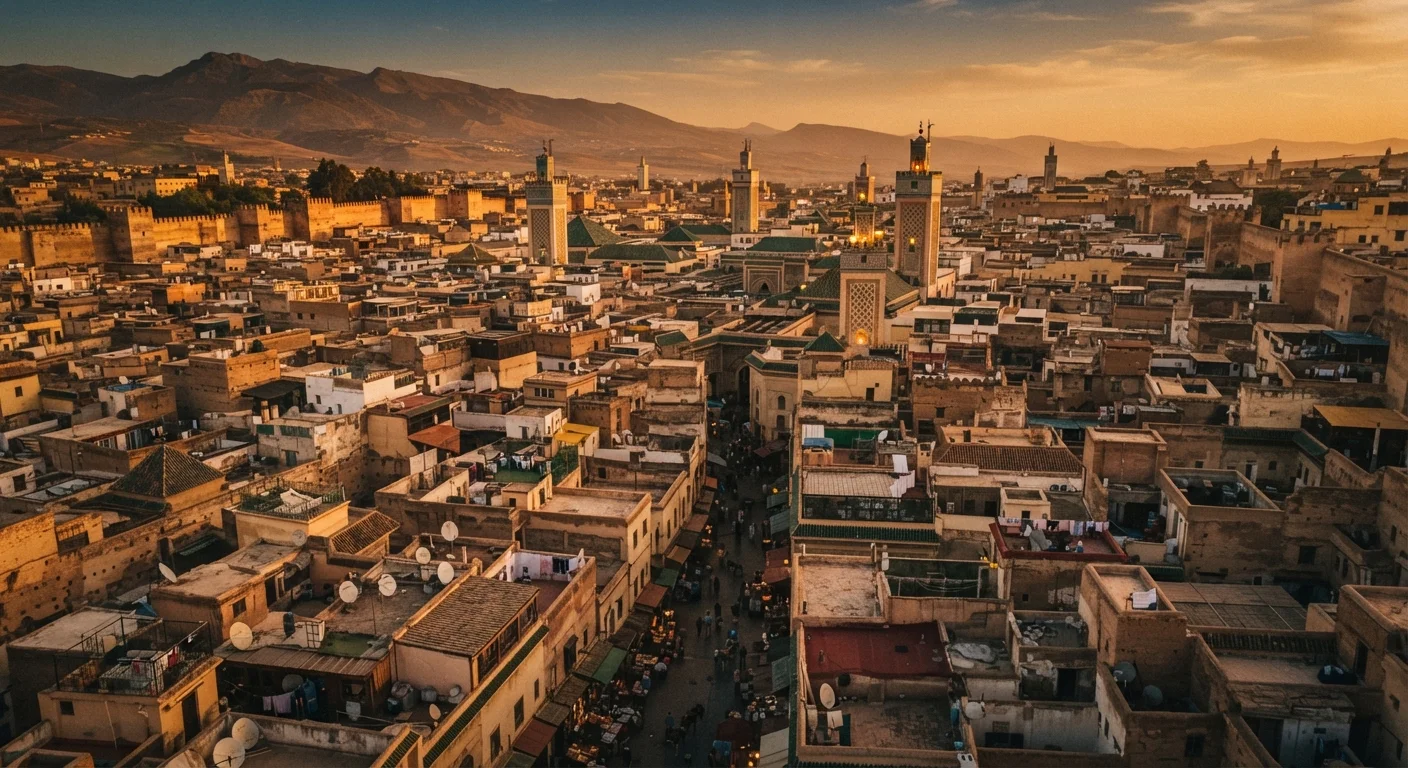
Fes operates at a different frequency. Morocco's oldest imperial city feels less performed. The medina — Fes el-Bali — is home to roughly 150,000 residents who use it not as a backdrop but as a living neighborhood. Artisan workshops produce ceramics, brass goods, and leather using centuries-old methods. The famous Chouara Tannery, visible from surrounding leather shop terraces, is a working industrial site, not a museum piece. Navigating Fes requires patience and a willingness to be genuinely lost — but the reward is a rare sense of time having thickened around you.
| Criterion | Marrakech | Fes |
|---|---|---|
| Medina UNESCO listing | Listed 1985 | Listed 1981 |
| Tourist infrastructure | Highly developed | Moderate, more local |
| Street navigability | Challenging but manageable | Very complex; guide recommended |
| International flights | Extensive direct connections | Fewer direct routes |
| Signature landmark | Djemaa el-Fna square | Chouara Tannery & al-Qarawiyyin |
| General cost level | Moderate to high | Moderate to low |
| Architecture era | Almoravid, Saadian (12th–19th c.) | Idrisid, Marinid (9th–14th c.) |
| Day-trip options | Atlas Mountains, Sahara | Meknes, Volubilis ruins |
Architecture and Landmarks
Marrakech's architectural identity is rooted in its Saadian and Almoravid heritage. The Koutoubia Mosque — whose 12th-century minaret influenced the design of the Giralda in Seville — anchors the skyline. The Bahia Palace offers a lush glimpse into 19th-century Moroccan courtly life, and the Saadian Tombs, hidden for centuries behind a wall, remain quietly astonishing. The city's riad culture — guesthouses built around interior courtyards — has also generated some of North Africa's most celebrated boutique design.
Fes, as the intellectual and spiritual capital of medieval Morocco, concentrated its finest buildings around religion and scholarship. The Bou Inania Madrasa is arguably Morocco's most exquisite example of Marinid architecture, its carved cedarwood, zellige tilework, and stucco rising in extraordinary layered detail. The University of al-Qarawiyyin, founded in 859 CE and often cited as the world's oldest continuously operating university, sits at the city's heart. For anyone drawn to Islamic art and architecture, Fes is without parallel in Morocco.
9,400+
Streets and alleyways in Fes el-Bali
Fes el-Bali is widely recognized as one of the world's largest car-free urban areas, with a street network that has expanded organically since the 9th century.
859 CE
Founding year of al-Qarawiyyin University
The University of al-Qarawiyyin in Fes is frequently cited by historians as the world's oldest continuously operating degree-granting institution.
12th century
Age of Marrakech's Koutoubia Mosque minaret
The Koutoubia Mosque minaret, completed around 1158 CE under the Almohad dynasty, served as an architectural model for later towers in Seville and Rabat.
Practical Considerations: Getting There, Getting Around, and Cost
Marrakech Menara Airport receives direct flights from a wide range of North American and European cities, making it the most convenient entry point into Morocco for many international travelers. Taxis, buses, and organized tours are plentiful and relatively easy to navigate. The city's layout, while intricate, is anchored by recognizable landmarks and main squares.
Fes is served by Fes-Saïss Airport, which has fewer direct international connections than Marrakech but is well-linked via domestic flights and train. The medina of Fes el-Bali is entirely pedestrian — no cars, no motorbikes — which means everything moves at a human pace. That's either a feature or a limitation depending on your travel style. Hiring a certified local guide for at least the first half-day in Fes is widely recommended; the medina contains an estimated 9,400 streets and alleyways, and disorientation is near-universal for first-time visitors.
On cost, Fes tends to run slightly more affordable than Marrakech for accommodation and meals, though both cities offer everything from budget guesthouses to high-end riads. As with any travel, prices vary considerably by season, and conditions change — verifying current visa requirements, entry conditions, and travel advisories through official government sources before your trip is essential.
Before You Travel: Verify Entry Requirements
Visa policies, vaccination requirements, and travel advisories for Morocco can change. U.S. travelers should check the U.S. Department of State's Morocco country information page and Morocco's official government sources for the most current requirements before booking. This article provides general orientation only and does not substitute for up-to-date official guidance.