

| Guinea pig lifespan | 4–8 years (Merck Veterinary Manual) |
| Rabbit lifespan (domestic) | 8–12 years (House Rabbit Society) |
| Hamster lifespan (Syrian) | 2–3 years (Merck Veterinary Manual) |
| Hay proportion in rabbit diet | 80% or more daily (House Rabbit Society dietary guidelines) |
| Guinea pigs: vitamin C requirement | Must come from diet; cannot self-synthesize (Merck Veterinary Manual) |
| Syrian hamsters: social housing | Solitary — cohousing causes aggression (General exotic veterinary consensus) |
Why Small Pet Care Is Its Own Category
Many people assume that caring for a guinea pig, rabbit, or hamster is simpler than caring for a dog or cat. In practice, these animals have highly specialized needs — and because they are prey species, they instinctively hide signs of illness until a condition is quite advanced. That behavioral trait makes routine observation and preventive care especially important for small pet owners.
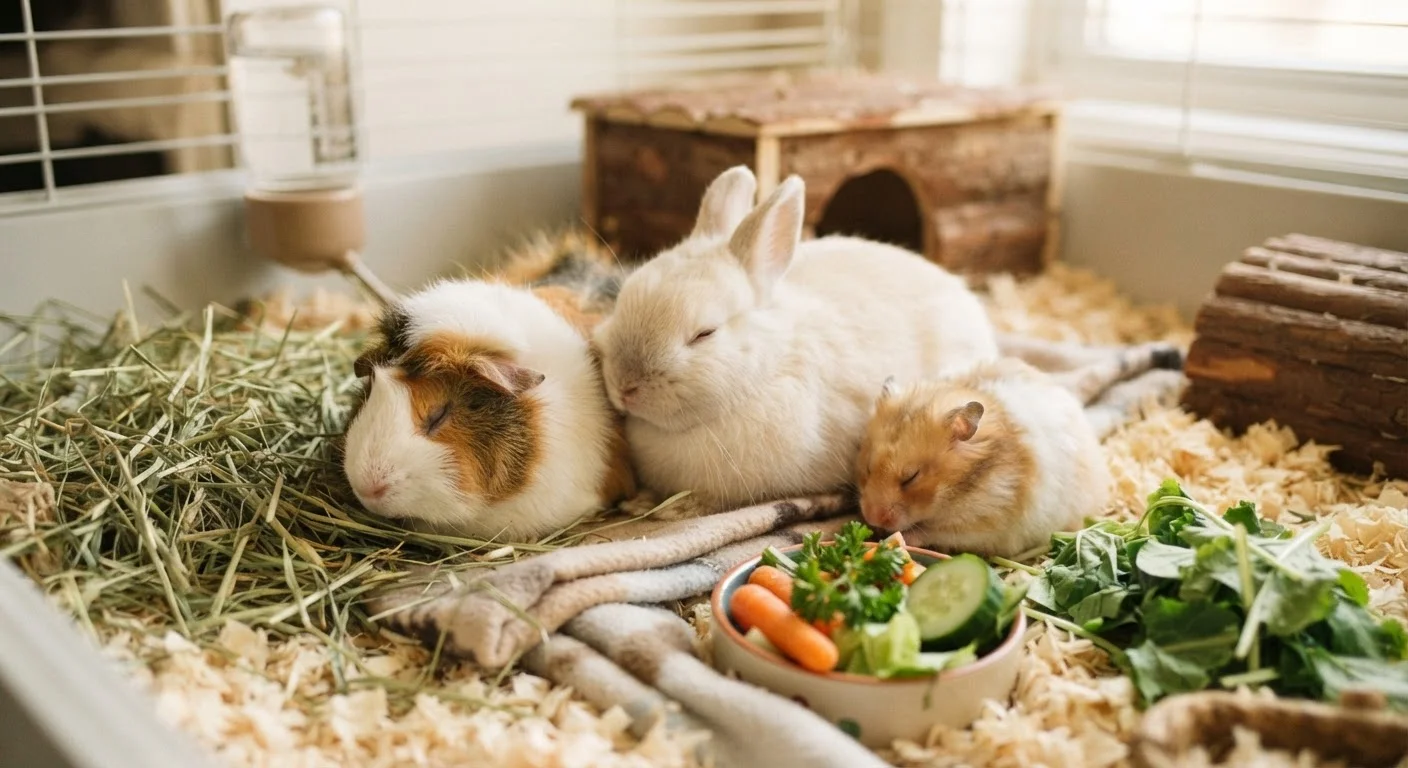
Understanding the baseline requirements for each species is the first step. The three most common small companion animals — guinea pigs, rabbits, and hamsters — share some care principles but differ significantly in diet, social needs, lifespan, and health vulnerabilities.
| Guinea pig lifespan | 4–8 years (Merck Veterinary Manual) |
| Rabbit lifespan (domestic) | 8–12 years (House Rabbit Society) |
| Hamster lifespan (Syrian) | 2–3 years (Merck Veterinary Manual) |
| Hay proportion in rabbit diet | 80% or more daily (House Rabbit Society dietary guidelines) |
| Guinea pigs: vitamin C requirement | Must come from diet; cannot self-synthesize (Merck Veterinary Manual) |
| Syrian hamsters: social housing | Solitary — cohousing causes aggression (General exotic veterinary consensus) |
Species Profiles: What Sets Each Animal Apart
Guinea Pigs
Guinea pigs are highly social animals that generally thrive in pairs or small groups. They are one of the few small mammals that cannot synthesize vitamin C on their own, making dietary supplementation through fresh vegetables — particularly bell peppers and leafy greens — essential. A deficiency can lead to scurvy, which is both preventable and serious. Their teeth grow continuously, so unlimited timothy hay is critical for dental health and digestive function.
Rabbits
Rabbits are the largest of the three and require the most space. A rabbit's digestive system is uniquely sensitive — their gut must keep moving at all times. GI stasis is one of the most common and dangerous conditions in pet rabbits, and a hay-heavy diet (80% or more of daily intake) significantly reduces that risk. Rabbits also need opportunities to exercise daily and benefit from mental enrichment like tunnels and foraging toys.
Hamsters
Hamsters are nocturnal and generally solitary — housing Syrian hamsters together almost always leads to fighting and injury. They are prone to wet tail disease, especially when stressed or in unsanitary conditions. A clean cage, low-stress environment, and species-appropriate diet of pellets supplemented with small amounts of fresh food support overall health. Their lifespan is shorter than guinea pigs or rabbits — typically two to three years — so health changes can progress quickly.
GI Stasis
A dangerous slowdown or complete halt of the digestive tract seen most often in rabbits. Without prompt veterinary treatment, it can be fatal within hours.
Exotic Animal Veterinarian
A veterinarian with specialized training in treating non-traditional companion animals such as rabbits, guinea pigs, hamsters, birds, and reptiles. Not all general practice vets treat small mammals.
Wet Tail Disease
A bacterial infection causing severe, watery diarrhea primarily in hamsters. It is most common in young or recently stressed animals and requires urgent veterinary attention.
Vitamin C Deficiency (Scurvy)
A nutritional disease resulting from inadequate vitamin C intake. Guinea pigs cannot produce this vitamin internally and must receive it daily through diet to stay healthy.
Foundational Health Practices Across All Three Species
Regardless of which small animal you keep, several core practices apply universally.
- Habitat hygiene: Spot-clean enclosures daily and perform a full clean at least once a week. Ammonia buildup from urine is a leading cause of respiratory illness in small animals.
- Diet quality: Each species has a specific dietary profile. Avoid mixes with excessive seeds or sugary treats. See our guide on feeding routines that support long-term pet health for broader context.
- Daily observation: Watch for changes in eating, drinking, activity level, droppings, and coat condition. Because small pets mask illness, subtle behavioral shifts are often the first warning sign.
- Veterinary care: Find an exotic animal veterinarian before you need one urgently. Routine wellness exams allow early detection of dental problems, parasites, and other issues.
Finding an Exotic Vet Before You Need One
General practice veterinarians may not have training in small mammal medicine. The Association of Exotic Mammal Veterinarians (AEMV) maintains a directory that can help you locate a qualified practitioner in your area. Establishing care before an emergency means faster, more informed treatment when it matters most.
For broader context on how these principles fit into a pet's overall care journey, the guide on caring for a pet throughout its life provides a useful framework. And if your small animal is diagnosed with an ongoing condition, caring for a pet with a chronic condition covers what to expect from long-term management.
This article is for general informational purposes only and does not constitute veterinary advice. Always consult a qualified exotic animal veterinarian for guidance specific to your pet's health and needs.