

Key Takeaways
- A credit score is a risk measurement, not a measure of wealth or income.
- Five main factors — payment history, utilization, credit age, mix, and new inquiries — determine your score.
- Different lenders may see different scores because multiple models and bureaus exist.
- Checking your own credit score does not hurt it.
- Consistent on-time payments are the single most powerful way to build a strong score.
Credit Score
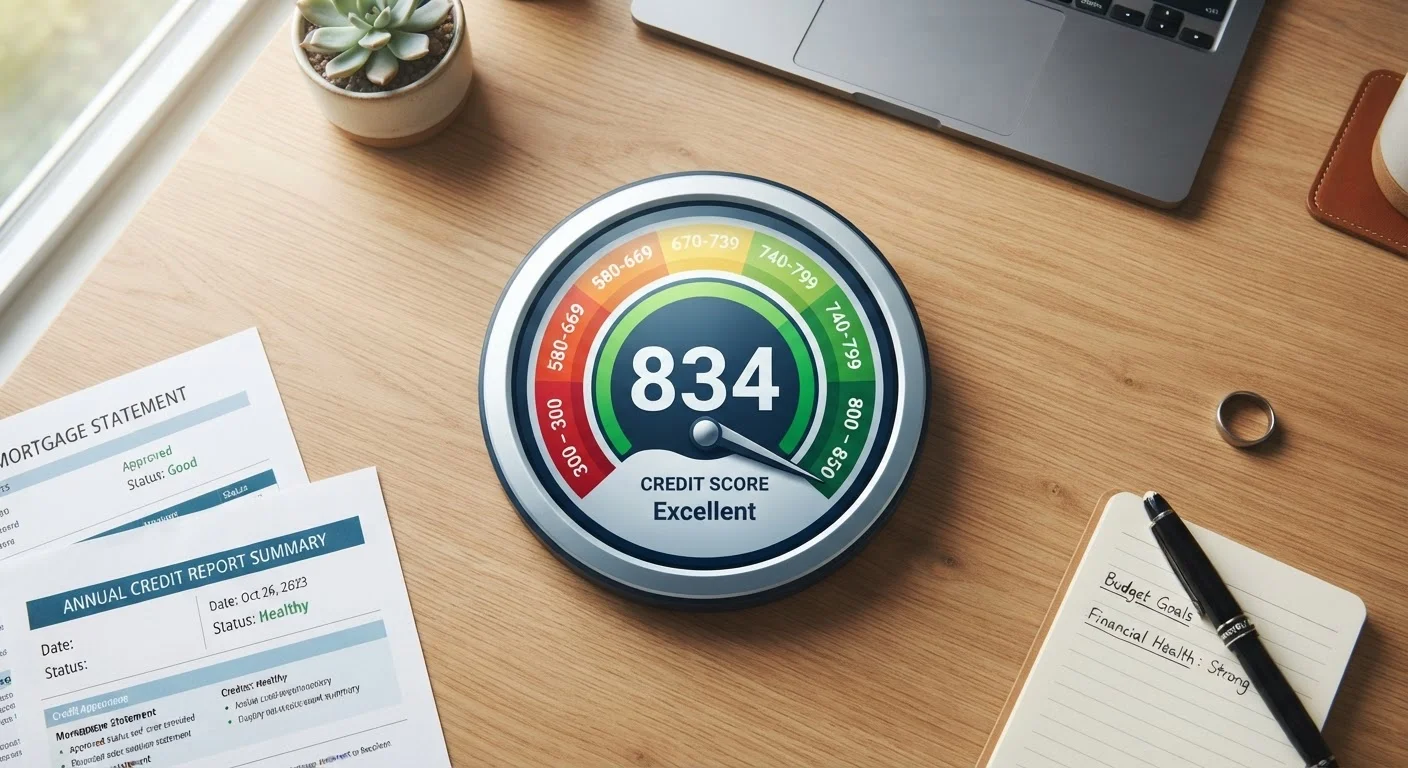
A credit score is a three-digit number — typically ranging from 300 to 850 — that summarizes how reliably you've managed borrowed money over time. Lenders use it to quickly assess the risk of lending to you. The higher your score, the more likely you are to be approved for credit and offered favorable terms.
The most widely used scoring model is the FICO Score, though VantageScore is also common. Both use the same 300–850 range but may weight factors differently, which is why scores can vary by model and bureau.
What a Credit Score Is Really Measuring
A credit score doesn't measure how much money you have — it measures how predictably you repay debt. Think of it as a statistical shorthand lenders use to estimate the probability that you'll pay back what you borrow on time. The score is generated by running your credit report data through a mathematical model, and the output is a single number that travels with you whenever you apply for a loan, apartment, or sometimes even a job.
It's important to know that your score is always a snapshot, not a permanent judgment. It reflects your credit behavior up to the moment it's calculated, and it changes as your financial habits evolve. Understanding the vocabulary behind credit — terms like utilization, inquiry, and derogatory mark — makes it much easier to interpret what your score is reacting to.
300–850
Standard credit score range (FICO and VantageScore)
Both major scoring systems use this range, with higher scores indicating lower credit risk according to FICO's published model documentation.
~35%
Weight of payment history in a FICO Score
FICO publicly identifies payment history as the single largest factor in its base scoring models, making on-time payments the most impactful habit a borrower can build.
7 years
How long most negative marks stay on a credit report
Under the Fair Credit Reporting Act (FCRA), most derogatory items — including late payments and collections — must be removed from credit reports after seven years.
The Five Factors Behind the Number
Most major scoring models weigh five categories of credit behavior, though the exact percentages differ by model. Here's what each one represents:
- Payment history (~35%): Whether you pay on time. A single missed payment can meaningfully lower your score, especially on a thin credit file.
- Credit utilization (~30%): How much of your available revolving credit you're using. Keeping balances low relative to your limits signals financial control. Learn how utilization is calculated and how to manage it for a deeper breakdown.
- Length of credit history (~15%): How long your accounts have been open. Older accounts generally help because they provide more data on your behavior over time.
- Credit mix (~10%): The variety of account types — credit cards, installment loans, mortgages — you manage responsibly.
- New credit inquiries (~10%): Recent applications for new credit. Multiple hard inquiries in a short window can signal financial stress to lenders.
A Simple Rule for Utilization
Many credit educators suggest keeping your revolving balances below 30% of your total available credit limit — and ideally below 10% if you're actively trying to improve your score. This doesn't mean you can't carry a balance; it means high balances relative to limits are visible to scoring models and tend to push scores down.
Why Your Score Varies Depending on Who Checks It
Many people are surprised to discover they don't have just one credit score — they have several. This happens for two main reasons: multiple credit bureaus and multiple scoring models.
The three major bureaus (Equifax, Experian, and TransUnion) compile separate credit reports. Because creditors aren't required to report to all three, your reports may contain slightly different information, producing different scores. On top of that, FICO alone has dozens of versions of its scoring model, and many lenders use industry-specific scores tailored to auto lending or mortgage underwriting.
When you check your score through a free consumer service, you're likely seeing a VantageScore or a general-purpose FICO Score — which may differ from the score a mortgage lender pulls. Neither is wrong; they're just different views of the same underlying data. Reviewing your actual credit report is the most reliable way to understand what's driving any version of your score.
“Your credit score is a tool that lenders use to make decisions about you — but it's a tool you can influence through your own behavior. Understanding what goes into it is the first step to using that knowledge in your favor.”
— Consumer Financial Protection Bureau, U.S. federal agency responsible for consumer financial education and protection
Building and Protecting Your Score Over Time
Because payment history carries the most weight, consistent on-time payments are the most reliable lever available to you. Even one or two missed payments can take months of positive behavior to offset, so setting up automatic minimum payments can act as a safety net.
Beyond payment history, managing your credit utilization and avoiding unnecessary new applications can meaningfully protect your score. It's also worth knowing that common credit myths — like the belief that closing old accounts helps your score — often work in the opposite direction.
Credit improvement takes patience. Most negative marks age off your report within seven years, and building a strong score from scratch typically takes at least six to twelve months of consistent activity. Treating your score as a long-term reflection of financial habits, rather than a quick-fix number, leads to more durable results.
This article is for general informational and educational purposes only and does not constitute personalized financial or legal advice. Consult a qualified financial professional before making decisions specific to your situation.