

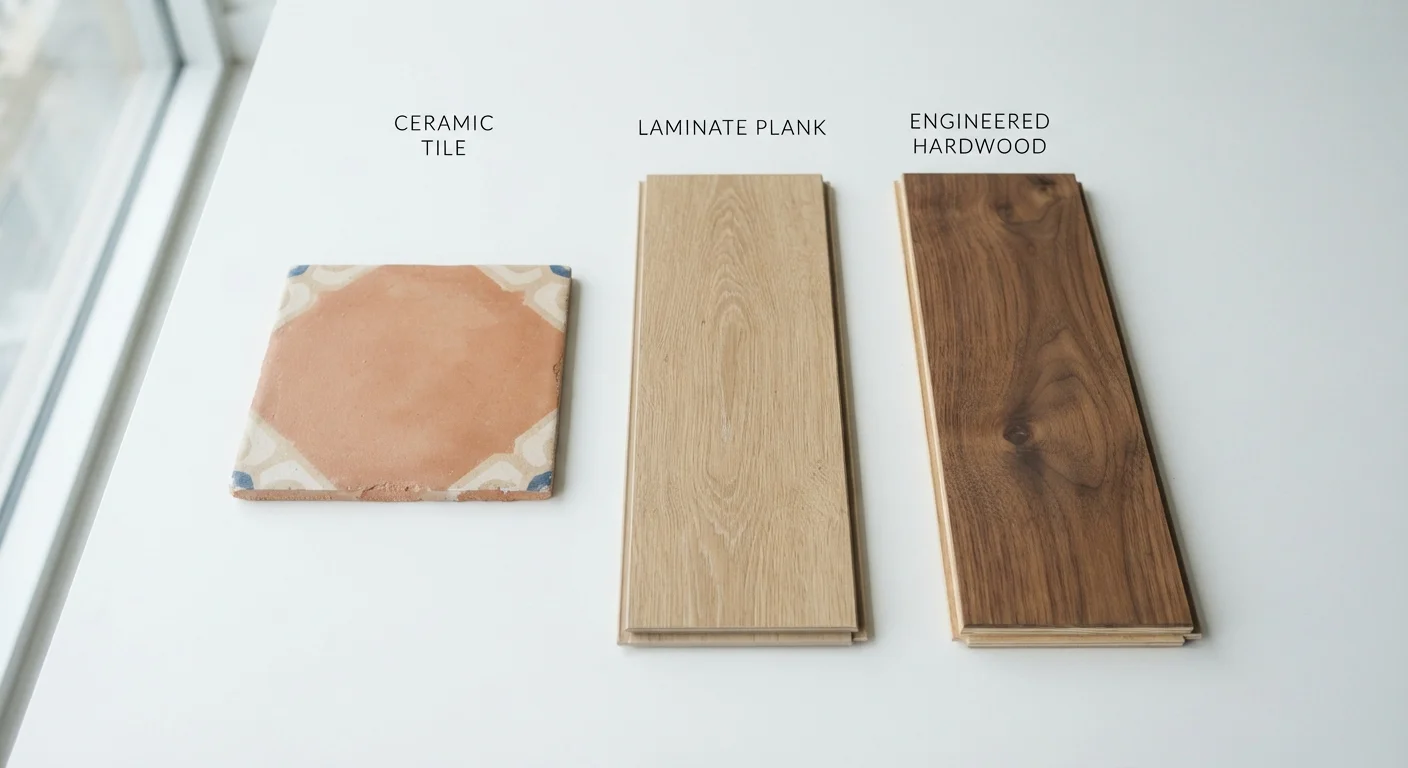
Key Takeaways
- Tile offers the strongest moisture resistance, making it ideal for bathrooms and kitchens.
- Laminate is the most budget-friendly option and installs easily via floating click-lock systems.
- Engineered hardwood delivers genuine wood aesthetics and can be refinished at least once.
- Each flooring type has distinct comfort, noise, and subfloor requirements worth evaluating before purchase.
- Local building codes may influence which materials are appropriate for specific rooms or climates.
Our Verdict
No single flooring type wins across every category. The right choice depends heavily on the room's moisture exposure, your household's foot-traffic demands, and how much hands-on installation work you're prepared to take on. Understanding each material's limitations helps you avoid costly mistakes down the road.
| Best for | Recommended |
|---|---|
| High-moisture areas like bathrooms, laundry rooms, and mudrooms | Tile |
| Budget-conscious renovators wanting a DIY-friendly install | Laminate |
| Living rooms and bedrooms where wood warmth and longevity matter | Engineered Hardwood |
| Households needing a versatile option across multiple room types | Engineered Hardwood |
Understanding the Core Differences
Choosing a new floor involves more than picking a color or texture. Each material has a distinct construction that directly affects how it performs over time. Tile — typically ceramic or porcelain — is a fired, mineral-based product that is essentially impervious to water when properly grouted and sealed. Laminate is a synthetic composite: a high-density fiberboard (HDF) core topped with a photographic layer and a clear wear coat, mimicking wood or stone at a lower price point. Engineered hardwood consists of a real-wood veneer bonded to multiple plywood or HDF layers, giving it greater dimensional stability than solid hardwood while retaining genuine wood character.
These structural differences cascade into nearly every decision you'll face: subfloor prep, acceptable moisture levels, installation method, and long-term upkeep. Reviewing all three side-by-side makes those trade-offs easier to weigh.
| Tile | Laminate | Engineered Hardwood | |
|---|---|---|---|
| Moisture Resistance | Excellent (with sealed grout) | Low–Moderate (avoid standing water) | Moderate (not for wet rooms) |
| DIY Friendliness | Challenging | High (click-lock float) | Moderate |
| Comfort Underfoot | Hard and cold | Moderate cushion | Warm, natural feel |
| Refinishable | No | No | Yes (1–2 times) |
| Typical Lifespan | 50+ years | 15–25 years | 25–40+ years |
| Relative Cost (material) | Moderate–High | Low–Moderate | Moderate–High |
| Best Room Applications | Baths, kitchens, entries | Bedrooms, living areas | Living areas, bedrooms, some basements |
Durability and Moisture Resistance
Tile is the clear leader in moisture resistance. Fully vitrified porcelain, for instance, absorbs less than 0.5% water by weight, making it well-suited for bathrooms and kitchens. Grout lines remain the vulnerability — unsanded or cracked grout allows moisture to reach the subfloor — so proper installation and periodic resealing are essential.
Laminate's HDF core is vulnerable to sustained moisture. Most laminate products are rated for light spills that are wiped promptly, but standing water or high-humidity environments can cause swelling and edge separation. Waterproof core laminate (sometimes called WPC or SPC laminate) addresses this to a degree, though it still cannot match tile in wet applications.
Engineered hardwood sits in the middle. The cross-ply plywood construction resists seasonal expansion and contraction better than solid wood, making it suitable for below-grade installations in some cases. However, it should not be used in consistently wet rooms. Always verify the specific product's moisture rating before installing in kitchens or basements.
Moisture Testing Is Non-Negotiable
Installing laminate or engineered hardwood over a subfloor with elevated moisture — particularly concrete slabs — without proper testing can lead to swelling, mold growth, and adhesion failure within months. Use a calcium chloride test or a relative humidity probe in concrete applications and compare readings to the manufacturer's specified thresholds before proceeding.
Installation Complexity and DIY Potential
Laminate is the most accessible option for confident DIYers. Most products use a floating click-lock system that requires no adhesive and can be installed over a variety of existing subfloors with minimal prep — provided the surface is flat, dry, and structurally sound. Expansion gaps at walls are required to prevent buckling.
Engineered hardwood can be floated, stapled, or glued down depending on the product and subfloor type. Floating installs are manageable for experienced DIYers; staple-down methods typically require a pneumatic flooring nailer and more technical skill. Glue-down installs over concrete are generally best left to professionals.
Tile installation has the steepest learning curve. Proper substrate preparation — often involving a cement backer board or uncoupling membrane — is critical. Cutting tiles around fixtures, managing grout lines consistently, and allowing adequate cure time all require patience and some experience. Improperly set tile can crack or hollow-sound within a year. Homeowners new to tile work may benefit from tackling a small utility space first or consulting a licensed tile setter for larger projects.
Test Your Subfloor Before Committing
Before purchasing any flooring material, check your subfloor for flatness (typically within 3/16 inch over 10 feet), structural soundness, and moisture levels using an inexpensive moisture meter. Subfloor deficiencies that aren't corrected before installation can void product warranties and cause premature failure regardless of which material you choose.
Maintenance, Comfort, and Long-Term Value
Tile is among the easiest floors to clean — regular sweeping and damp mopping suffice — but grout lines can discolor and require periodic sealing or scrubbing. Tile also transmits cold and hardness underfoot; radiant heat systems can offset this in appropriate climates and budgets. It is highly durable and, if quality materials are used, can outlast the home's other finishes.
Laminate requires only dry or slightly damp cleaning; harsh chemicals and wet mopping should be avoided. Its wear layer resists scratches from everyday use, though deep gouges are difficult to repair without replacing planks. Most laminate cannot be refinished. Lifespan typically ranges from 15 to 25 years depending on wear rating and maintenance.
Engineered hardwood brings genuine warmth and acoustics to a space. It can typically be lightly sanded and refinished at least once — sometimes more, depending on veneer thickness — extending its usable life. Hardwood floors also tend to be a recognized positive attribute during home resale, though outcome varies by market and condition. Engineered hardwood is susceptible to scratching from pets and furniture, so felt pads and area rugs are practical protective measures.
This article is for general informational purposes only. Always consult local building codes and, where appropriate, a licensed flooring professional before beginning a renovation project.