

Key Takeaways
- Food contributes roughly 20–30% of your total daily fluid intake.
- Fruits and vegetables have the highest water content of any food group.
- Sodium, alcohol, and heavily processed foods can increase your body's fluid losses.
- Thirst is a useful but imperfect signal — other cues also indicate hydration status.
- Individual hydration needs vary based on body size, activity level, and climate.
- Consulting a healthcare professional is recommended if you have concerns about chronic dehydration.
Dietary Fluid Balance
Dietary fluid balance refers to the total water your body takes in versus what it loses each day — and food plays a larger role in that equation than most people realize. Beyond drinking water and other beverages, the foods you eat contribute a meaningful portion of your daily fluid intake. Maintaining this balance supports digestion, circulation, temperature regulation, and cognitive function.
Physiologists estimate that food typically provides 20–30% of total daily water intake, though this varies considerably by diet composition and individual metabolism.
Water From Food: More Than You Might Think
When people think about staying hydrated, they picture a glass of water. But your body doesn't distinguish between fluid that arrives in a cup and fluid that arrives inside a piece of watermelon. Both count — and that matters for how you approach your daily intake.
Research consistently estimates that food accounts for roughly 20–30% of total daily fluid intake for adults eating a typical mixed diet. That figure can shift considerably depending on what you actually eat. A diet centered on whole fruits, vegetables, and soups will supply far more fluid than one built around dry, ultra-processed foods like crackers, chips, and cured meats.
~20–30%
Daily fluid intake supplied by food
Physiological research estimates that food contributes roughly 20–30% of total daily water intake in adults eating a mixed diet.
>90%
Water content in top hydrating vegetables
Foods like cucumber, celery, and lettuce exceed 90% water by weight, according to USDA food composition data.
1–1.5L
Fluid from food on a vegetable-rich diet
Estimates from nutrition researchers suggest diets high in fruits and vegetables can supply 1 to 1.5 liters of water per day from food alone.
Understanding this relationship helps take some pressure off the idea of hitting an exact number of glasses of water per day — a target that, for most healthy adults, lacks strong scientific grounding anyway. As our nutrition guidance article explains, rigid rules in nutrition often oversimplify more nuanced realities.
Foods That Contribute the Most to Hydration
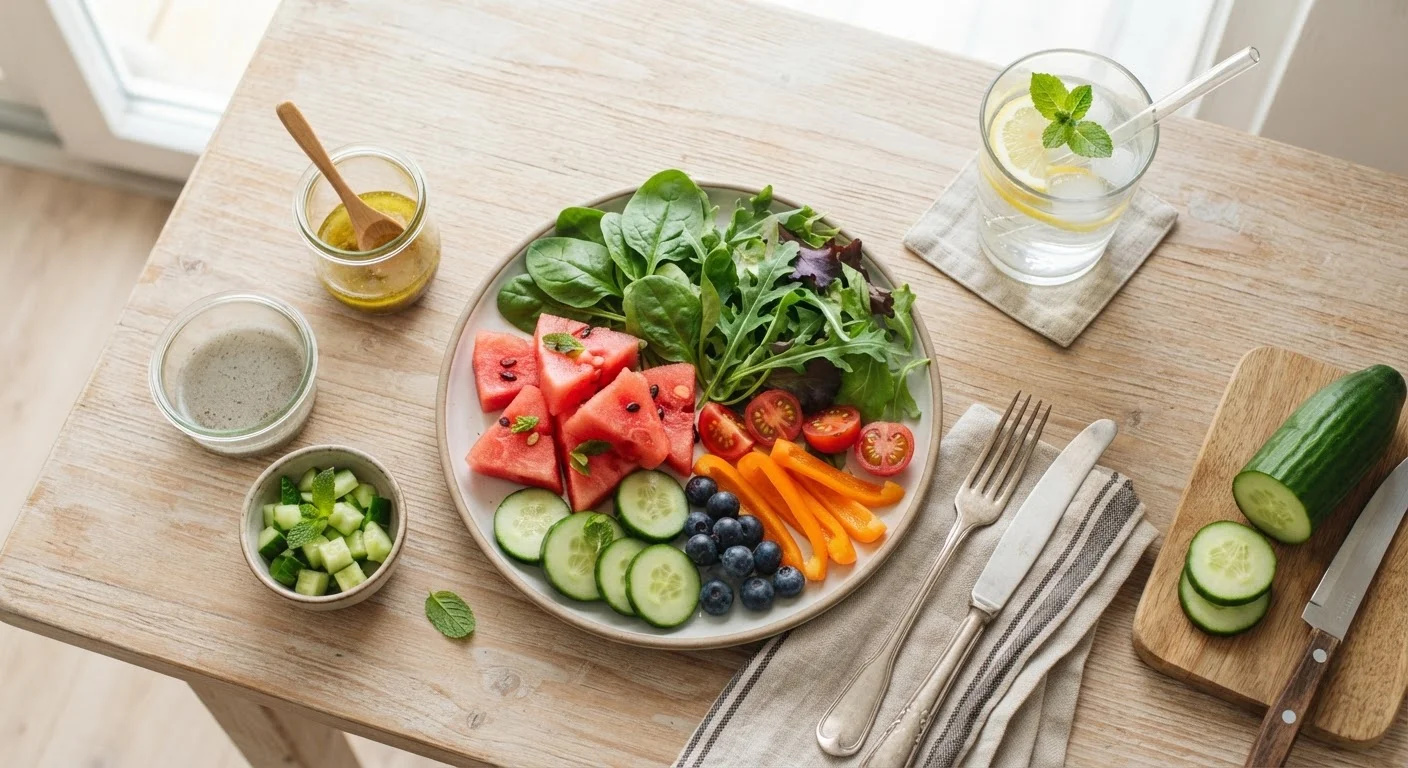
Water content varies widely across food groups. Fruits and vegetables sit at the top of the scale, with many containing more than 90% water by weight. Cucumber, iceberg lettuce, celery, radishes, tomatoes, strawberries, and watermelon are standouts. Even foods that don't feel especially watery — like yogurt, cooked oatmeal, or scrambled eggs — provide meaningful fluid when consumed regularly.
Soups and broths deserve special mention. A bowl of vegetable broth or a tomato-based soup delivers fluid alongside electrolytes like sodium and potassium, which help the body retain and use that water effectively.
Conversely, dry and concentrated foods — nut butters, dried fruits, crackers, hard cheeses, and cured meats — provide very little water and may even draw on your body's existing stores to aid digestion. This doesn't make them unhealthy, but it reinforces why dietary variety matters for overall fluid balance.
Build Hydration Into Your Meals
You don't need to overhaul your diet to improve fluid intake from food. Adding a side salad, swapping dry snacks for sliced fruit or raw vegetables, or starting a meal with a broth-based soup are small changes that meaningfully increase dietary water contribution. These shifts also tend to support overall nutritional quality.
Dietary Habits That Disrupt Fluid Balance
Certain eating patterns can tip the balance toward fluid loss rather than retention. Sodium is the most discussed culprit: a consistently high-sodium diet increases the kidneys' workload and raises the body's overall fluid requirement. Highly processed foods — which tend to be very high in sodium — compound this effect.
Alcohol is another significant factor. It suppresses the hormone that signals the kidneys to conserve water, leading to increased urination and net fluid loss even when consumed as part of a liquid drink. This is why alcohol-heavy meals and social occasions often leave people feeling dehydrated the next day.
Diet composition also interacts with physical demands. During exercise or in hot weather, fluid and electrolyte losses accelerate substantially. The relationship between hydration and physical performance is well-documented — even modest dehydration can impair endurance and concentration.
Special Populations and Fluid Needs
Older adults, pregnant individuals, those with kidney conditions, and people taking certain medications may have different or more specific hydration requirements. General guidelines are not a reliable substitute for personalized advice in these cases. Always consult a healthcare provider if you fall into any of these groups or have questions about your specific needs.
Reading Your Body's Hydration Signals
Thirst is a real and useful signal, but it's not a perfectly calibrated one. By the time thirst registers strongly, mild dehydration may already be present — particularly in older adults, whose thirst response tends to diminish with age. Urine color offers a simple, practical alternative check: pale yellow typically indicates adequate hydration; darker shades suggest a need for more fluid.
Other potential signs of insufficient fluid intake include headaches, low energy, difficulty concentrating, and dry skin — though all of these have multiple possible causes, so no single symptom should be read as a definitive indicator.
If you travel frequently, your hydration habits may need adjustment. Airplane cabin air is notably dry, and travel disrupts normal eating routines. Our guide to staying healthy while travelling includes practical hydration strategies for on-the-go situations.
This article is for general informational purposes only and is not a substitute for personalized medical or dietary advice. If you have concerns about your hydration, fluid intake, or an underlying health condition, please consult a qualified healthcare professional.